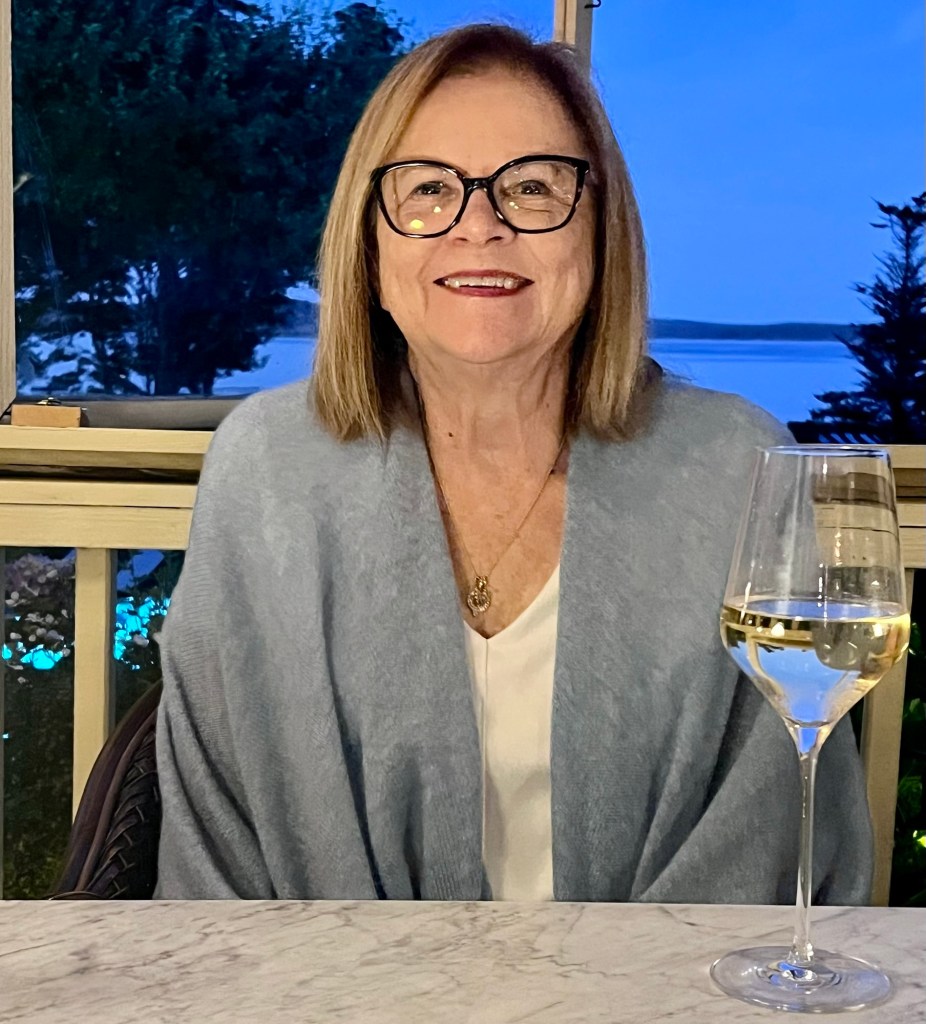
October 12, 2025–Final Notes From Florence, Italy

Tomorrow morning we fly out of the Florence airport via Charles De Gaulle to Atlanta.  We have been in Europe for three weeks and that is a long time. I only have the bare minimum of clean clothes at my disposal.  I’m all set with clean underwear and socks, but I have worn all of my jeans and leggings a few times. No use being persnickety at this point.  You either have to get up and get dressed in something, or stay in bed all day.  Pick your poison.  (And yes, I know we could have had laundry done by one of the hotels.)

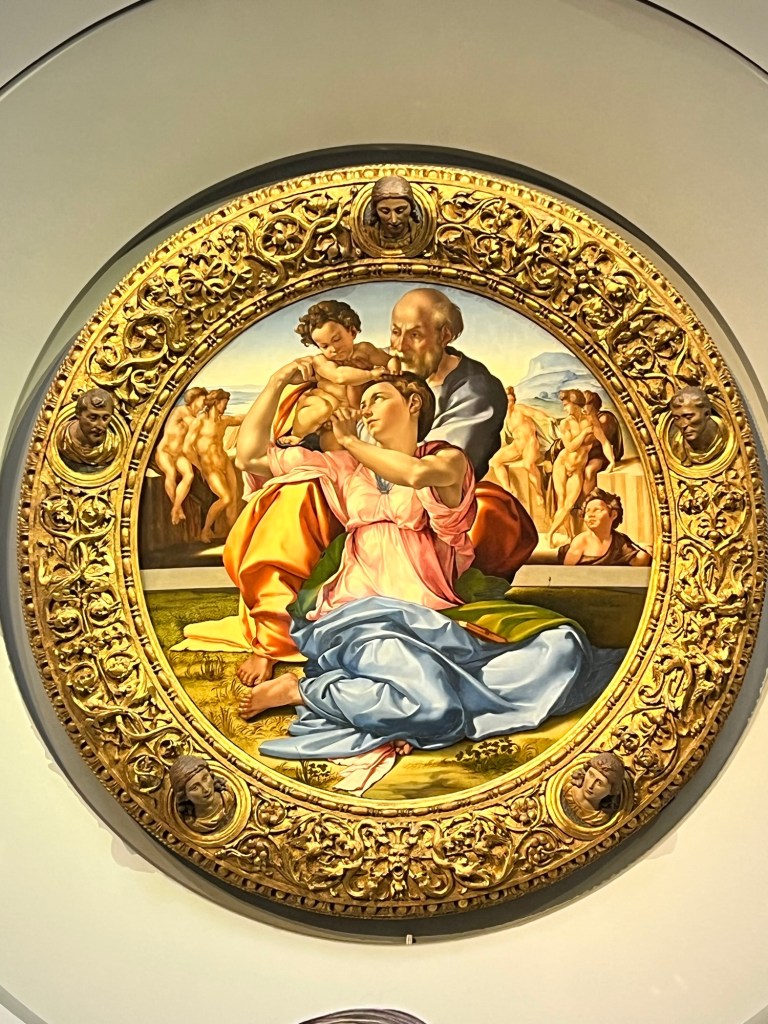
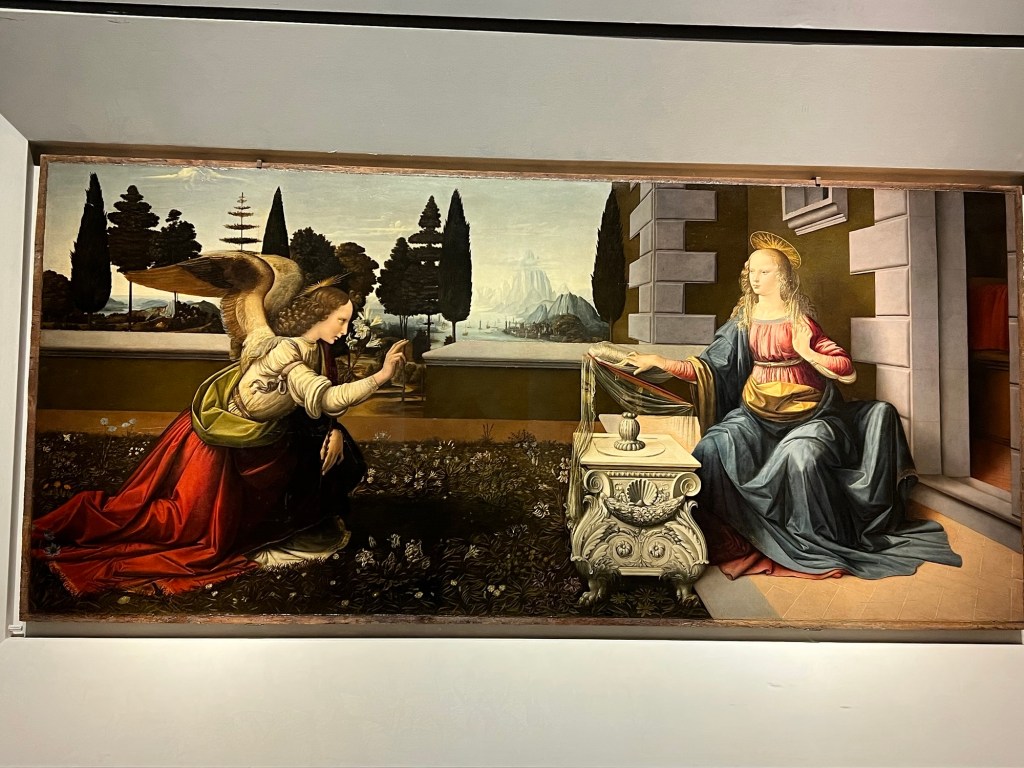
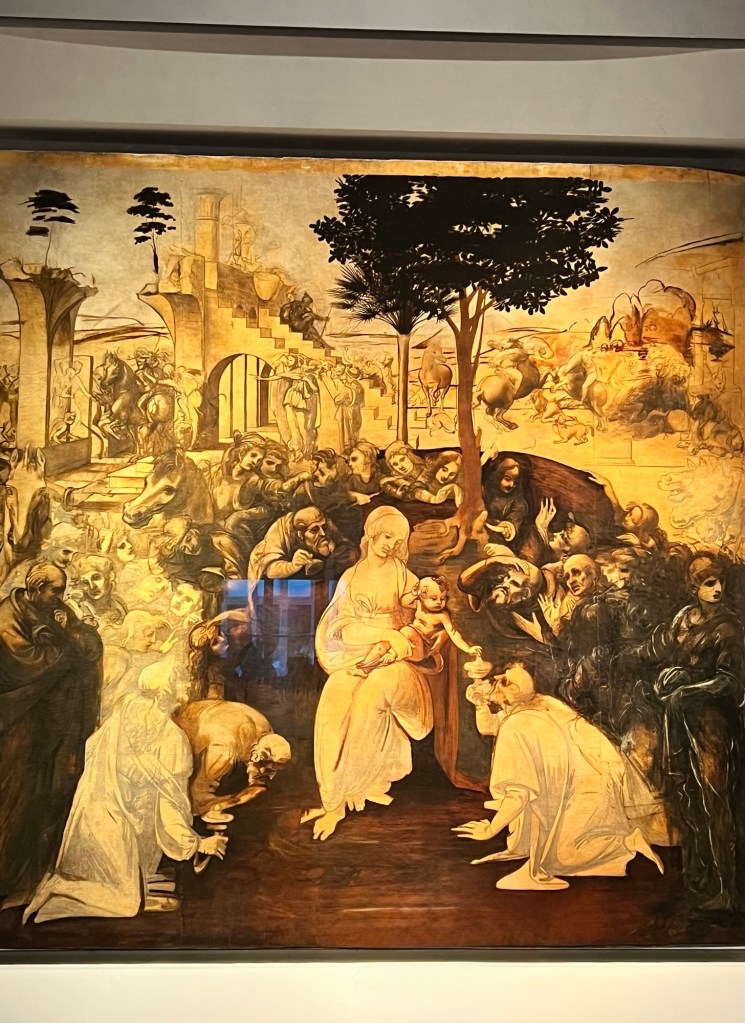
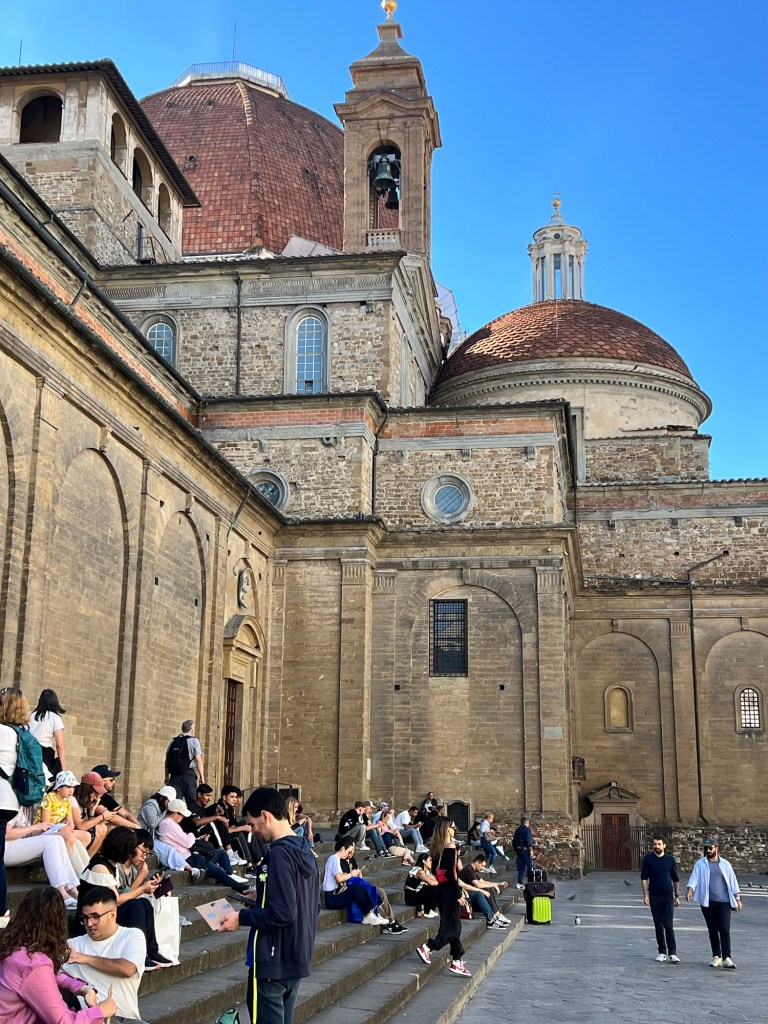
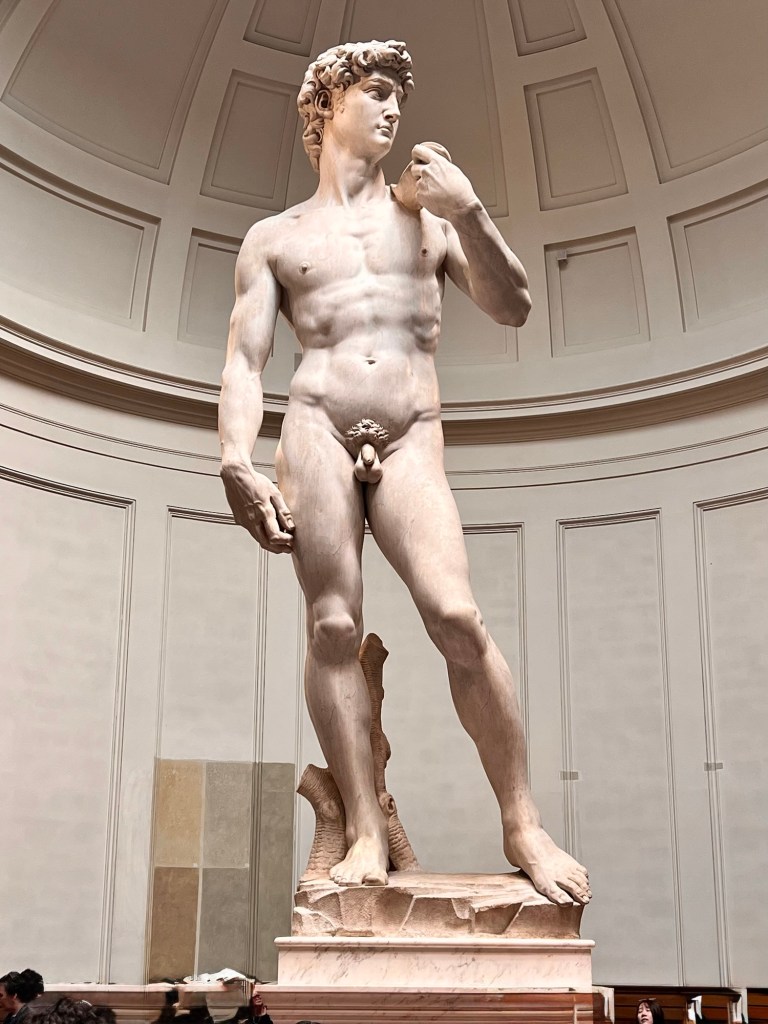
Florence is yet another beautiful Italian city.  It was a center  of medieval European trade and finance, and is considered by many to have been the birthplace of the Renaissance.  There are over sixty museums in Florence, but we only visited two of most famous: the Uffizi Gallery and the Accademia Gallery, mainly because I wanted to see the Botticellis at the former and Michelangelo’s David at the latter. My favorites are Botticelli’s Birth of Venus and Michelangelo’s David. Which ones do you find most appealing?

And Michelangelo’s David:
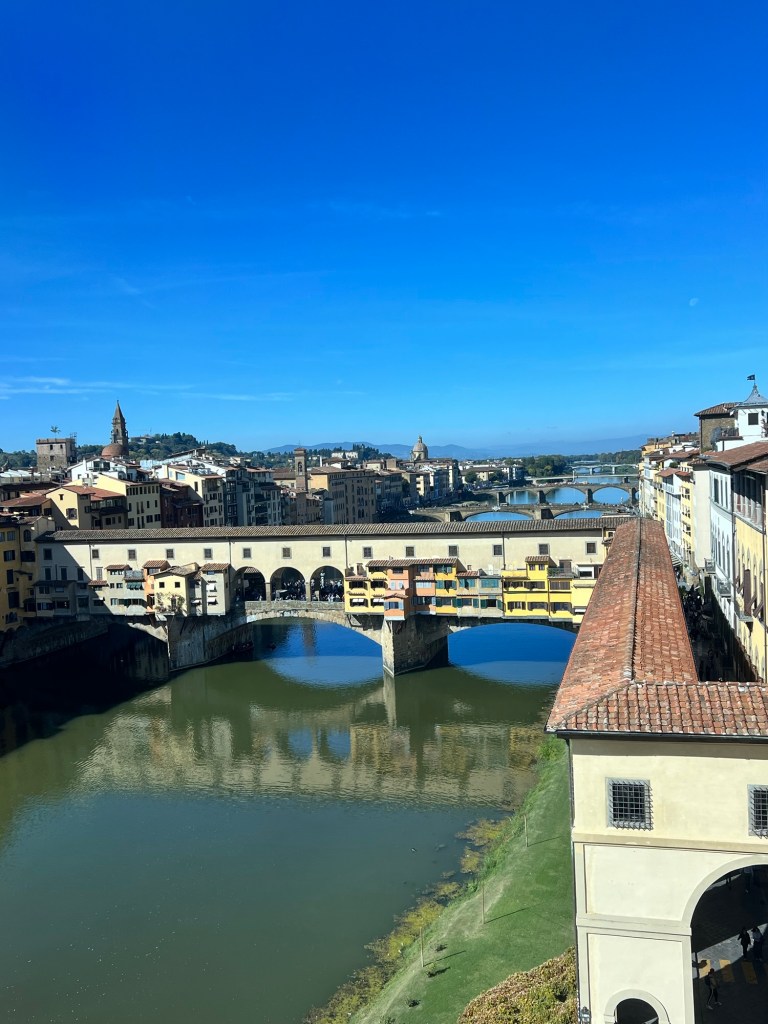
Florence is also known for its many bridges.  The city is divided by the Arno River, and its bridges are a large part of its identity, most famously the Ponte Vecchio, the oldest and most recognizable bridge, lined with shops since the 13th century.   Our hotel is right on the Arno River, so we can see many of the bridges from our room.  The first picture is of the Ponte Vecchio where all the shops are, and the second picture is of Ponte Santa Trinita, which is named for the Santa Trinita Church you can see in the background. Ponte is Italian for bridge as you may have guessed.
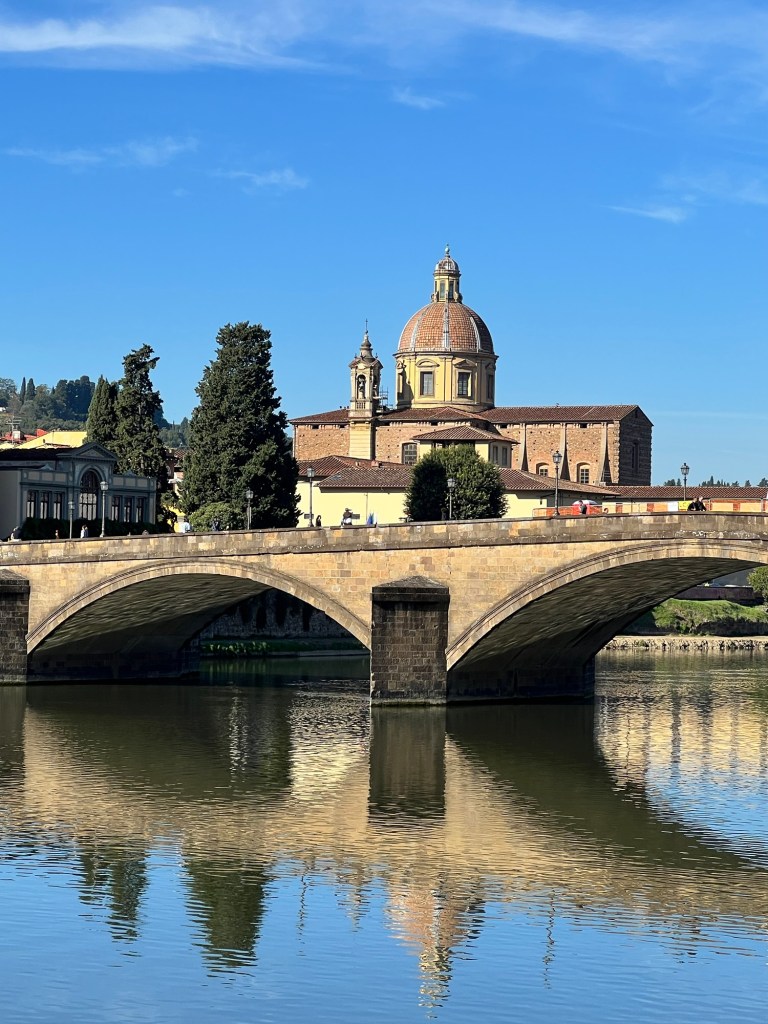
The other night we walked across the Ponte Santa Trinita for dinner, and Doug ordered a steak with a side of tagliatelle (the long flat ribbon pasta).  The waiter seemed pretty disgusted by the entire idea and said in a rather sneering manner, “Pasta with steak?  You’re just like the French!”  I guess he didn’t really care for the French people or their food choices. Or Americans, for that matter.

As side note about the Renaissance in Europe, Shakespeare set thirteen (out of thirty-eight) of his plays in Italy.  Scholars think he did this because Elizabethans were fascinated by the Italian culture, political intrigue, family strife, and palace plots.  One of the other reasons might have been that he was able to criticize the ruling class in England by couching it in Italian settings, thus avoiding the displeasure of the monarchy.  For instance, “Romeo and Juliet” is set in Verona, “Julius Caesar” in Rome, “Othello” in Venice, and part of “All’s Well That Ends Well” in Florence.  

And what would a blog about a European city without a cathedral? The largest one in Florence is the Duomo di Firenze. The first stone on the cathedral was laid in 1294 and it took 140 years to build.

All of the streets in Florence are really crowded with tourists and it can be fairly overwhelming at times. My biggest pet peeve is people who are obsessed with looking down at their cellphones while walking down the sidewalk, or who stop right in the middle of the sidewalk to send a text or take a selfie. They are always crashing into innocent bystanders. How is that enjoyable for anyone involved?

And so another trip, another blog. I enjoy writing them most days, but I do find it difficult to choose what pictures to put in, which facts are interesting and which are too trivial or boring, and how much griping I can do without people thinking I’m curmudgeonly. Hope I got the perfect balance this time. Until we meet again, arrivederci!

October 9, 2025–Florence, Italy

Tonight we are in Florence, where will stay until we fly out on Monday morning.  We spent the last three nights in Siena in a hotel at the heart of the Siena City Center, or Piazza del Campo.  

The Grand Hotel Continental in Siena where we stayed was constructed in the 17th-century and originally built as a wedding present from Pope Alexander VII to his niece, Olimpia, and her husband Giulio de’ Gori. It has been a hotel since 2002, and maintains its original Renaissance architecture with frescoes, antiques, and terracotta floors.  It is an absolutely gorgeous hotel.  The first picture is of our room; the second picture is a sitting room which was probably once a ballroom; the third picture is of the street beneath our room.

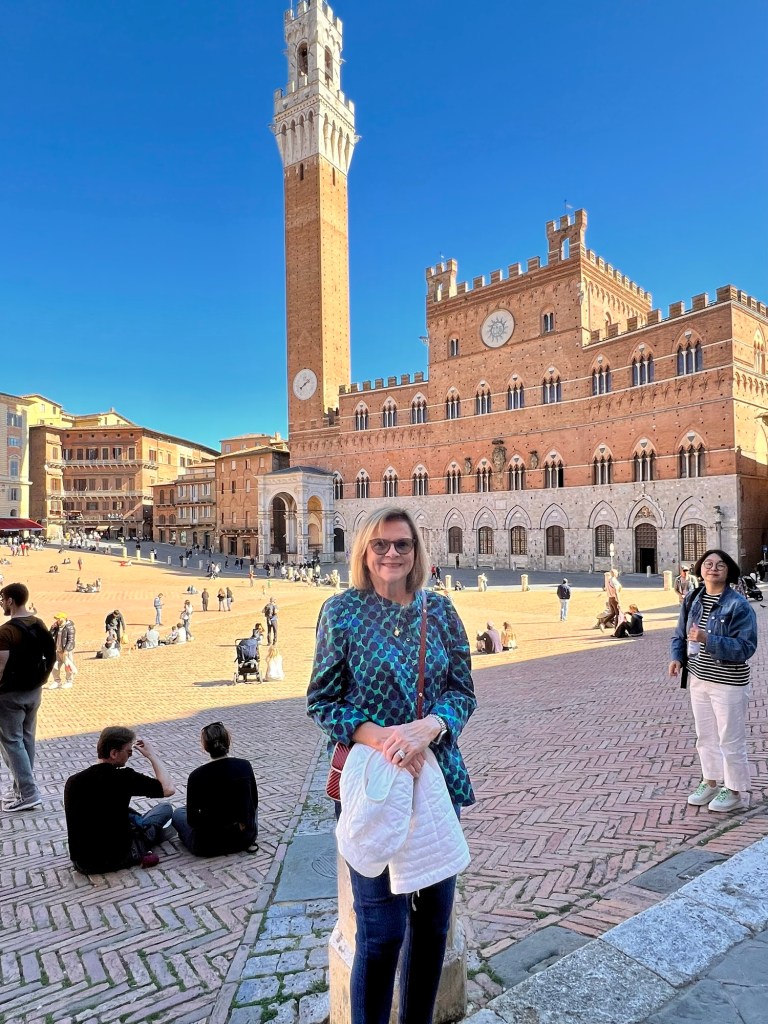
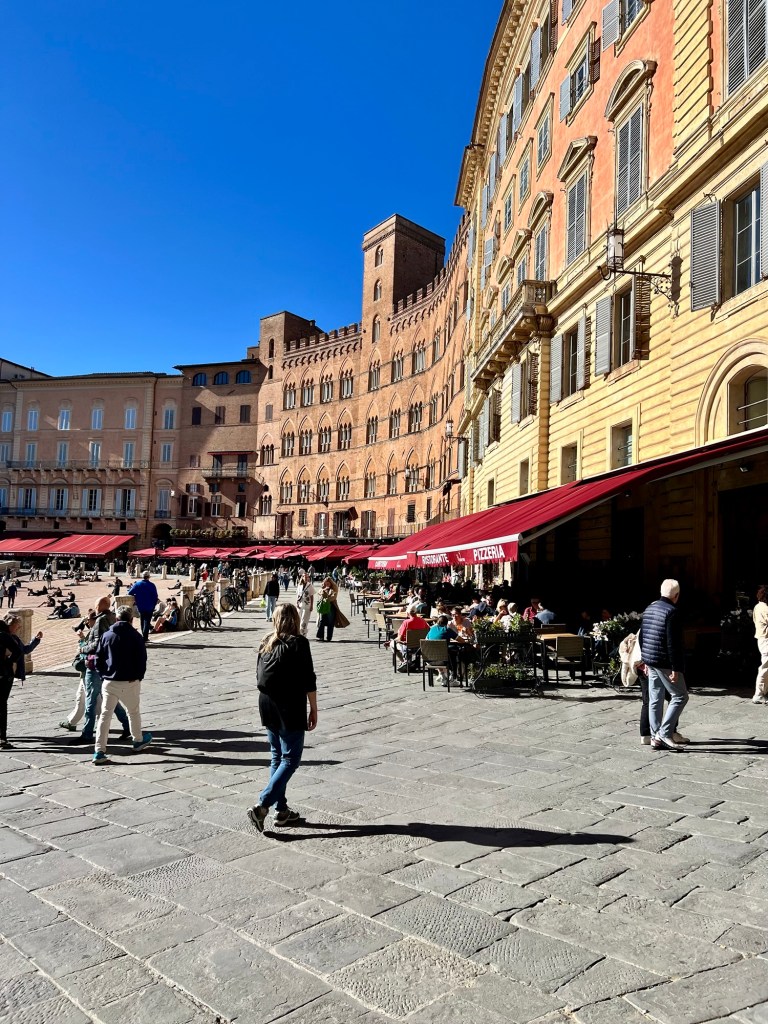
Siena is a walled town and the center is fortified  by ancient brick walls, bastions, and towers built between the 14th and 16th centuries.  The first thing you notice when you walk into the Piazza del Campo is the tower of Torria del Mangia.  The tower was built in 1338–1348, and is located next to the Palazzo Pubblico (Town Hall).  The tower was built to be exactly the same height as Siena Cathedral as a sign that the church and the state had equal power.  The clock on the lower part of the shaft was added in 1360, and it chimes like clockwork, as they say.  It’s amazing to think that for hundreds of years, people have been sitting in that square, hearing that clock chime.  All of the awnings in the last picture are sidewalk restaurants.

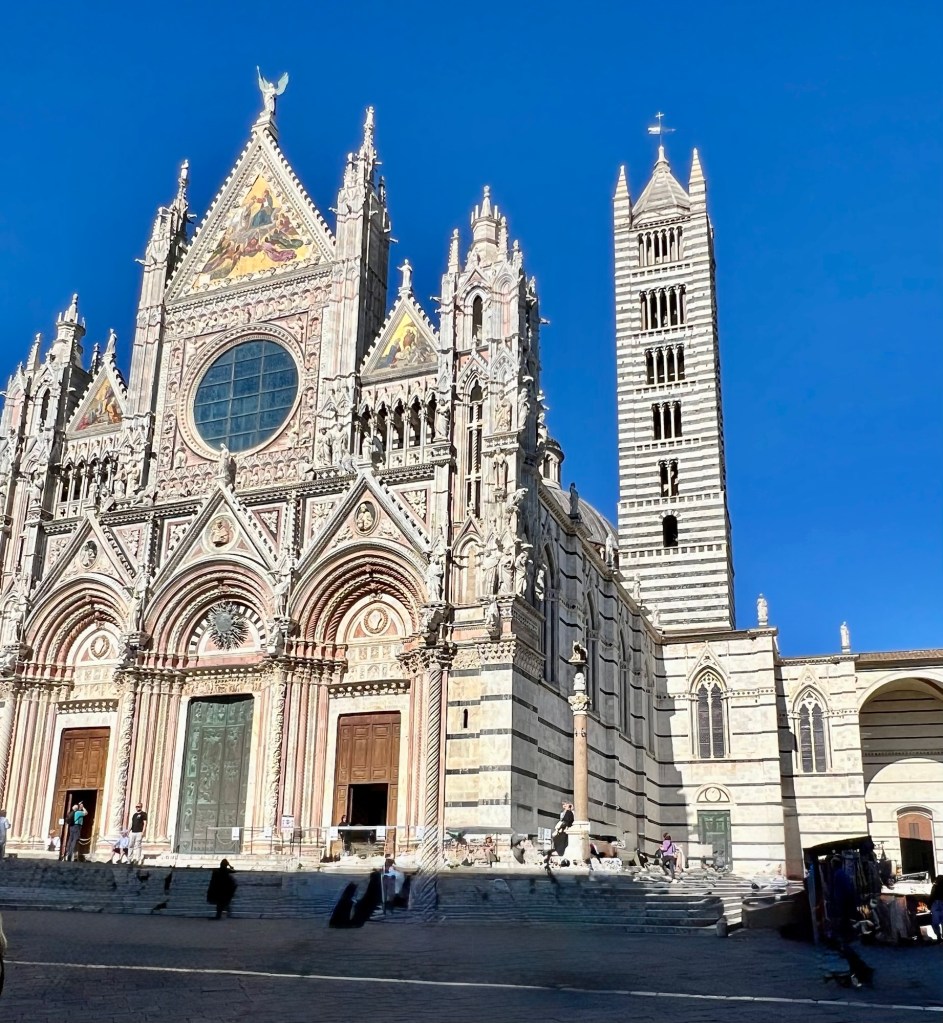
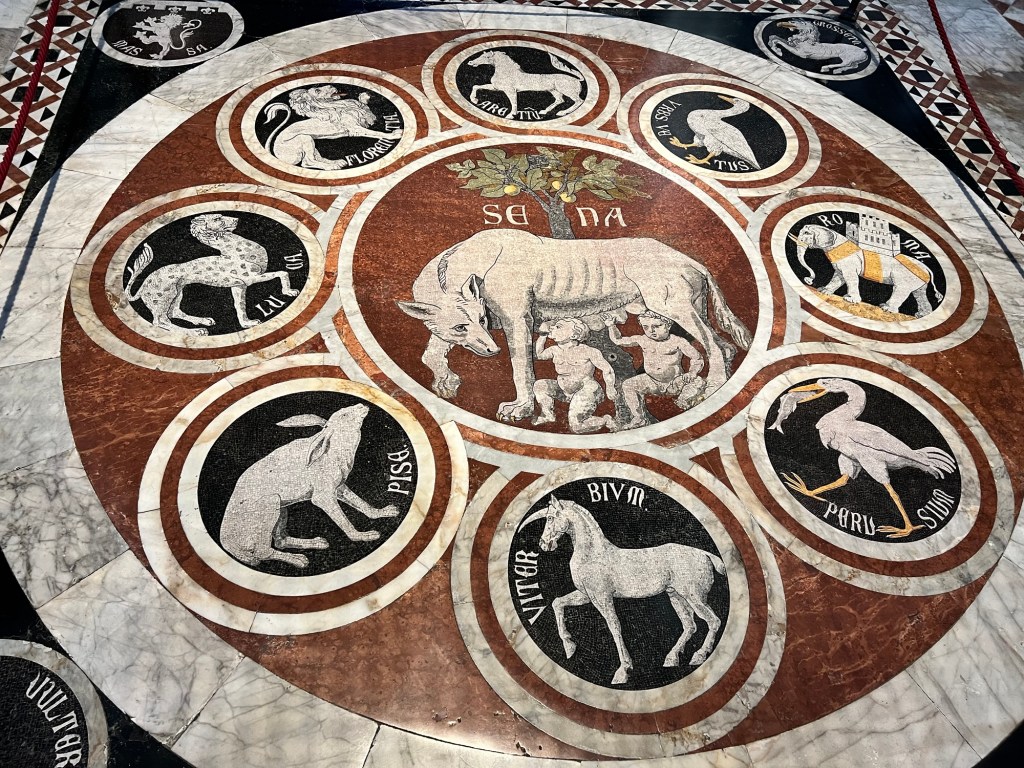
The other famous building in Siena is the Siena Cathedral, which was designed and completed between 1215 and 1263.  It has the form of a Latin cross with two transepts (left and right), a dome and a bell tower.  In case you are wondering what a transept is, it is a part of a cruciform (cross-shaped) building that projects at an angle from the main body and forms the arms of the cross.  

I have had to look up many Italian words lately since my grasp of the language is limited.  Italian has many similarities to Spanish if you studied that in high school or college.  Inexplicably, I took German (I won’t go as far as to say that I studied German).  In restaurants the menus aren’t that difficult to figure out because a lot of the words are the same: pizza, pasta, ragu, lasagna, pomodoro, etc.  But sometimes you just have to guess at things.  Like today when I wanted to buy some sparkling water, my choices were acqua naturale or acqua gassata.  I chose gassata because CO2 gas is used to carbonate water and gassata sounded closer.  It’s not always so easy, though.  Road signs are super confusing.  

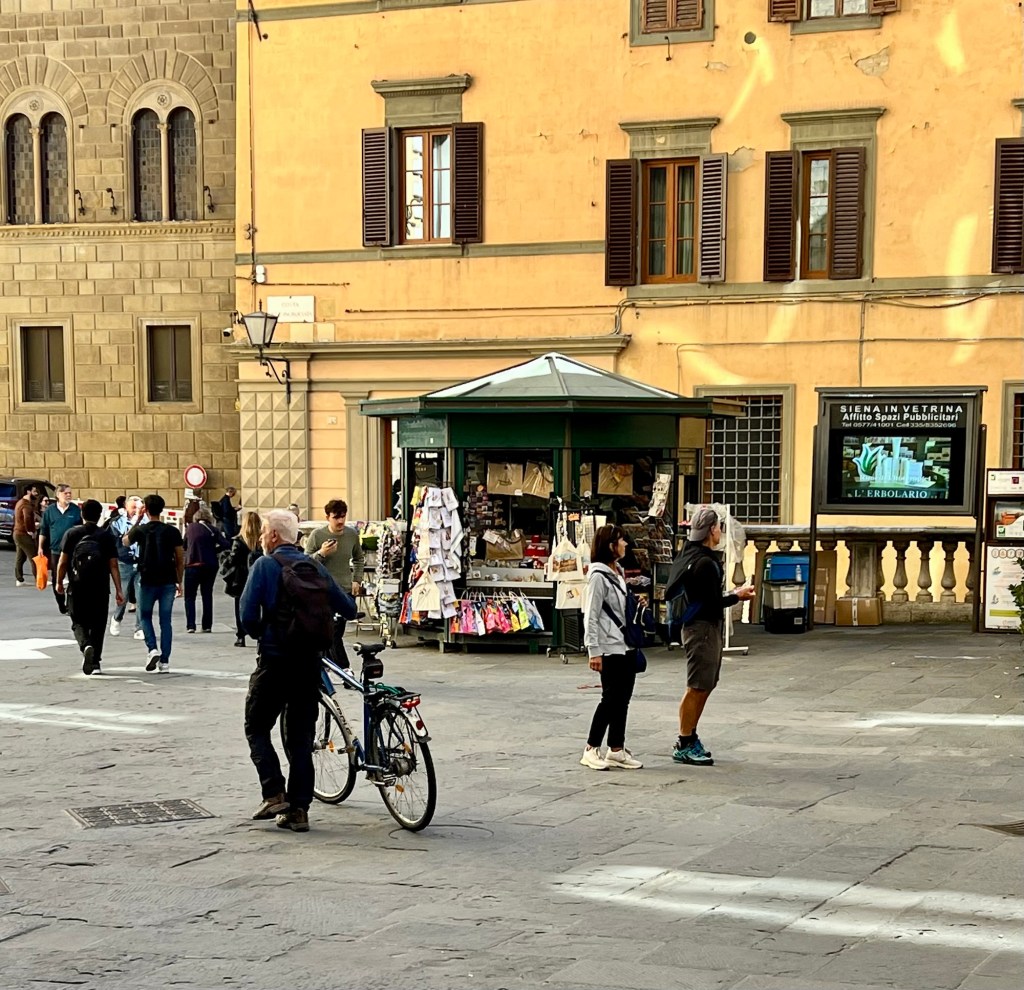
Below is the picture of the newsstand we had to drive by to get to our hotel. No, it does not look like you should be driving a car through there.


We returned our car today (thank goodness) and will either walk or take taxis in Florence.  We will miss our long suffering GPS, a nice British gentleman we called Alfred.  There are many toll roads here, and Alfred freaked out every time we approached a toll booth.  He kept saying,  “Warning.  Approaching toll booth,” over and over in his uber polite, yet hoity-toity manner.  The toll booths were all automated and confusing, so Alfred had reason to be concerned.  We would sit there forever trying to figure out the directions, all of which were stated by an automated voice in super fast Italian.  The credit card readers worked only occasionally, so we had to dig out Euros most of the time.  Once we succeeded the voice would say quite cheerfully, “arrivederci.”  Yeah, whatever.  Back at you.

October 6, 2025–Under the Tuscan Sun in Siena, Italy

Tonight we are in Siena, where we will be for the next three nights. Our hotel is right off the main square, so driving here was quite a feat. They told us not to use GPS because we would end up in a restricted area and would probably receive a large fine. So, rather than us being arrested by the Carabinieri, they sent turn by turn directions that were insanely hard to follow: drive past the soccer field, make a sharp right up a steep ramp, go past a round green garden on the right (?), drive by the newsstand on the left (on a road that was looking more and more like a pedestrian sidewalk), and then drive to the end of the road to the statue of Salustio Bandini in Piazza Salimbeni. The hotel is in walking distance. So, we arrived at said statue and had no idea where to park. We ended parking right by the statue while Doug found the hotel and someone who could park our car legally. Totally nerve-wracking.

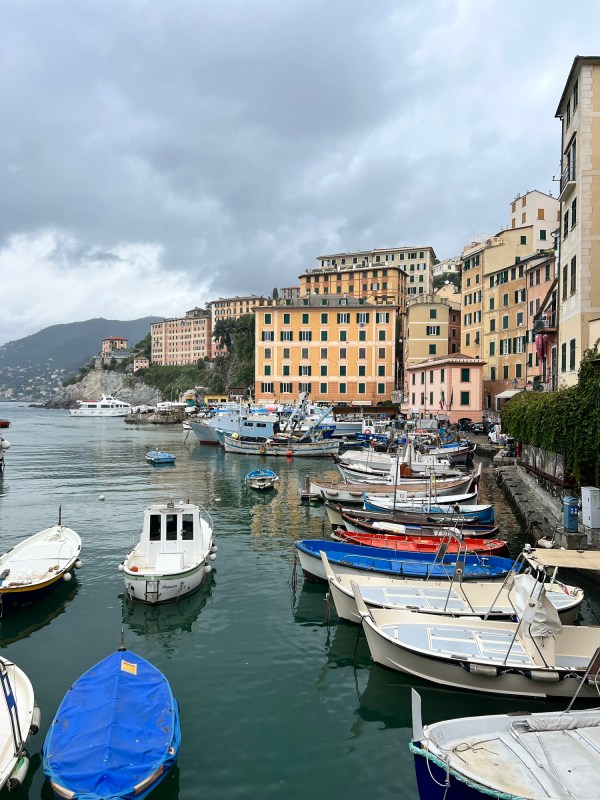
We spent Friday and Saturday nights in Portofino—well actually on the Portofino Peninsula—in a town called Comalgi, which is part of the Italian Riviera.  The Italian Riviera is the narrow coastal strip in Italy which lies between the Ligurian Sea and the mountain chain formed by the Maritime Alps and the Apennines Mountains.  Although the Italian Riviera is known for 300 days of sunshine per year, it was raining on Saturday when we were there.  Go figure.  Basically, everything is built on a mountainside, so colorful houses line the beach and go up the mountainside.  Comalgi was a fishing town, so the different shades of orange, yellow, red, and green helped sailors recognize their houses against the vast expanse of the sea, making landfall more straightforward.  By the way, this is a phenomenon in many coastal villages and seaports, even in America.  For instance, Rainbow Row in Charlestown, South Carolina has the same history of colors used to guide sailors home. The pink building in the center picture is where we stayed, Hotel Cenobio dei Dogi.

One thing I learned about traveling in Italy:  you had better love pasta for breakfast, lunch and dinner.  Well, not for breakfast, but definitely for the other meals.  And seafood, especially in the places on the water where we have been.  Comalgi is historically a fishing town, so seafood is a way of life.  And of course, the bread is fantastic and the pizza is always excellent.  We were at a pizzeria a couple of nights ago and they had a pizza called Americano, which listed as one of its ingredients as “frites.”  I was confused because even us rube Americans know that frites are French fries.  I asked, and yes, they had a pizza with French fries on it which was supposed to appeal to Americans.  That’s just weird in my book.

Last night we stayed in Hotel Villa Casanova, which was a farmhouse or villa on 360 acres before being converted to a fourteen room hotel in 2009. It is about six miles from Lucca, and totally out in the country, so the GPS had us making numerous turns through small towns and taking the second and third exits off dozens of roundabouts. It seemed like we were going to end up somewhere scary.  But we finally arrived and it was just the sweetest place ever, with a restaurant, pool, and a lovely guest room.

By the way, we are in Tuscany and it is sunny, thus my title.


October 3, 2025–Portofino, Italy 

Tonight we are in Portofino, Italy.  We drove here this morning from Lake Como, where we stayed in a lovely town called Bellagio, which is located on the lake where the two southern arms branch.  The drive around the lake is an 89 mile road called the Gardesana Scenic Route, opened in 1931.  After driving the section from Como to Bellagio on Wednesday, I wouldn’t want to tackle the rest of it.  The roads are notoriously narrow, winding, and busy, so just the 20 mile drive to Bellagio took us over an hour.  I read that if you want to drive the entire road, you should do it in two days.  No thanks.  Italian drivers are insane.  (Apologies to my readers who are of Italian ancestry. Your food is great!)

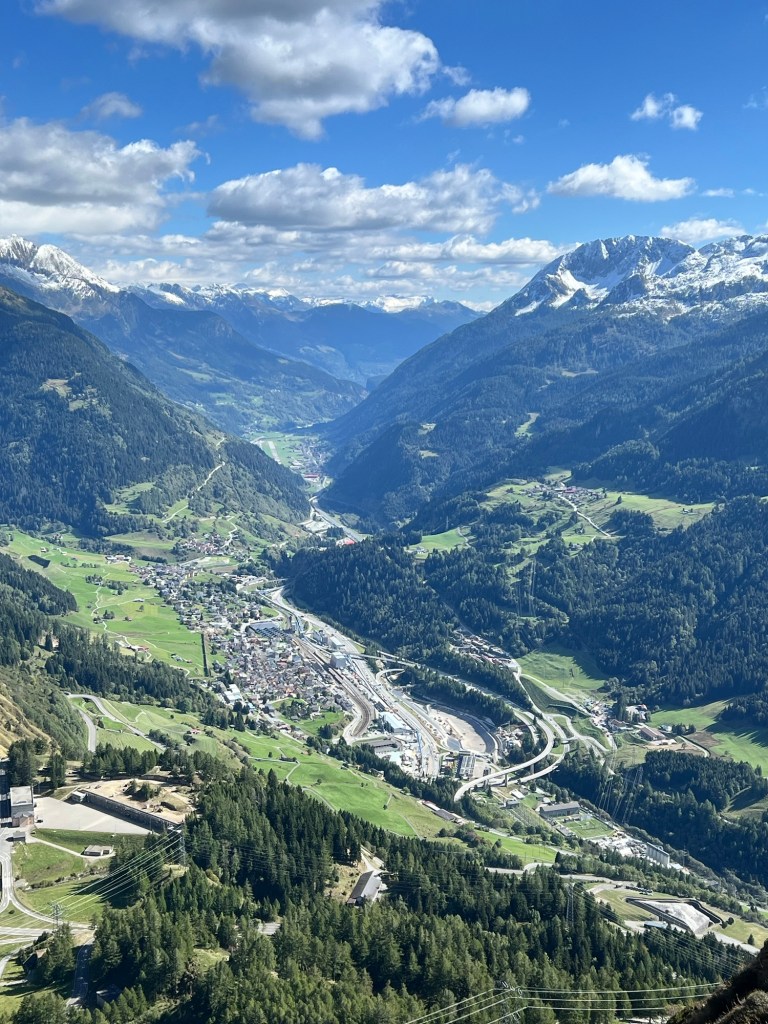
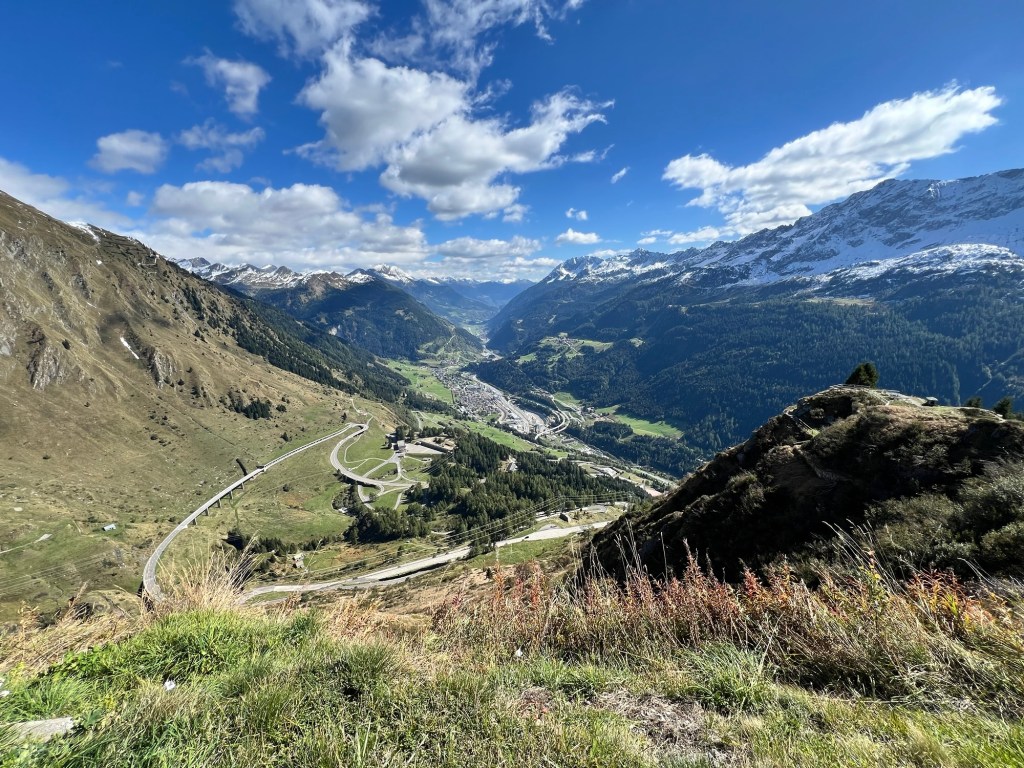
On our way from Lucerne to Bellagio, we drove over the Gotthard Pass, which goes over the Saint-Gotthard Massif, a mountain range in the Swiss Alps.   The Gotthard Pass connected Northern and Southern Europe and for centuries was a major trade route.  A ten mile cobblestone road, called ‘The Tremola,” was built from the village of Airolo up to the pass between 1827 and 1832 to serve as a commercial route for horse-drawn wagons, and to generally facilitate trade.  Of course there is a modern road now, but the Tremola road is still open to hikers and cyclists.  It has an elevation gain of around 3,900 feet so it has to be tough going on those cobblestones. We didn’t hike it, so no pictures of the road. But we did get some from the main road.

I thought it really strange that there were five of those ugly power windmills up on the pass.  At first I thought I was seeing things, but there they were, along with numerous ugly substations with electric wires running down the side of the mountain.  So, just think about it.  A beautiful mountain pass in the Alps with a historic cobblestone road to the top, and the pristine beauty is marred by the addition of windmills and electric lines.  It boggles the mind.  

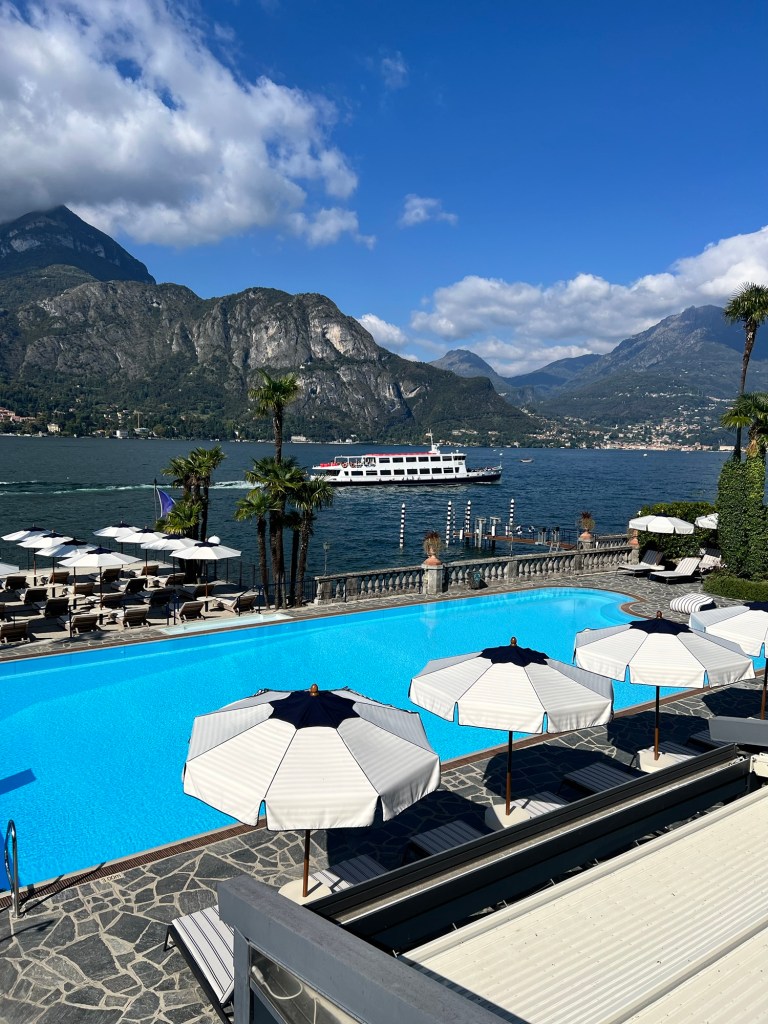
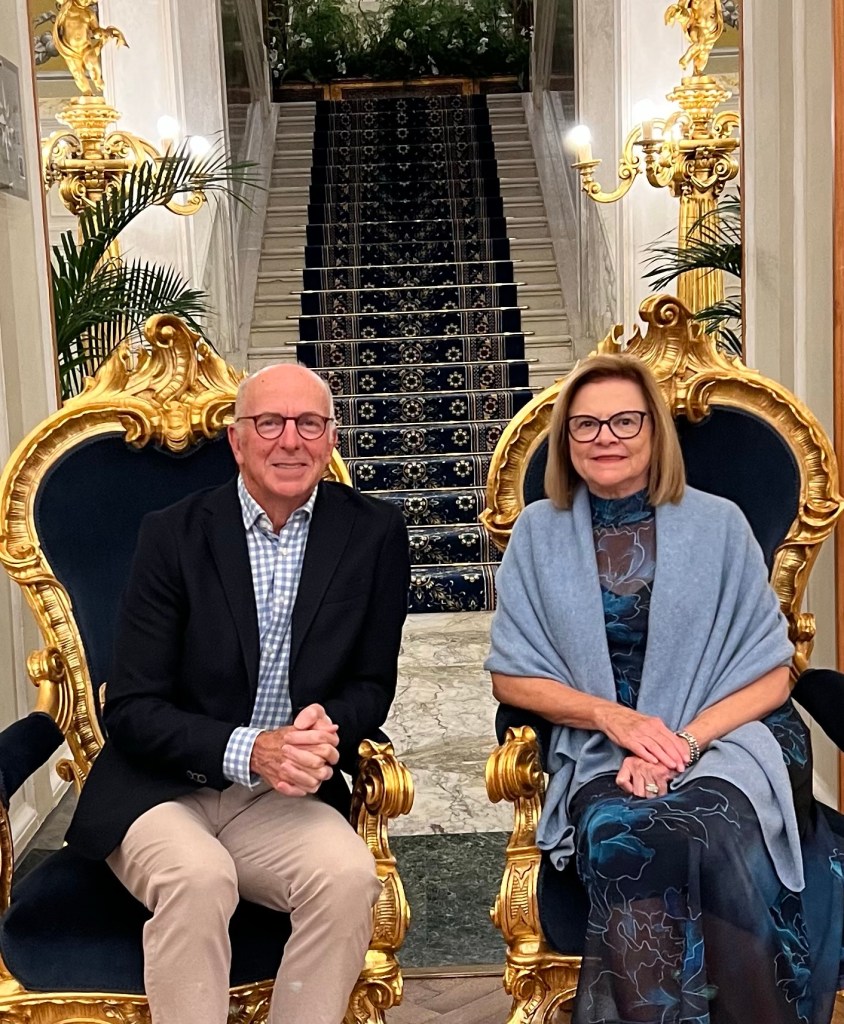
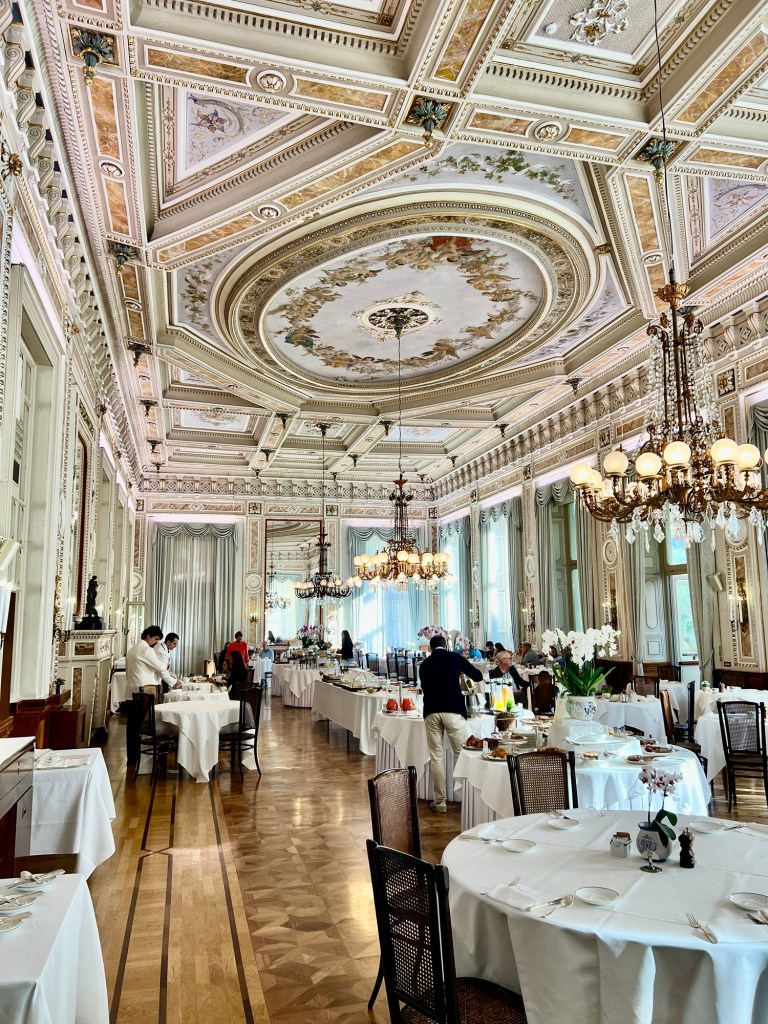
In Lake Como we stayed at the Grand Hotel Villa Serbelloni, a hotel originally built in 1851 as a villa for the Count and Countess Frizzoni, a noble Italian family.  It’s a beautiful property in an absolutely stunning setting with long range views of Lake Como.  The hotel is right in the center of the old town of Bellagio.  The picture of Doug and me was taken by one of the hotel employees who insisted we sit in the ornate blue chairs. He pushed them together, but not close enough to look like we actually like each other. We look like we think we are some kind of royalty. Haha.

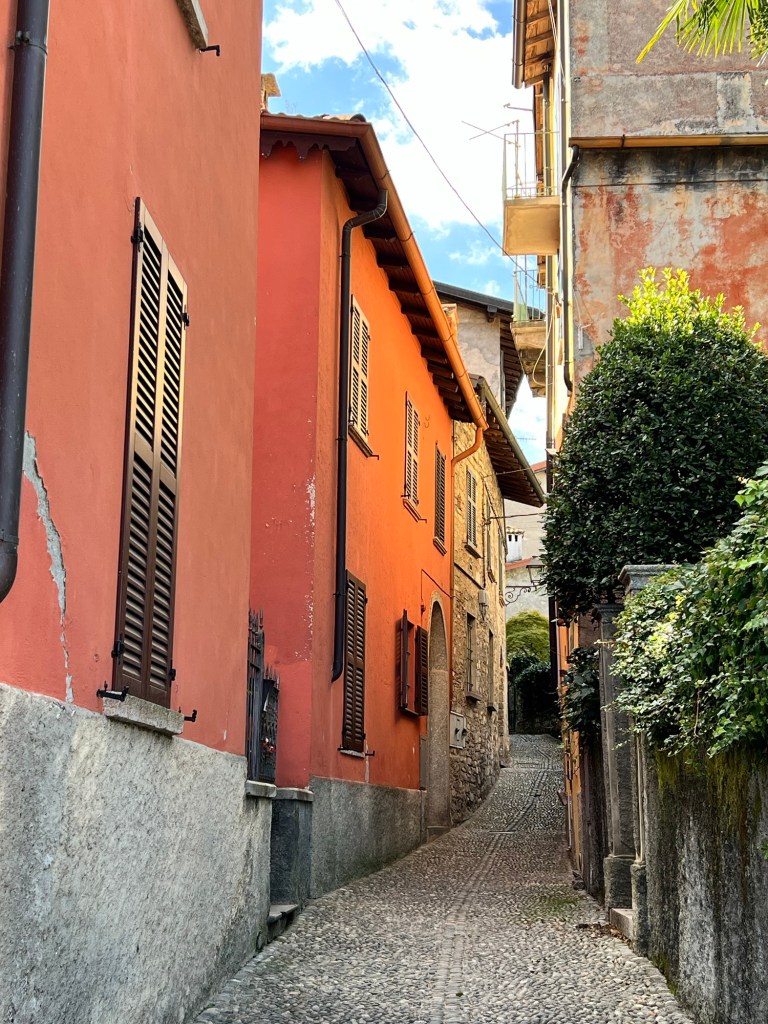
Bellagio has two parts—an upper part of town, along Via Garibaldi, and a lower part along the lake shore. The two are connected by a series of “streets” which are not streets at all but staircases.  Salita Serbelloni is the most famous of these staircases.  This wide series of steps, lined with shops, galleries and restaurants, leads from Via Garibaldi in the upper portion of Bellagio down to the waterfront.  

All of the towns around the lake are connected by a system of passenger ferries, along with at least one ferry that carries cars. That means you can jump on a ferry and go to the other towns without having to navigate the narrow, winding road in a car.

We are headed next to Lucca, a town we have actually been to before. After that we head to Siena and then Florence.

September 30th, 2025–Germany, France and Switzerland

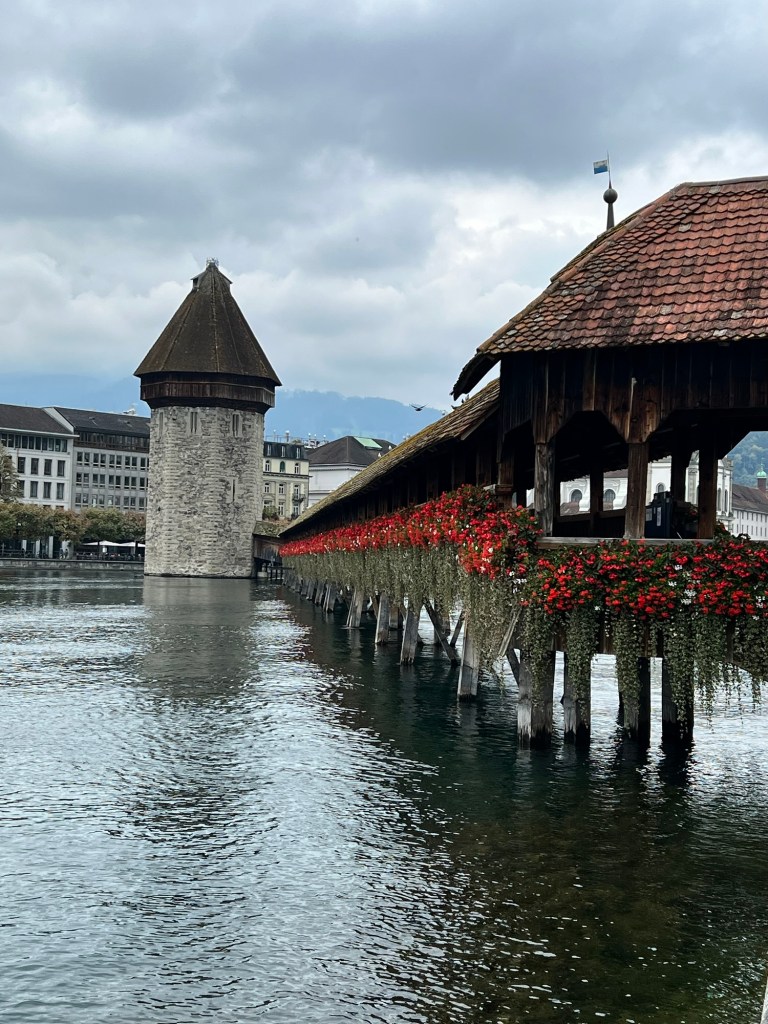
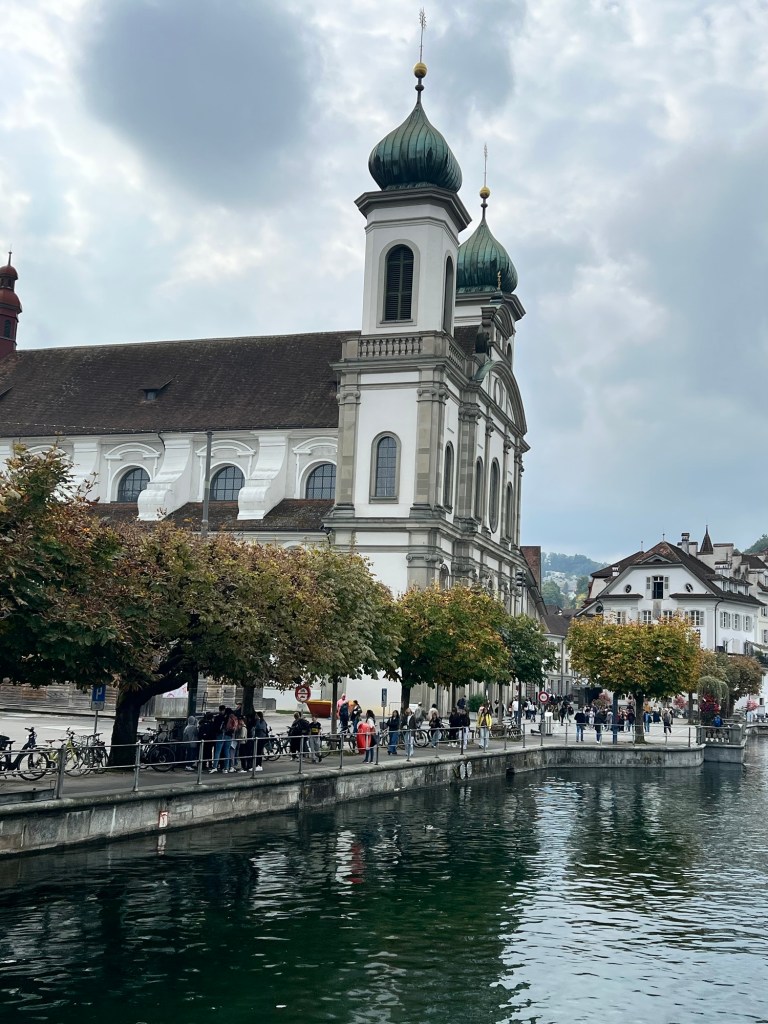
This morning we got off the riverboat on the Rhine at Basel, Switzerland, rented a car, and drove to Lucerne, Switzerland, where we are spending the night.  Because of its location on the shores of Lake Lucerne and within sight of the Swiss Alps, I think Lucerne is one of the most beautiful cities in Switzerland. The major landmark in the city is the Chapel Bridge, a wooden bridge first erected in the 14th century.  We came here about ten years ago, and liked it so much we wanted to come back.  This part of Switzerland is German speaking, so more German food.  As I have already mentioned, German food is not my favorite.  Too heavy.  Blech!

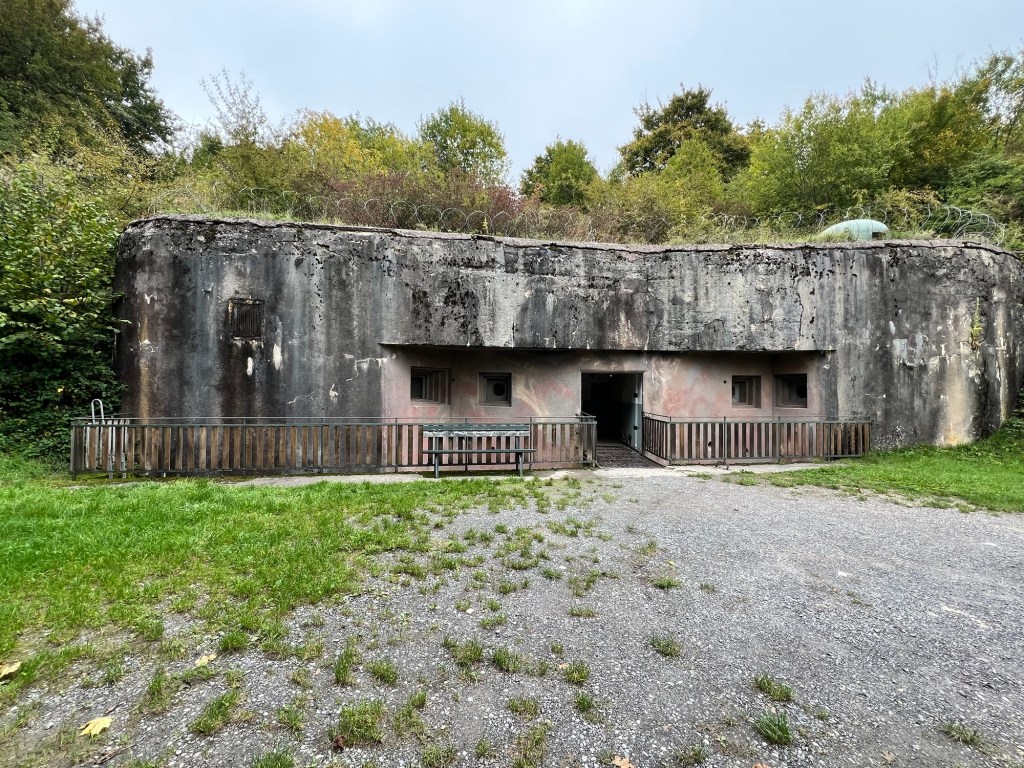
As you may or may not know, the Rhine River forms a border between France and Germany for about 112 miles, so we have been to both France and Germany in the last few days.  On Sunday, it was France, where we visited a museum that was part of the Maginot Line.  The Maginot Line was a massive defense system of forts, bunkers, and obstacles built by the French after World War I along its border with Germany and other countries.  The line was intended to prevent a surprise invasion by Nazi Germany after the devastation of WWI, but as we know, this strategy was unsuccessful.  During WWII the Germans surprised the French by attacking through the Ardennes Forest which the French had believed was impassable.  I know I have some history teachers and WWII buffs as readers, so I will leave it at this simple explanation.  

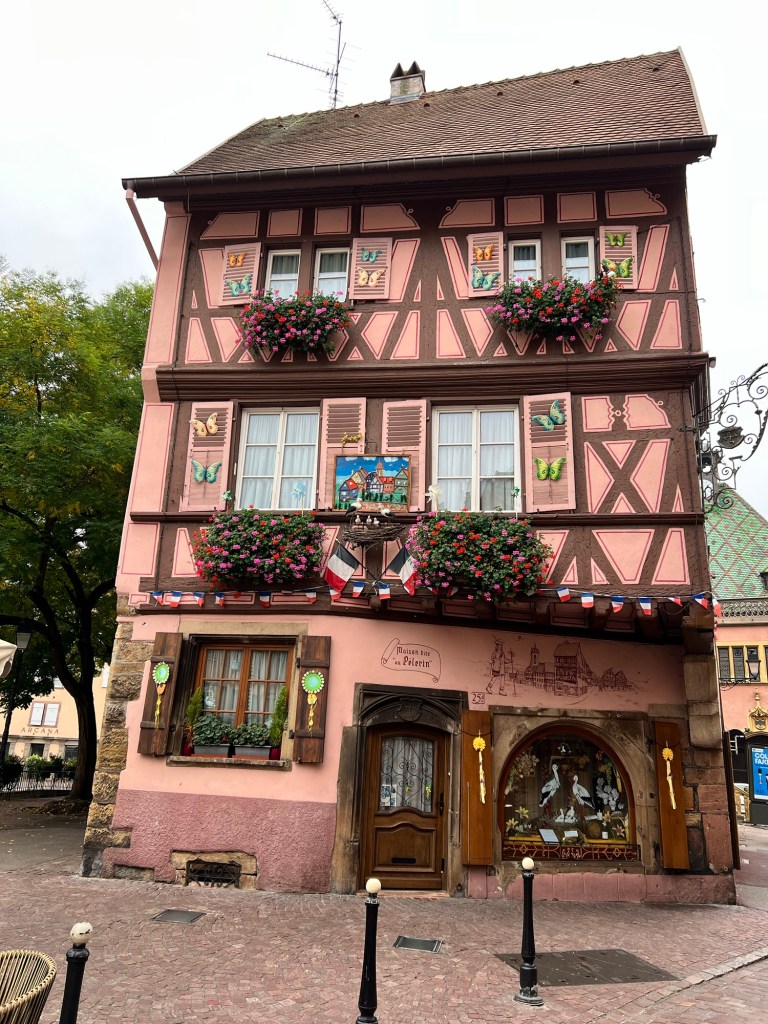
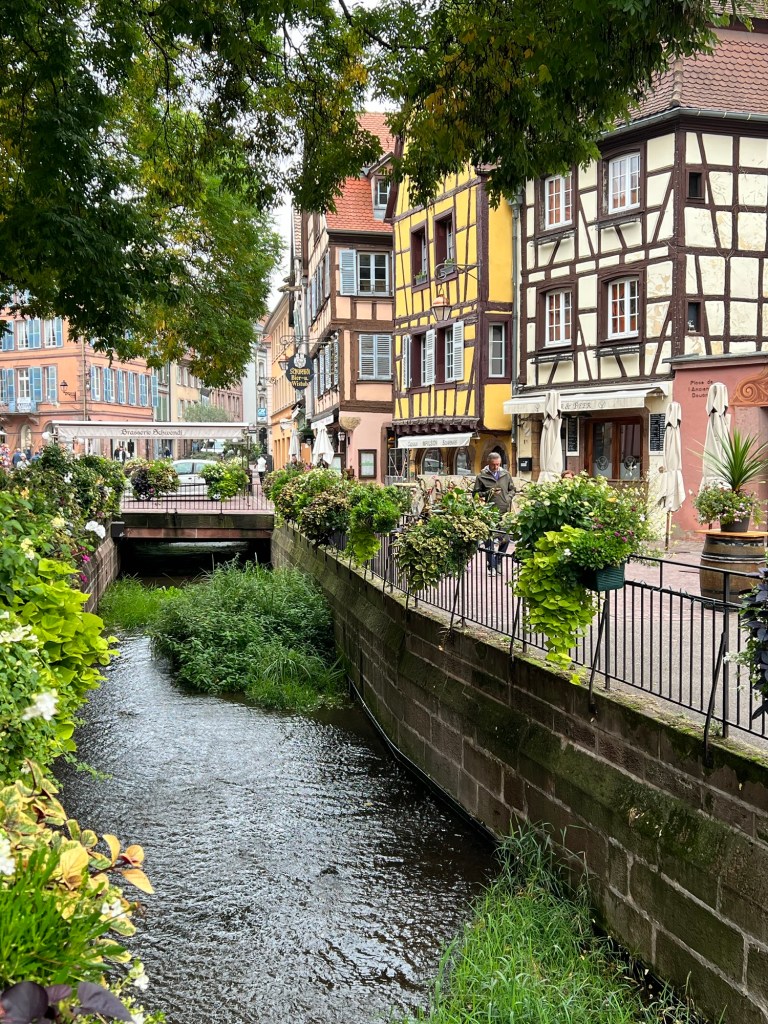
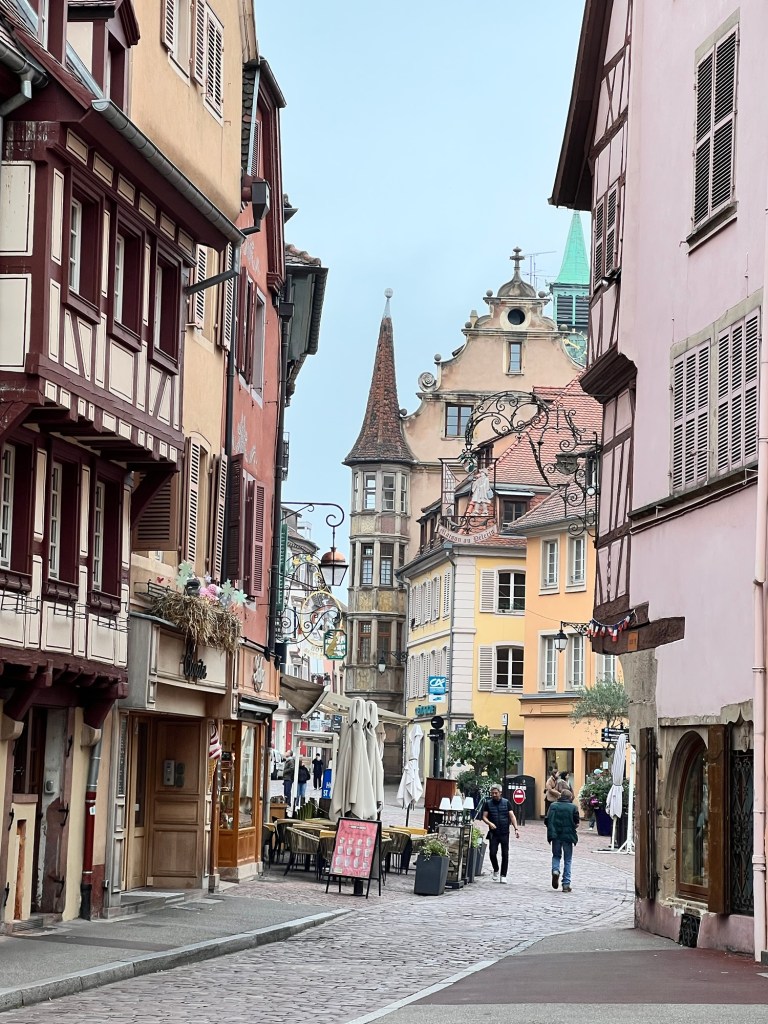
Yesterday, it was back to both France and Germany to visit a couple of villages, Colmar, France and Freiburg, Germany.  Colmar was not significantly bombed in WWII, so it was left pretty much intact.  Freiburg, on the other hand, was 80% destroyed, with only the cathedral and a few other buildings remaining.  While the majority of the city center was destroyed, a conscious effort was made to rebuild it on its original medieval plan, so the city has its historic charm.  An interesting fact is that the local community made a concerted effort to take out all of the medieval stained glass windows in the cathedral and store them in a safe place before the bombing raids of November 1944.  They are back in the cathedral now, which is really great.

The following pictures are of Colmar.

We have been on two river cruises in Germany—on the Danube and the Rhine—and I have noticed one thing about German  tour guides when they are speaking about WWII: They seem quite chastened and apologetic about being natives of the country which was largely responsible for the two World Wars.  I know it’s a lot more complicated than that, but I am simply relaying the general guilt and sorrow that these people show when they are talking about Germany’s culpability.  It makes me sad because I wouldn’t think of associating them with the wars after all of these years, but I do remember my grandparents and my aunts and uncles did have negative feelings about the Germans.  Of course, I had five uncles who were in WWII, so the war was a much more immediate entity to all of them.  

Well, I still can’t decide if I really want to do any more river cruises.  It’s just so, uh, intimate.  A lot of togetherness, let us say.  I am such an avid eavesdropper which I admit can be a totally unpleasant habit. Like yesterday morning at breakfast. There were five people at the table next to me. Only two of the five were a couple, but I won’t go into how I surmised that fact. One of the guys mentioned that the toilet paper on the ship had more the texture of paper towels rather than actual toilet paper. Everyone discussed this at length. Riveting conversation, right?

But then there was sweet Lori and her mother, Ann, from the Branson, Missouri area. Salt of the earth. Lori is an 8th grade science teacher and her husband is a policeman. They have three children, and the youngest one is a senior in high school. They were so appreciative of everything on the trip. They even loved the German food.

Tomorrow we are heading to Lake Como in Italy. So far no invitation from George and Amal Clooney to stay in their villa, but I am still holding on to hope.

September 27, 2025–Germany:  Cologne, Rudesheim, and Heidelberg

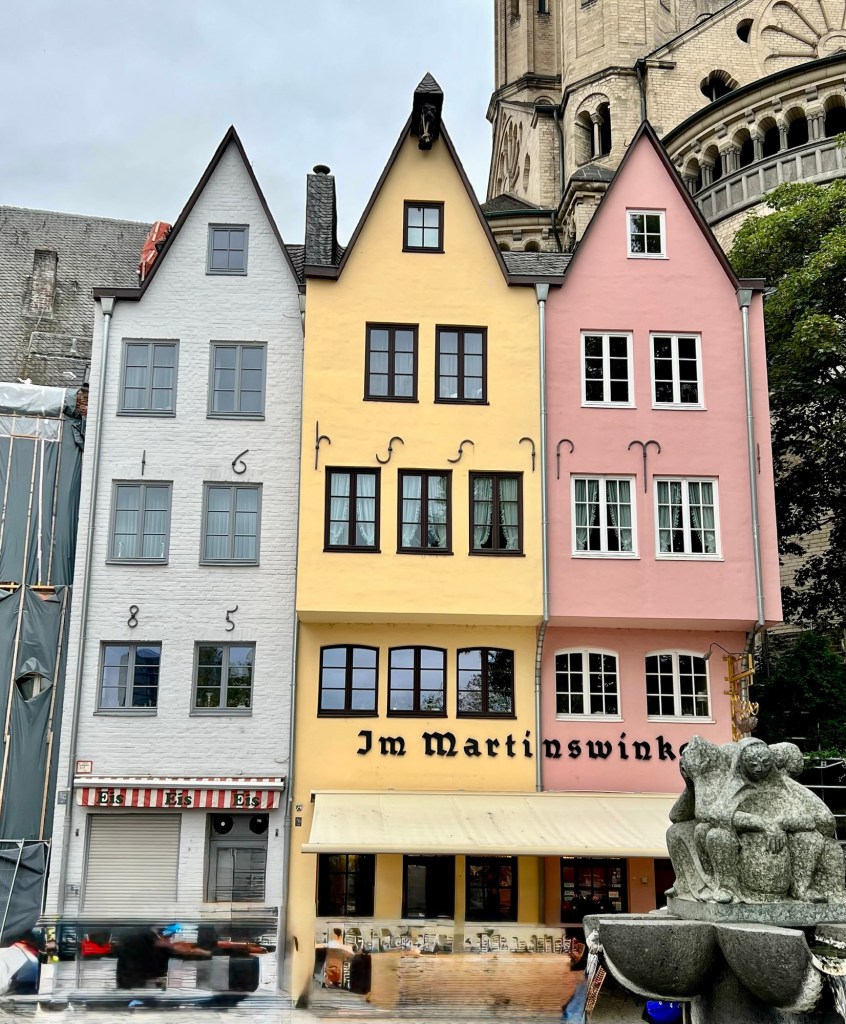
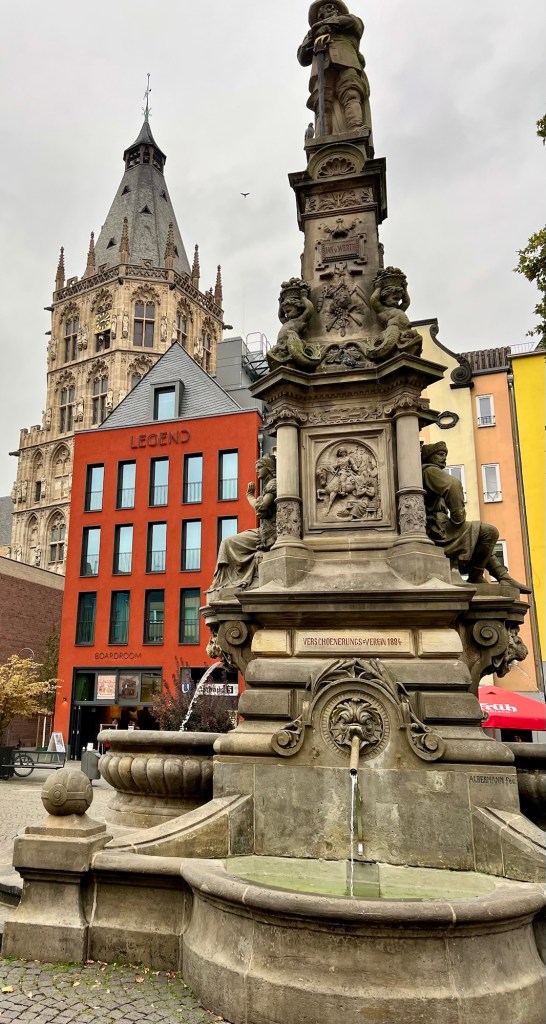
Well, we are still on a riverboat on the Rhine.  On Tuesday evening we traveled from Amsterdam to Cologne, Germany, where we spent the day on Wednesday.  Cologne is a major cultural and economic center in western Germany.  The city was founded by the Romans in 50 AD, and was called “Colonia Claudia Ara Agrippinensium,” a long, super-confusing name which was shortened to “Colonia” (colony).  The famous perfume, “eau de Cologne,” or “water from Cologne,” was invented in the city in 1709 by Giovanni Maria Farina (A man with both a boy’s name and a girl’s name). The city is now known by the French and English translations Cologne, rather than the German “Koln,” and they still sell the original Eau de Cologne 4711 in the city.  Most of these German cities were bombed by the French in WWII. If at least 70% of the building was still standing, it’s considered original. The first and last picture, the Cologne Cathedral, is original.

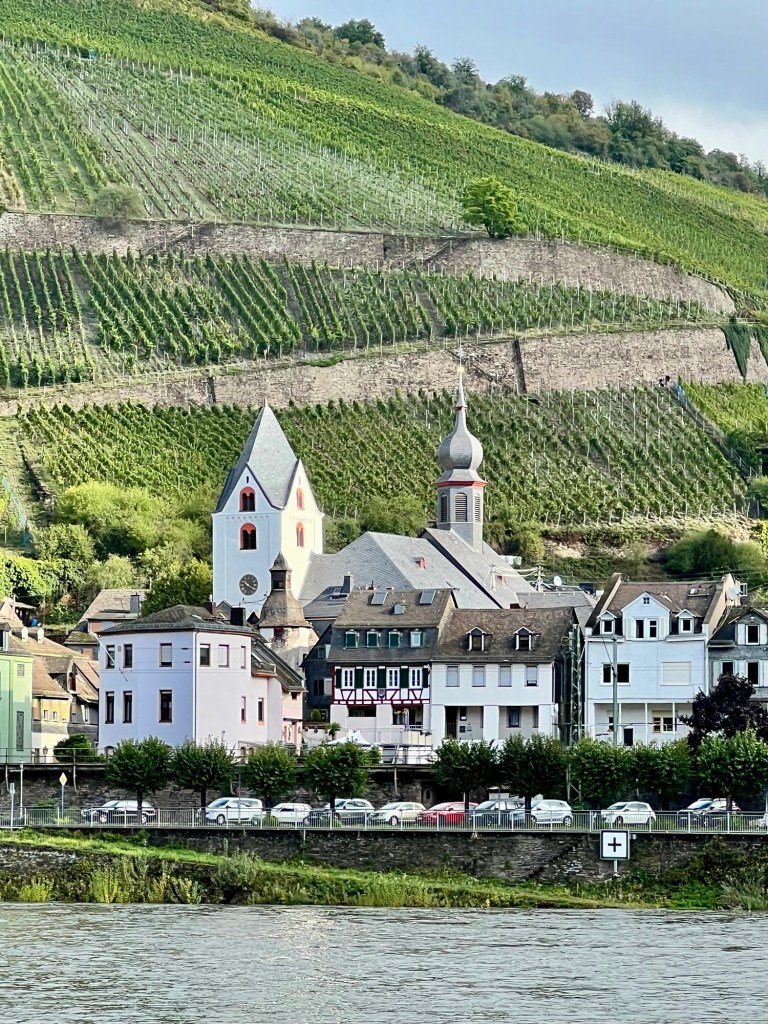
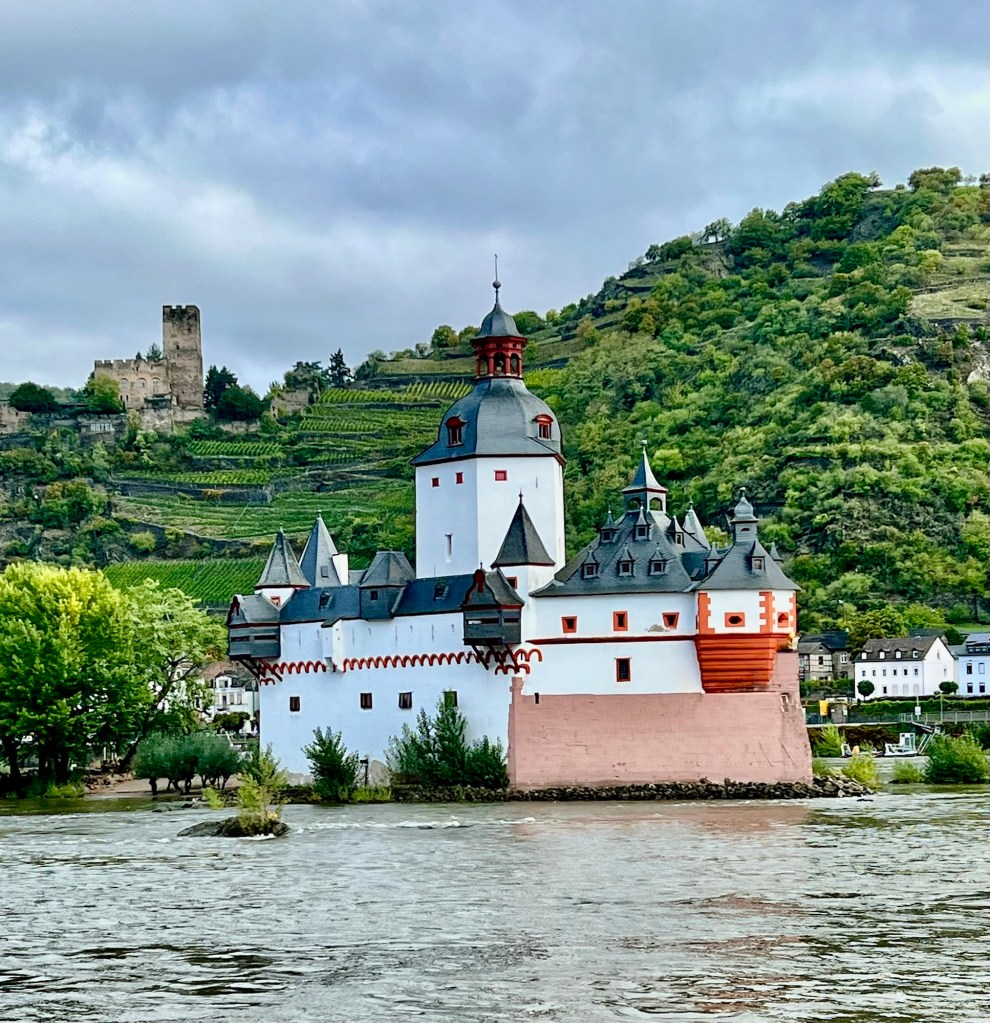
Yesterday we stopped in Rudesheim, a picturesque German winemaking town on the Rhine Gorge.  The Gorge is an approximately 40 mile stretch of river with steep, 650 foot walls or cliffs on each side created by a combination of river erosion and regional uplift that occurred as the river cut through the mountains.  By the way, the wines from this area are usually either Riesling or Pinot Noir.    

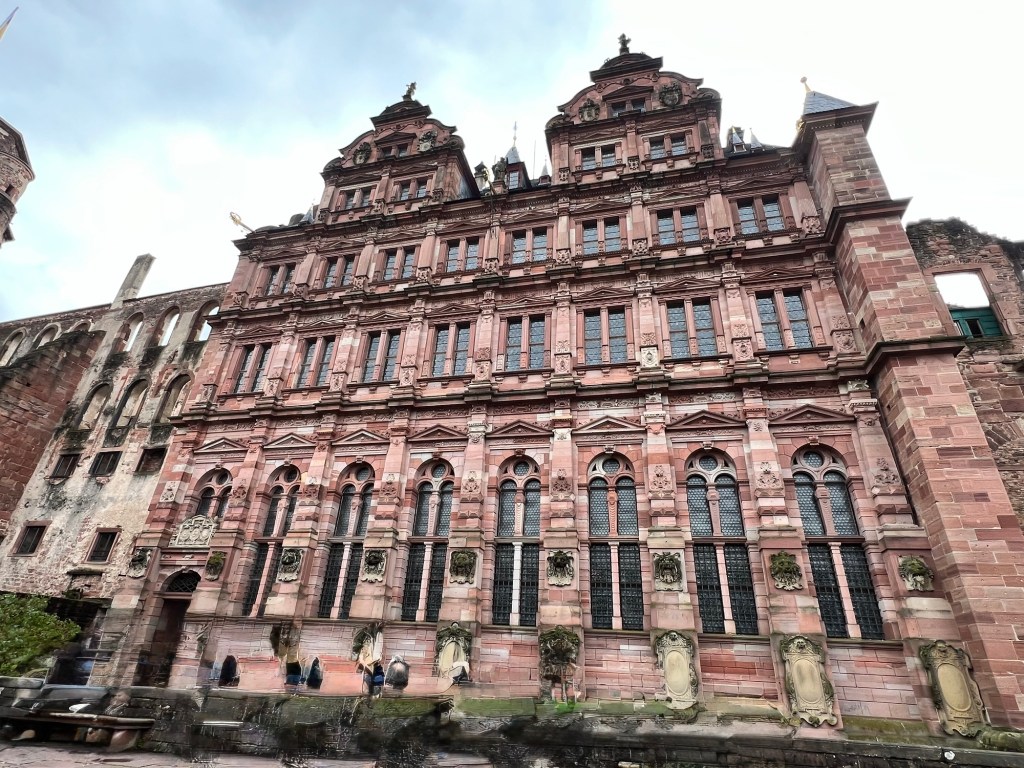
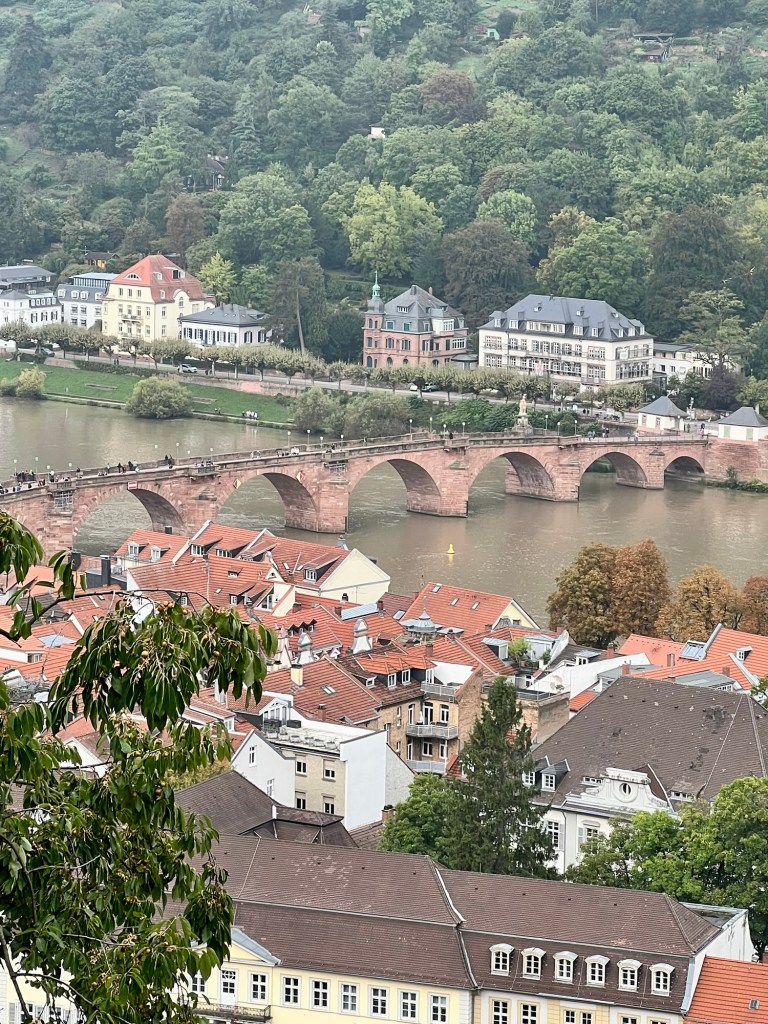
Today, we visited Heidelberg and saw, you guessed it, yet  another castle, Heidelberg Castle, built circa 1225.  Castles have such a long and storied history that I won’t bore you silly with the details.  Usually it’s something like this in Germany:  built, burned by a stray lightening bolt, rebuilt, conquered in the 30 Years War, rebuilt, destruction by French troops, rebuilt, renewed destruction in the Palatinate succession war, rebuilt, hit by another lightening bolt, rebuilt.  You get the idea.  It’s always a long story.  

Strangely, I haven’t found my “Heather” on this trip.  A lot of people are traveling in large groups and not mixing with other people.  I guess that’s a good thing.  We have met some people from several different states, mostly nice to chat with, but we aren’t looking for friends, really.  We have found that only occasionally do boat friends stick because being on the same boat is the only thing you have in common.  I do notice that some people make hard and fast friends and spend every waking moment together.  

The main chef on this boat is making a point to offer German food at every meal, which is not top on my list.  So far the offerings have been various schnitzels, pretzels, bratwursts, sauerbratens, Käsespätzles, and a variety of dumplings. Uh, okay.

Tomorrow we will still be somewhere else in Germany and then we will head to Switzerland.

September 24, 2025–Amsterdam, Netherlands

On Sunday we flew non-stop from Atlanta to Amsterdam to begin our three week “European Extravaganza.”  Yes, I am flat out of inventive names for this trip. My apologies. We spent the first night in a hotel and then yesterday afternoon we boarded the Envision, a river boat that will take us down the Rhine for the next seven days.  As you all probably know by now, I have conflicted feelings about river cruises.  On the plus side they stop right at a city center and you can easily hop off the boat and enjoy walking around and seeing the sights and sounds.  Also, you don’t spend days at sea with nothing to look at but the bounding main.  On the negative side you are up close and personal with the other 148 people on board.  Everyone is always there—breakfast, lunch, dinner, the tours, etc. Some people are very loud. It’s a lot.  So, we will see how it goes.

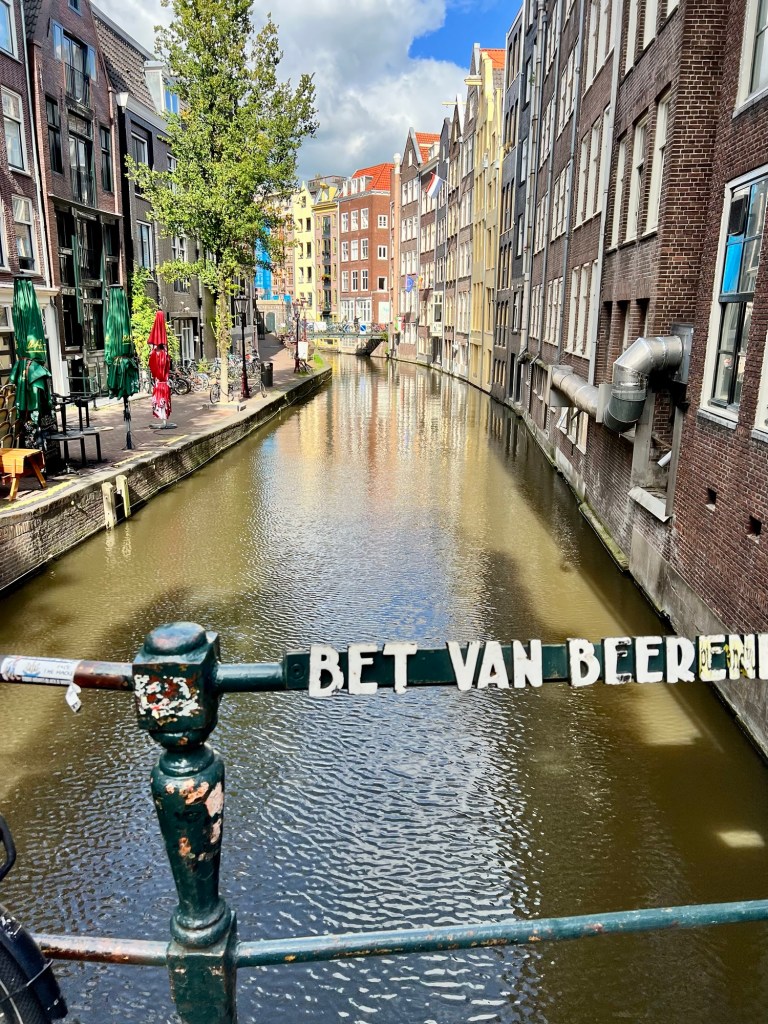
Amsterdam is a fascinating city.  It’s the capital of the Netherlands and has more than 62 miles of canals, about 90 islands and 1,500 bridges.  The three main canals—Herengracht, Prinsengracht and Keizersgracht—were dug in the 17th century during the Dutch Golden Age and form concentric belts around the city.  The purpose of the canals is to manage the city’s marshy land, control water levels and provide transportation.  At one time they also served as a defense, acting as a moat around the city.  About 25% of the Netherlands is below sea level and protected by an extensive system of dikes, dams, and windmills.  Below is an aerial view of the city.

We walked around Amsterdam all afternoon after we arrived, and it was amazing. So much great architecture.

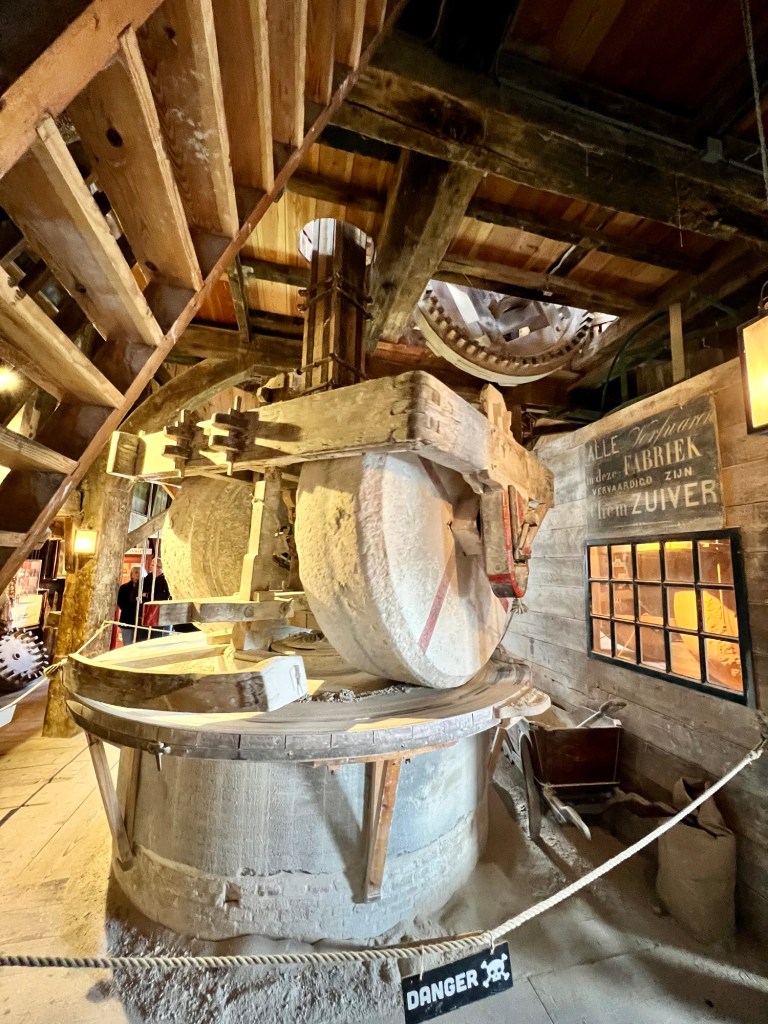
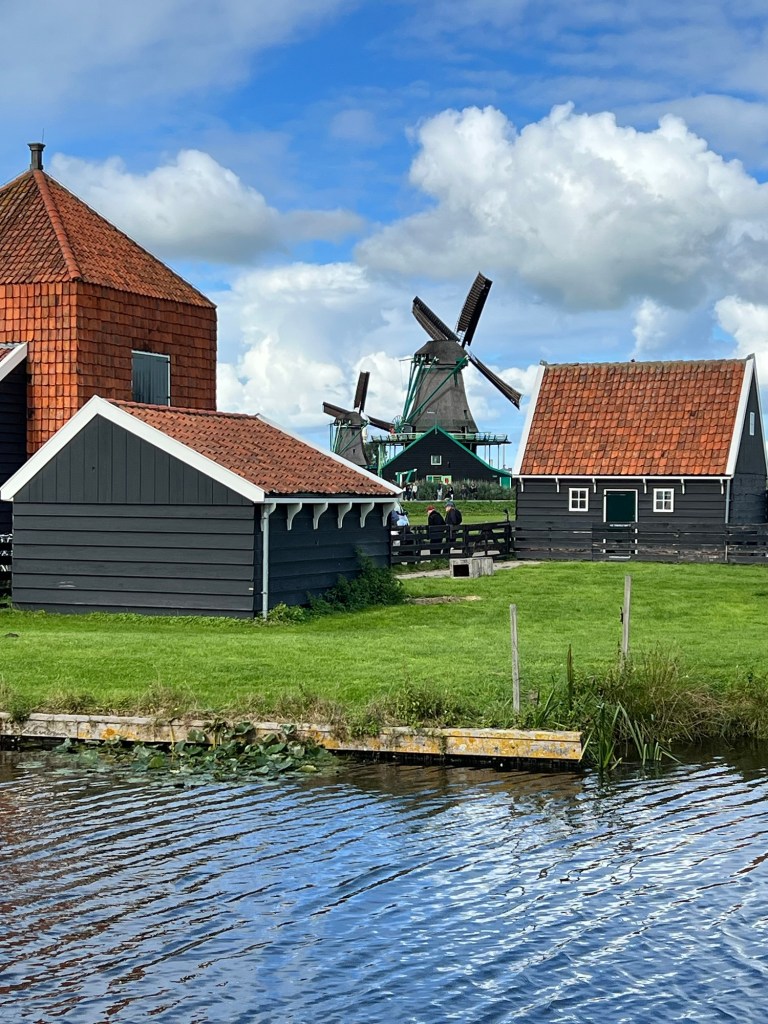
Yesterday we took a tour to Zaanse Schans, which is an open air museum that features traditional Dutch buildings, historic windmills, and artisan workshops for cheese, wood clogs and so forth.  It’s sounds a bit kitschy but it was really pretty cool.  For instance, I did not know that windmills in the Netherlands were historically used to pump water for land drainage and reclamation, as well as for a variety of industrial processes like grinding grain, sawing wood, making paint and pigments, and producing paper and oil.  The windmill we visited was De Kat, the world’s last working paint mill, which grinds raw materials like minerals and chalk into pigments for traditional, artisanal paints. Large chisels pound raw materials and then crush them into a fine powder with huge grinding stones, and it’s all done with wind.

I am not easily shocked, but I when we were walking around Amsterdam the first day, the Red Light District, or De Wallen, was truly shocking.  I was aware there was such a thing, but I guess I didn’t know exactly how it worked.  It consists of a network of alleys containing approximately 300 one-room cabins or booths rented by prostitutes who offer their sexual services from behind a window or glass door.  Typically the rooms are illuminated with red lights.  When the booth is closed, there’s a red velvet curtain pulled over the glass.  If it’s open for business, the prostitute poses and cavorts in front of the glass.  I don’t need to go into more detail, but both prostitution and nudity are legal in Netherlands, so it was appalling in that “hard to look away” manner.  As my Dad used to say, “Mercy!” Sorry, no photos.

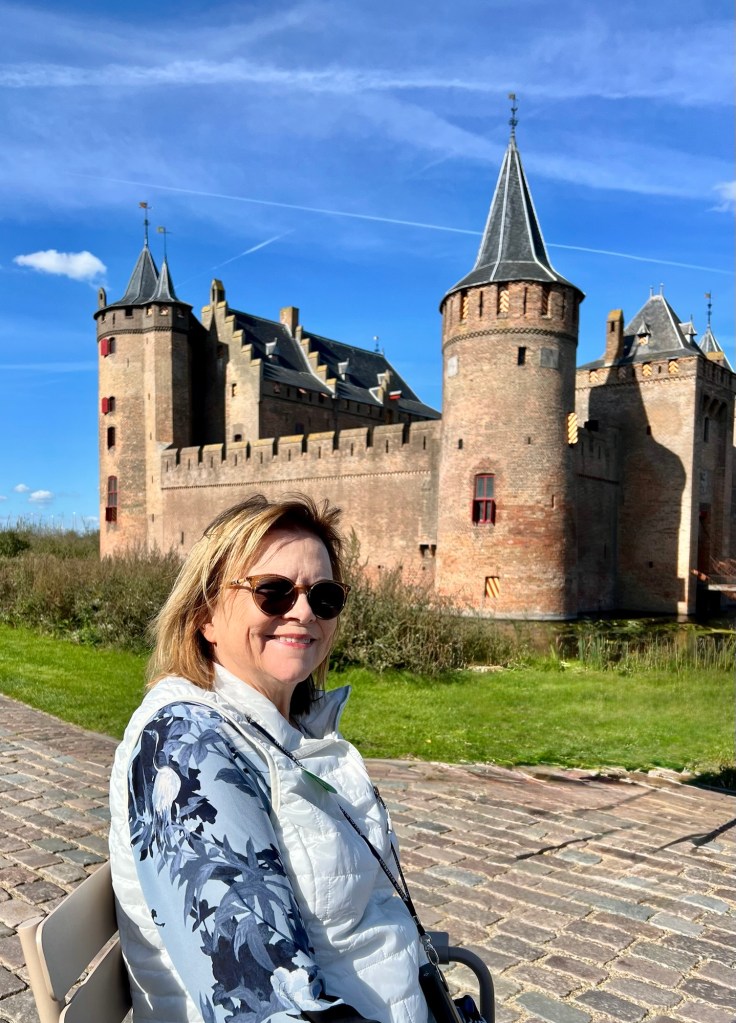
Today we visited a medieval castle, Muiderslot, which was built in the 13th century. It was the real deal with a moat, murder holes, and turrets. In case you are wondering what a murder hole is, it’s a hole or narrow opening hole in the wall of a gateway or passageway in the castle through which the defenders could shoot, throw or pour harmful substances or objects such as rocks, arrows, scalding water, hot sand, quicklime or boiling oil on the dummies who tried to swim the moat and get into the castle. Quite a deterrent, I would say. Also, they threw their sewage and waste in the moat, so you would have to be one desperate marauder to want to take on the siege of a castle.

Quick fact: Holland is not a country, it’s a province in the Netherlands. Actually, two provinces—North Holland and South Holland. Heading to Cologne, Germany this evening.

August 23, 2025–Dover, Delaware to New Bern, North Carolina

On Wednesday we stayed in Dover, Delaware, and then Thursday drove to Virginia Beach, Virginia where we stayed the night in a hotel on the beach.  The beach thing didn’t actually work out that well due to Hurricane Erin.  We began this trip on August 3rd with the heavy rain and winds from tropical storms Debbie and Dexter, and we are ending it with Hurricane Erin. Such are the joys of travel.

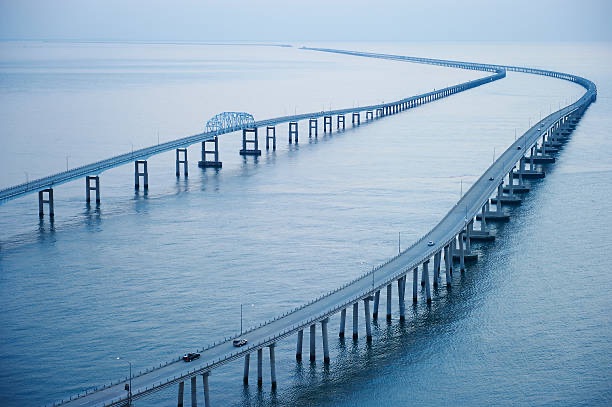
We came from Dover down the Delaware Peninsula so we had to cross the Chesapeake Bay Bridge-Tunnel to get to Virginia Beach.  My geography was sketchy here, but Delaware is part of the Delmarva Peninsula, which encompasses most of Delaware, along with parts of Virginia and Maryland. The Chesapeake Bay Bridge-Tunnel connects Virginia’s Eastern shore (where we were) with the Virginia mainland, near Norfolk and Virginia Beach.  It’s about 18 miles long, with twelve miles or so of bridges and two tunnels under the bay.  

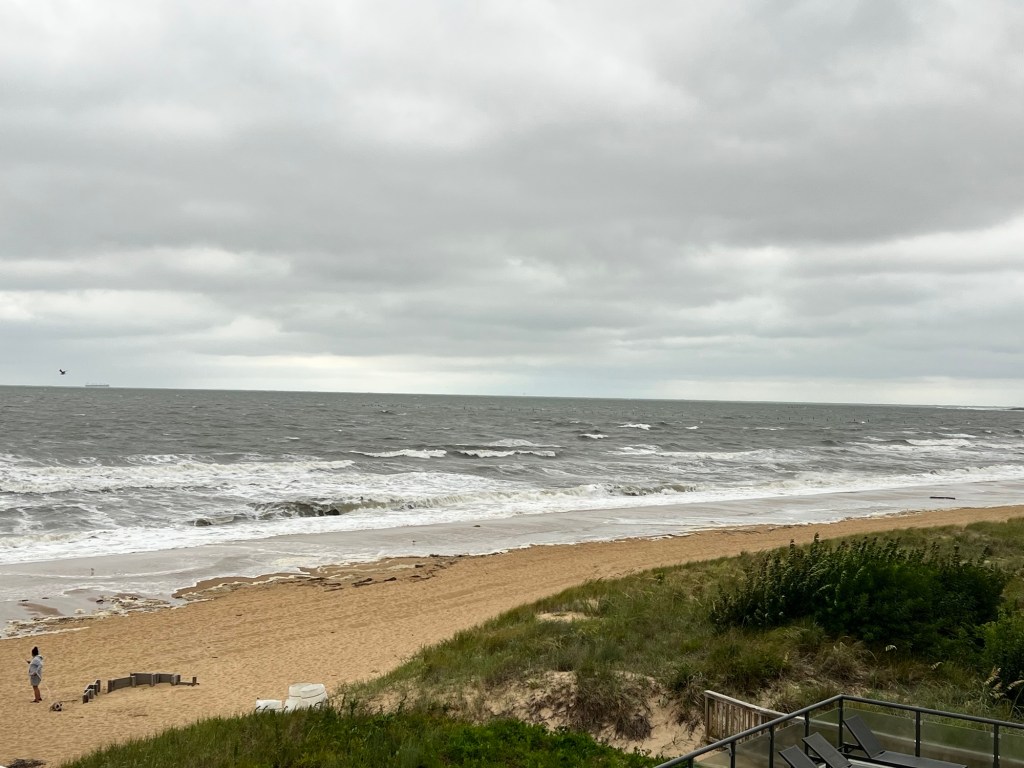
So, we would have arrived at our hotel early afternoon and spent some time on the beach, but there were level one winds, and we couldn’t go over the bridge-tunnel until said winds dropped down to an acceptable level.  Regular cars could cross, but no semis, trailers, and you guessed it, RV’s.  Vanna is such a pain in the rear at times.  There is a huge parking lot/visitors’ center by the toll plaza, so all of the semis, trailers and us were stuck there for a few hours.  We asked the truck driver next to us when we would know it was safe to go across, and he told us the police would come and tell us when to move out.  So, after we had sat there for what seemed like forever, our friend knocked on the door and said “Let’s go, we have the signal!” Everyone jumped in their rigs and hightailed it out of there. It was so strange.  The first photo is an aerial picture of the bridge.  The second is a picture of the beach when we arrived in Virginia Beach. By the way, when we went over the bridge, it didn’t look like the picture. There were giant waves sloshing up on the sides.

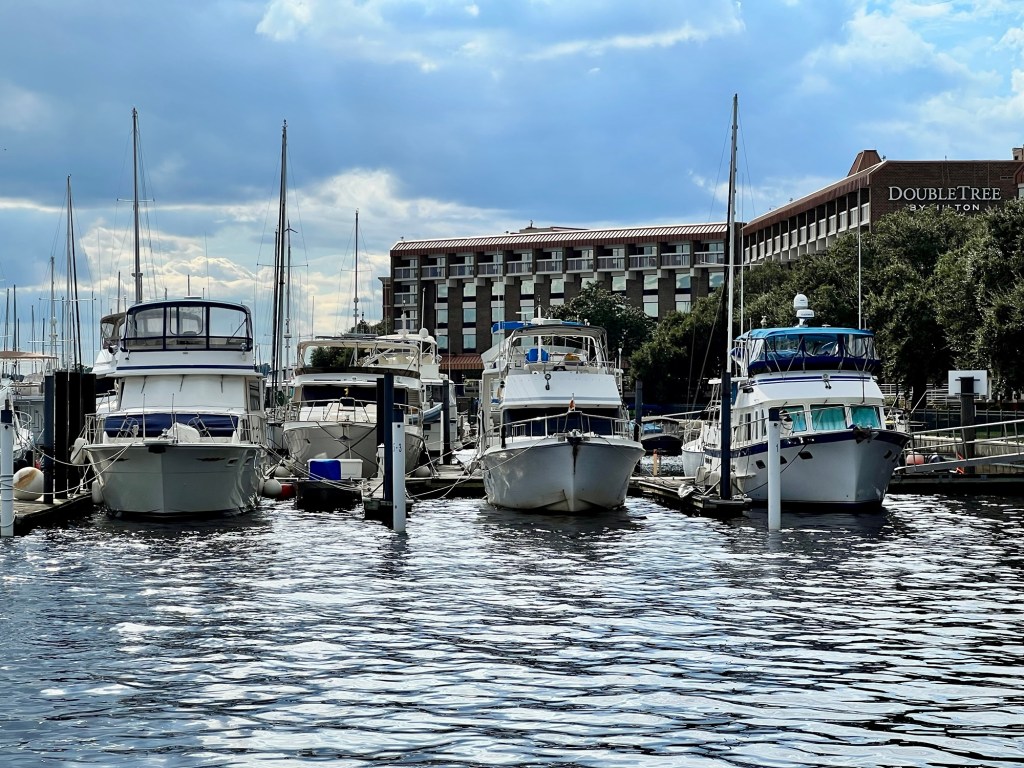
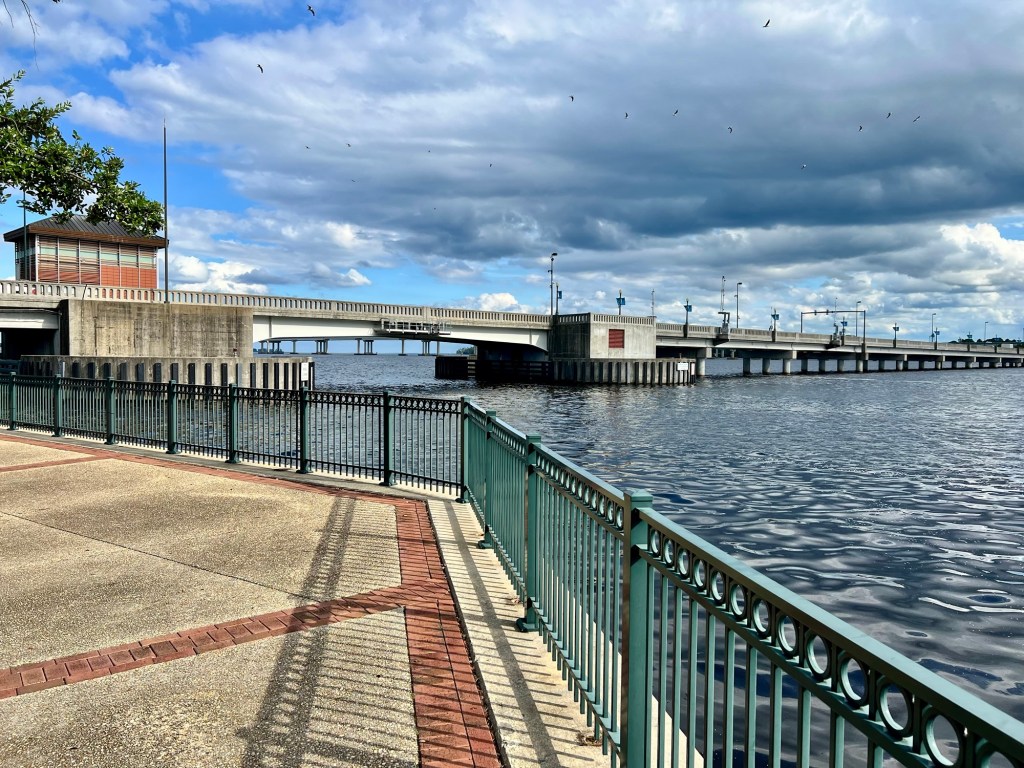
Yesterday we drove to New Bern, North Carolina where we spent the night in a hotel on the Trent and Neuse Rivers. New Bern is a lovely historic riverfront city known as the “Birthplace of Pepsi” and the site of the first North Carolina State Capitol, Tryon Palace.  So, as you have probably surmised, Pepsi-Cola was invented in New Bern.  Specifically, it was created by pharmacist Caleb Bradha at a drugstore on the corner of Middle and Pollock Streets.  He initially called it “Brad’s Drink” in 1893, but later renamed it Pepsi-Cola in 1898.  In my book Brad was wasting his time because Diet Pepsi doesn’t hold a candle to Diet Coke.  And neither are as good as Diet Dr Pepper.  Just my opinion.  

As an aside, did you know that Dr. Pepper (1885 in Waco, Texas), Coca Cola (1886 in Atlanta), and Pepsi Cola were all invented by pharmacists at their corner drugstore’s soda fountains?  

New Bern was side trip due to the storm.  We were going to go to Cape Hatteras, but NC Highway 12, the main road through the Outer Banks, has been closed because large sections are covered in sand and water due to overwash and dune breaches.  Also, the ferry we were taking to Ocracoke Island has been cut off due to the dangerous conditions.  We have been to both places several times, so it wasn’t a major disappointment, but we had to reroute.

By now you are probably thinking, “Ann’s blog is turning into a gripe fest about storms and Vanna.”  Traveling is like that.  Even with meticulous planning it doesn’t always quite work out like you thought it would.  Today we head to Georgetown, South Carolina where we will see Sara and Carrie for a couple of days before heading back to Georgia.   Sadly, my blog is at an end. Haha! So, until next time, safe travels wherever you may go.

August 20, 2025–Leaving  Newport, Rhode Island

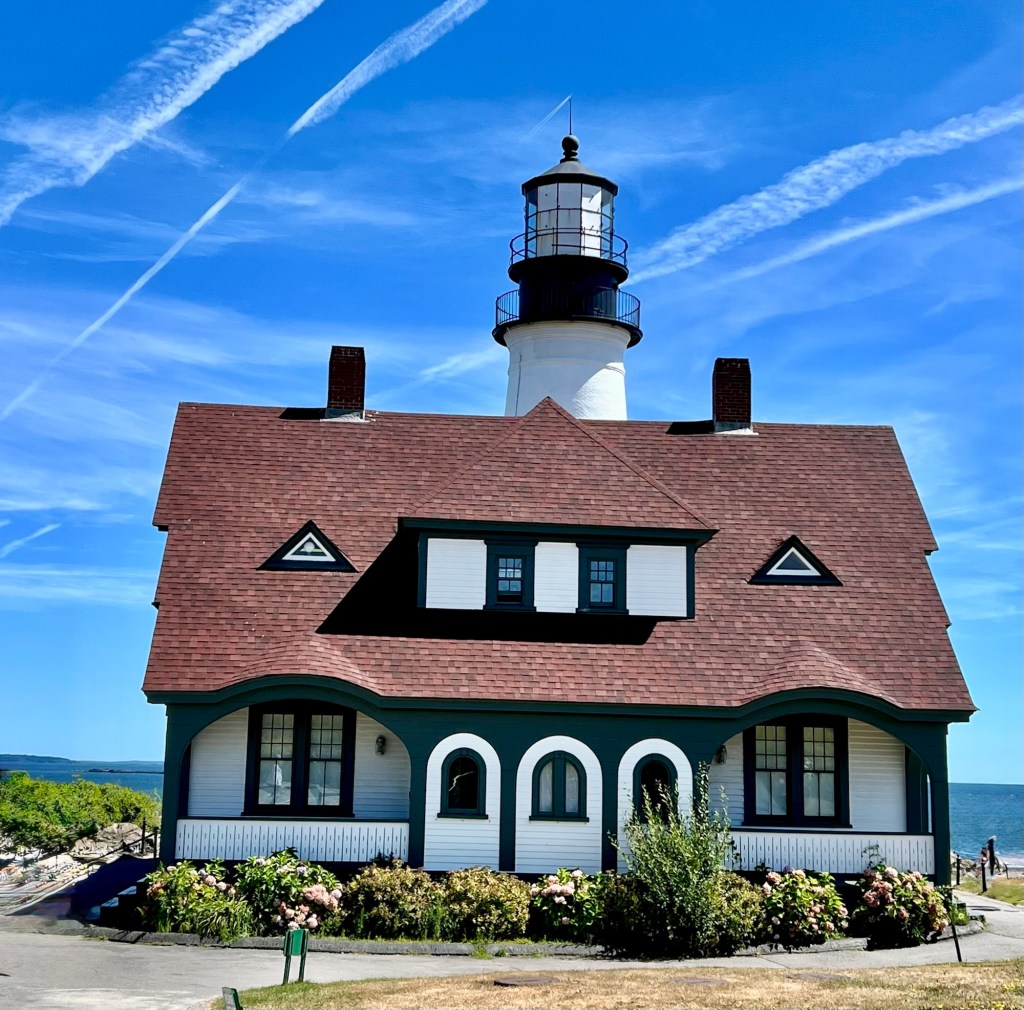
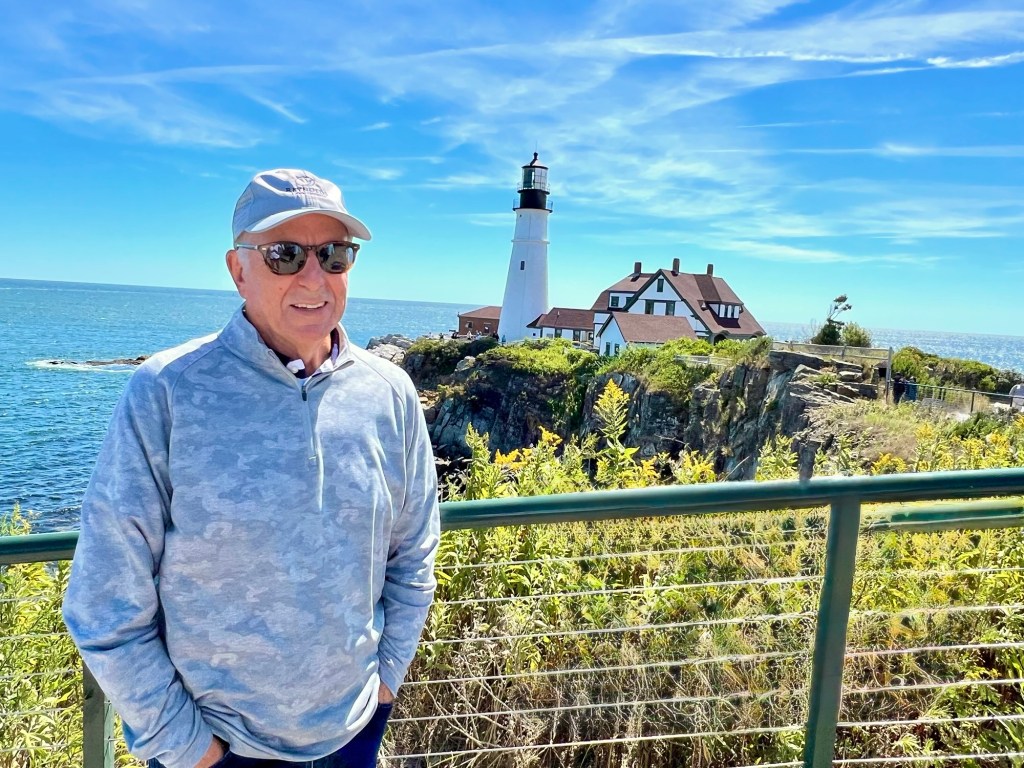
On Monday we drove from Portland, Maine down to Boston, and then on to Newport, Rhode Island, a distance of about 177 miles.  Before we left Portland we visited the Portland Head Light in Cape Elizabeth, Maine, which is a historic lighthouse that sits on a headland at the entrance of the primary shipping channel into Portland Harbor in Casco Bay, Gulf of Maine.  It was completed in 1791, and is the oldest lighthouse in Maine. 

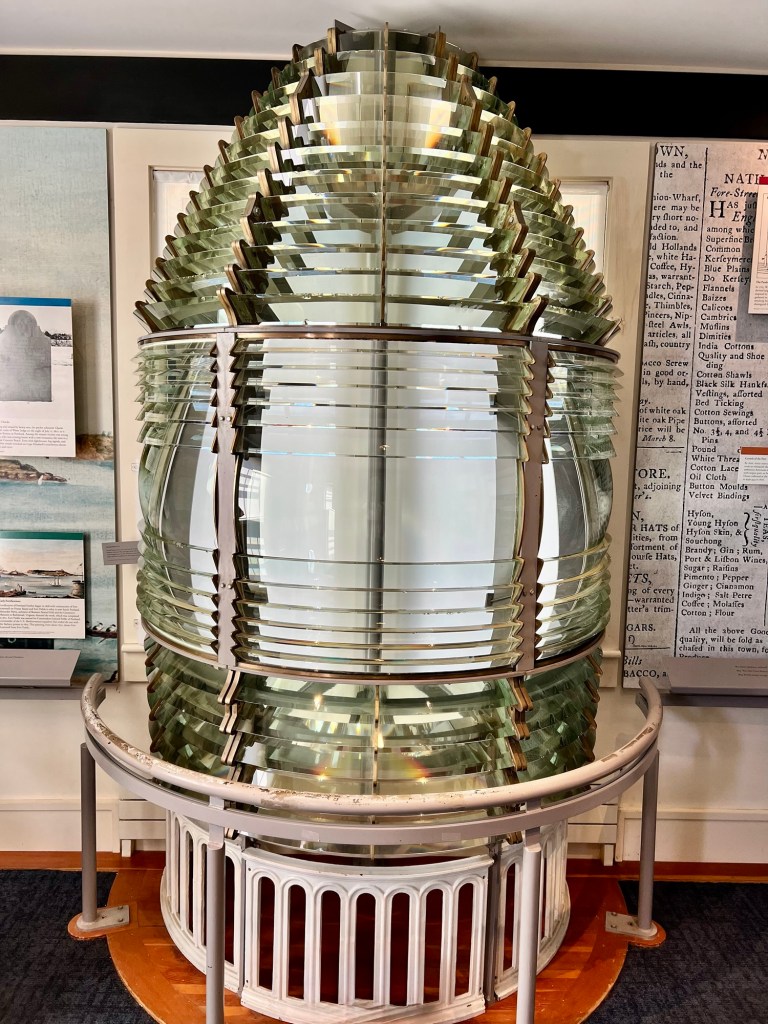
We visited the small museum there, which I was against on principle because I usually feel a pall of boredom wash over me when we go to most small museums. Like who cares? But Doug was insistent that we go because he would go to any museum, no matter how small or how lame. Surprisingly, this museum was well put together and interesting. Below is a picture of a Fresnel lens, which was a revolutionary invention that improved lighthouse illumination by using a system of prisms and lenses to focus light into a powerful beam. Pretty cool, right?

We had never been to Newport, and it was lovely surprise.  Newport is a seaside city on Aquidneck Island located on Narragansett Bay.  It is known as a New England summer resort and is famous for its historic mansions from the Gilded Age.  We stayed at the Cliffside Inn, an 1876 Victorian manor house. It’s called Cliffside because it’s right by the Newport Cliff Walk, which is a 3.5-mile public access walkway along the eastern shore of the island.  

Yesterday we walked the cliff walk about one and half miles to the Breakwaters, a Gilded Age mansion built between 1893 and 1895 as a summer residence for Cornelius Vanderbilt II.  We have toured many mansions on our travels, and this one was one of the most stunning houses I have ever seen.  The sheer opulence of it was almost unbelievable.  The largest Vanderbilt mansion is the Biltmore in Asheville at 178,926 square feet.  The Breakers mansion is 125,339 square feet.  Cornelius and George Vanderbilt (Biltmore) were brothers, so they must have had quite a serious competition going. The Biltmore is the largest house in the United States, so apparently George won.

Heading to Dover, Delaware today. Pictures of the Cliff Walk below:

August 17, 2025–Bar Harbor, Maine to Portland, Maine

On Friday we crossed back over the Canadian/US border and drove south to Bar Harbor, Maine.  The American border agent was a lot more stringent than the Canadian border agent.  He asked most of the same questions (no mention of firearms or using said firearms to shoot bears), but then he actually came inside Vanna and looked around to make sure we were telling the truth.  We had no contraband, so he gave us the go ahead.

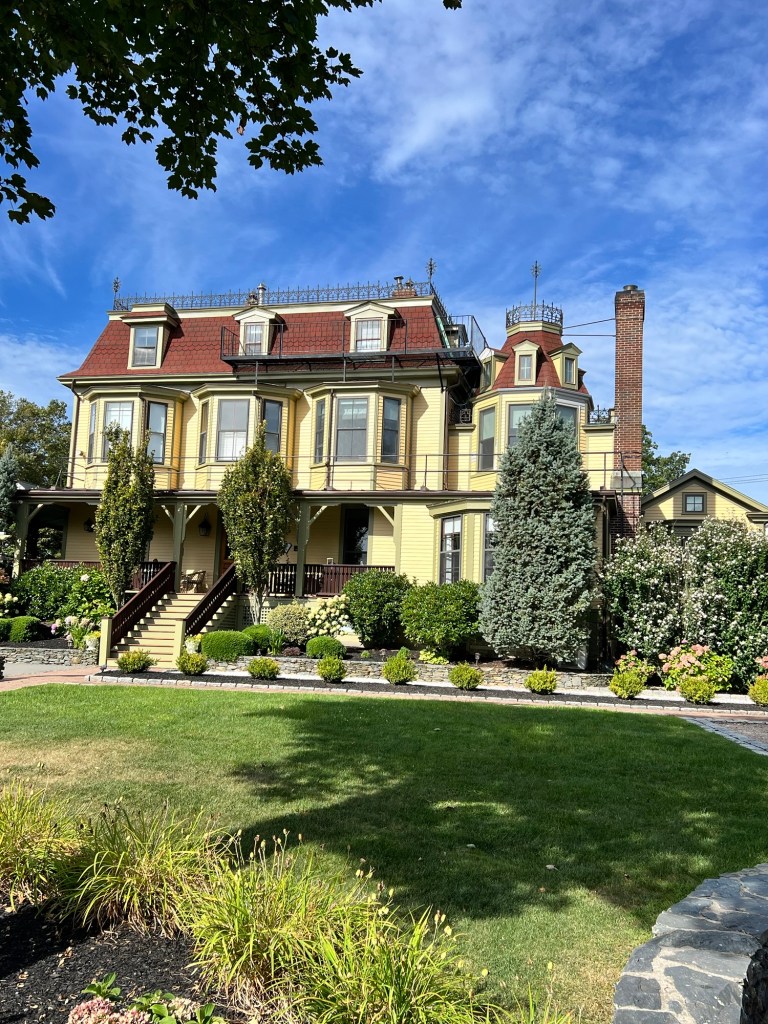
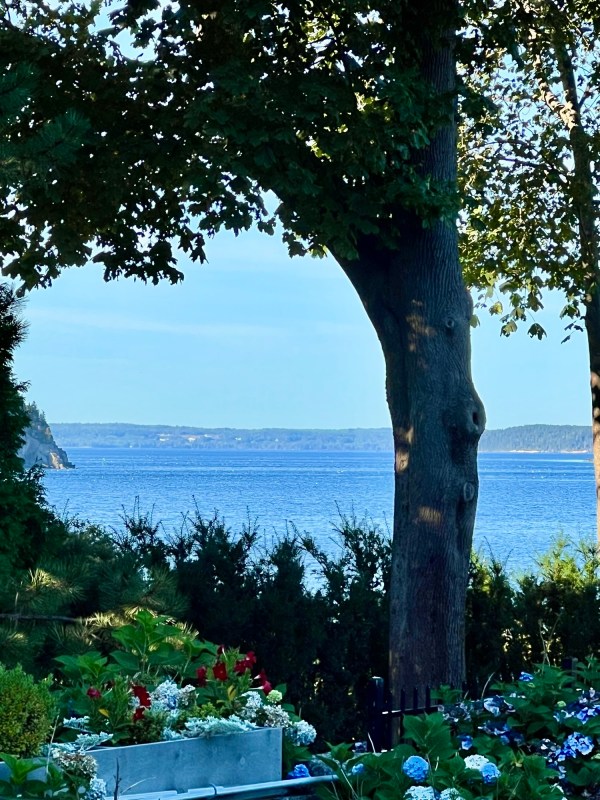
We stayed two nights in Bar Harbor at the Balance Rock Inn, a hotel that was built in 1903 as a home for a Scottish railroad tycoon.  It’s located right on the water on the coast of Frenchman Bay.  The first picture is a stock picture, so a bit blurry, but you can get a good idea of the hotel and its location.  The second picture is one we took last night of the Balance Rock in front of the hotel, which is how the original house got its name. 

We came to Bar Harbor some twenty years ago or so, but neither Doug nor I can remember much of anything but snippets about the trip.  We do remember eating lobster rolls, lobster bisque, broiled lobster, lobster salad, boiled lobster—you name it.  I never order lobster in Georgia, but it just tastes so much better in Maine. The first night at the hotel restaurant:

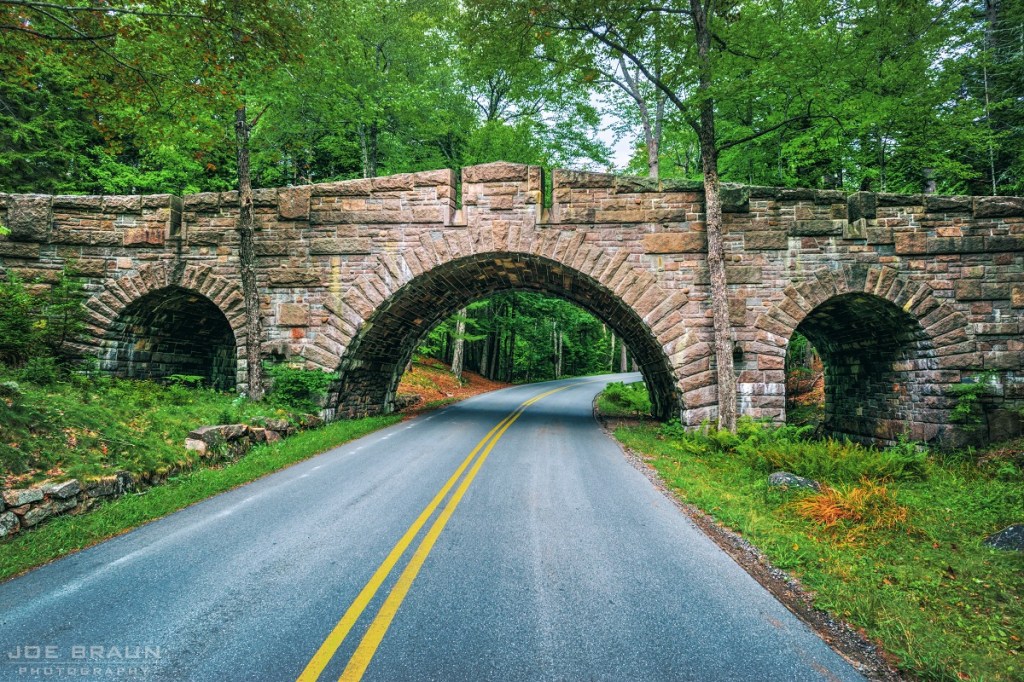
Bar Harbor is on Mount Desert Island, and in about 1890, the island became a summer resort haven for a number of wealthy families, including the Rockefellers, Carnegies, and Vanderbilts.  Between 1919 and 1931, John D. Rockefeller Jr, who was opposed to the introduction of automobiles on the island, personally oversaw the construction of a network of carriage roads, closed to motorized vehicles, on the eastern half of the island, including sixteen granite bridges and two gatehouses.  The entire project resulted in the construction of more than 50 miles of roads, sixteen bridges, and two Tudor Revival gatehouses.  47 of those miles are now in Acadia National Park.

Today we drove through the park before heading south to Portland.  Doug remembers that we visited Acadia on our first trip and climbed Cadillac Mountain, the highest peak on the Atlantic Coast.  The trail is listed as moderate, but the literature says that the trail is mostly granite, with some potential for “scrambling,” which in this case means climbing up and over big rocks.  I think my scrambling days are over.   And anyway it’s a moot point, because RVs are not allowed up Cadillac Summit Road.  The pictures below are of the Jordan Pond Gatehouse and the Stanley Brook Bridge, both part of the original Carriage Trail. They are stock pictures because the park was so busy we couldn’t find any place to park stupid Vanna. Anyway, I knew you would suss that out once you saw the brilliant orange fall leaves. Not a common sight in August.

Tonight we are staying at the Higgins Beach Inn, which the blurb online describes it as emanating the charm of a quintessentially Maine oceanfront hotel.   Meaning quirky and old school, I guess. Tomorrow we head to Newport, Rhode Island.

Blog at WordPress.com.

Up ↑