June 18, 2026–Wild, Wild West Expedition:  From Moab to Glenwood Springs to Colorado Springs

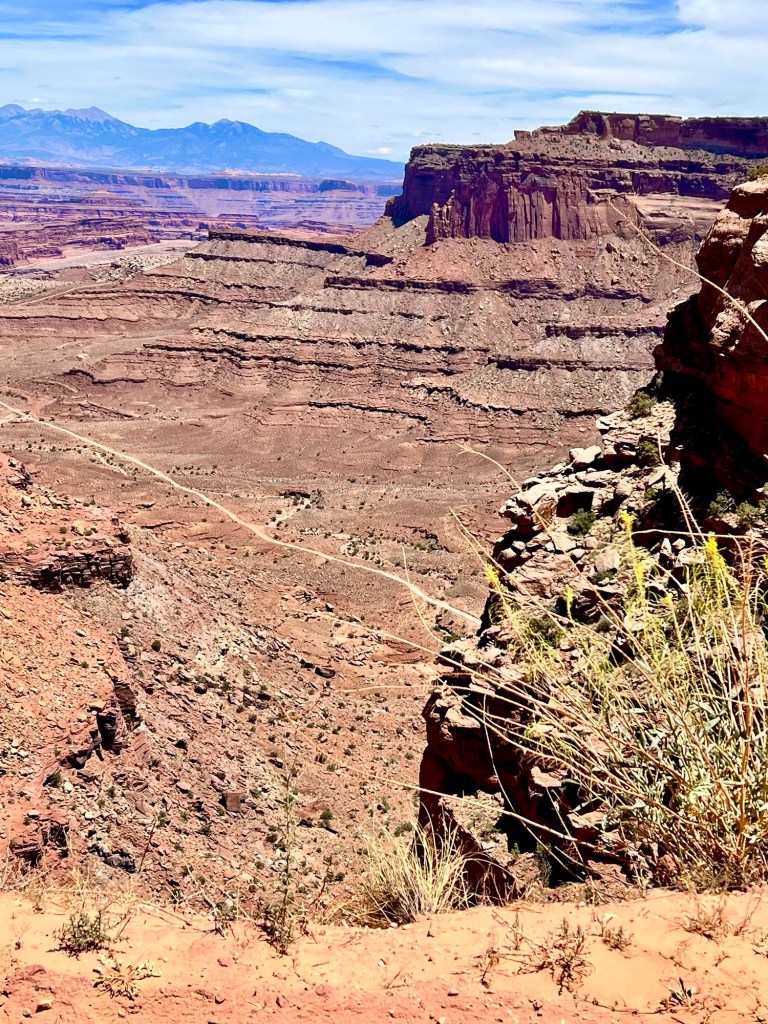
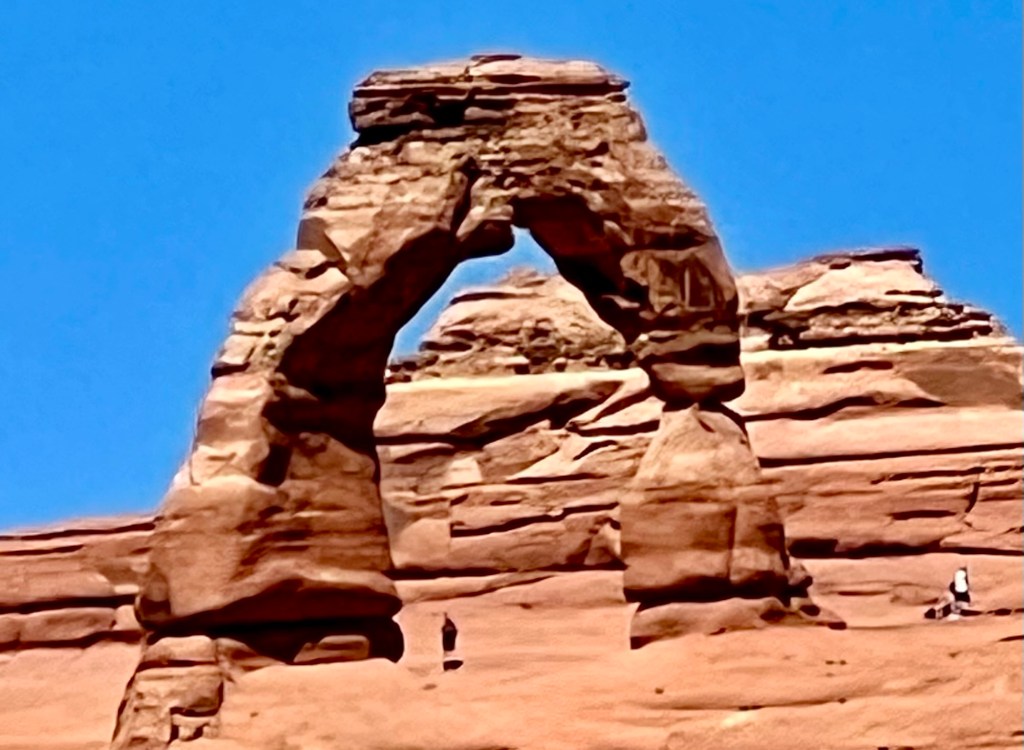
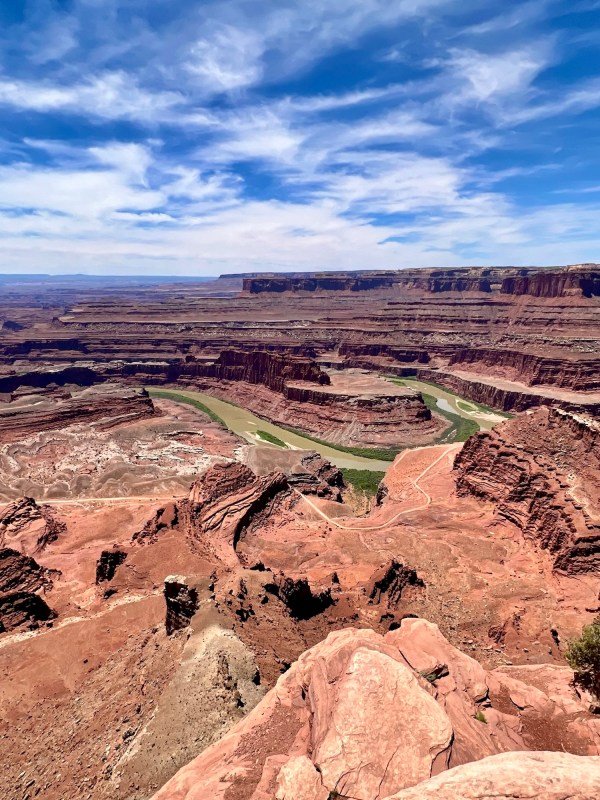
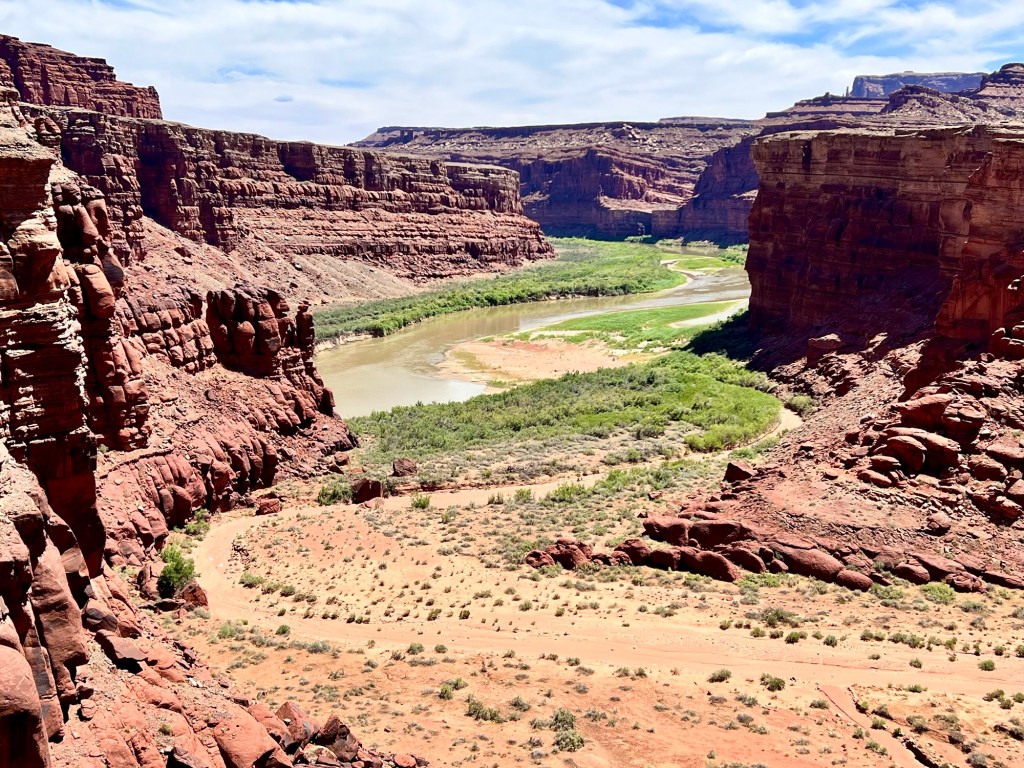
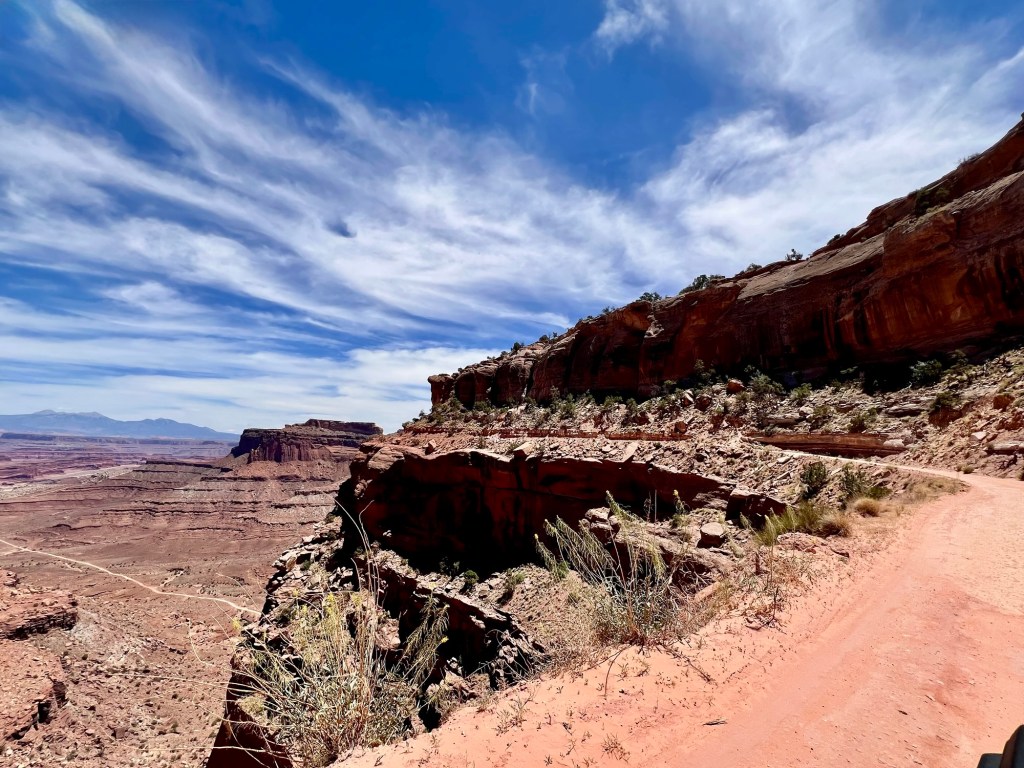
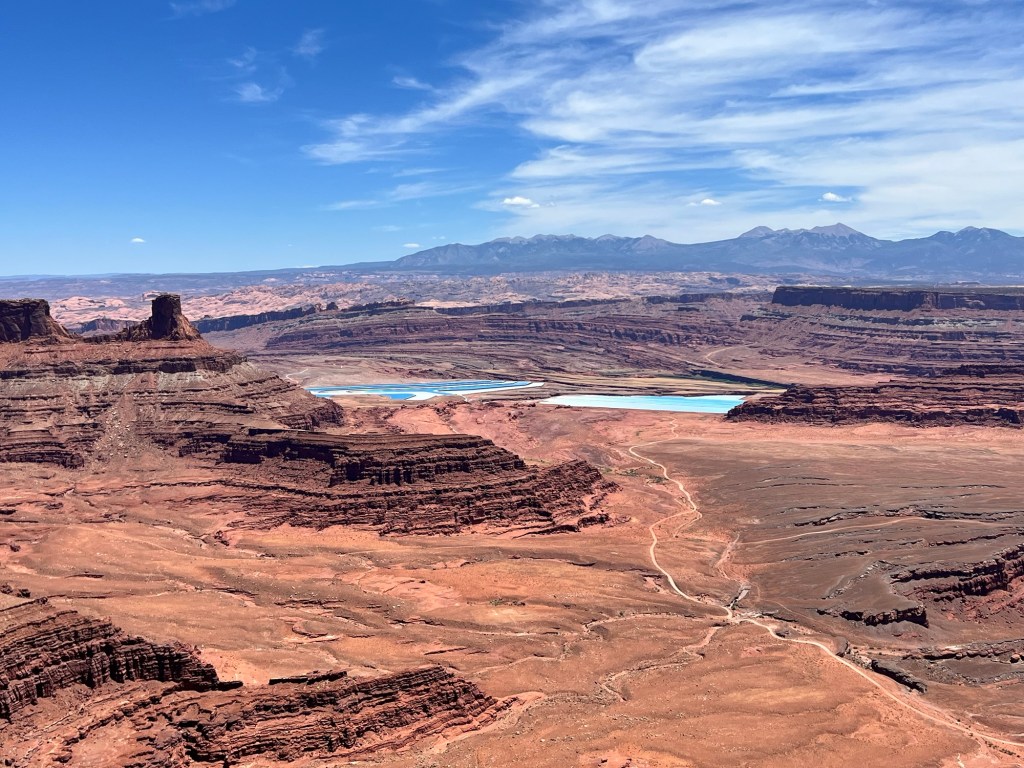
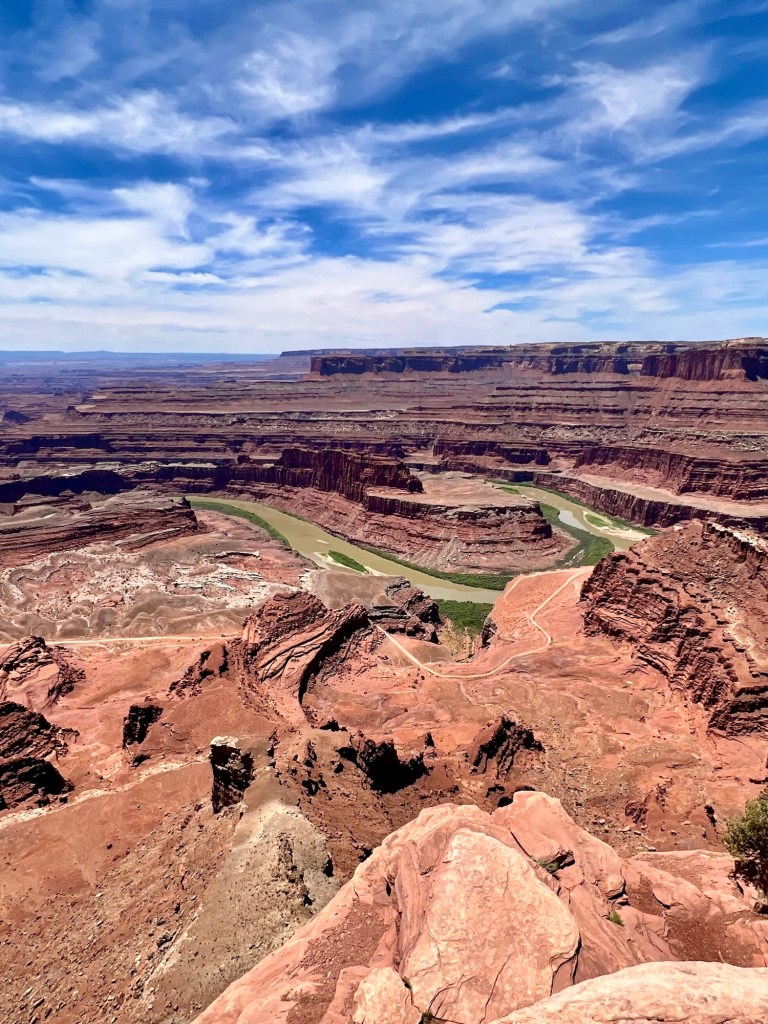
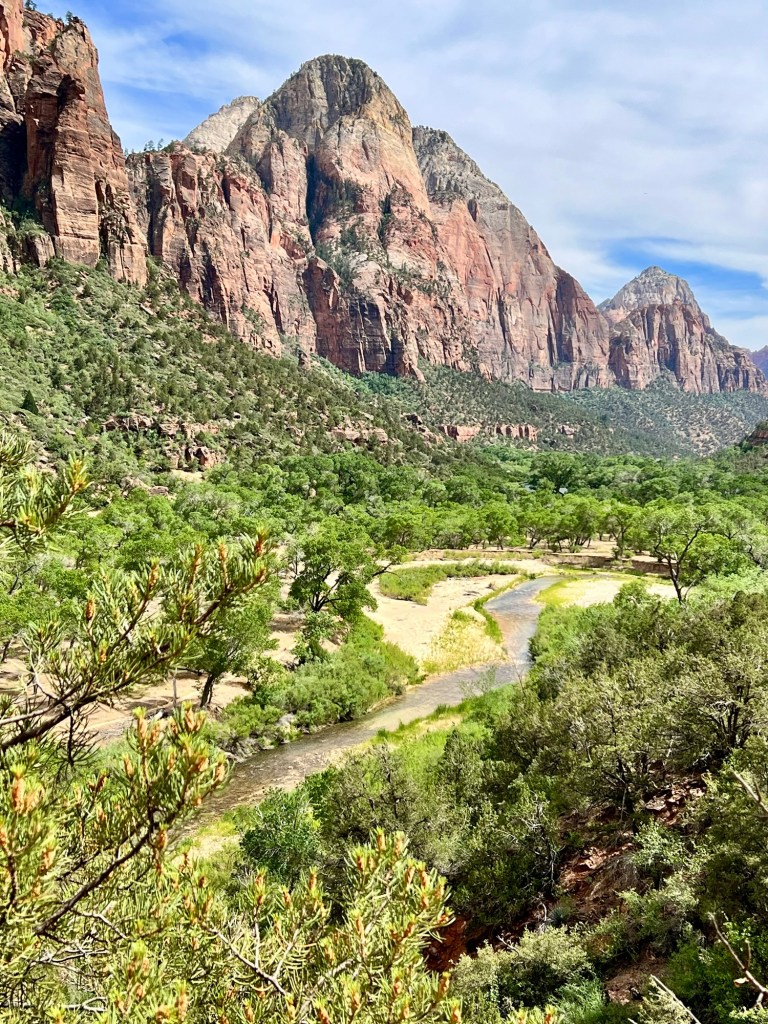
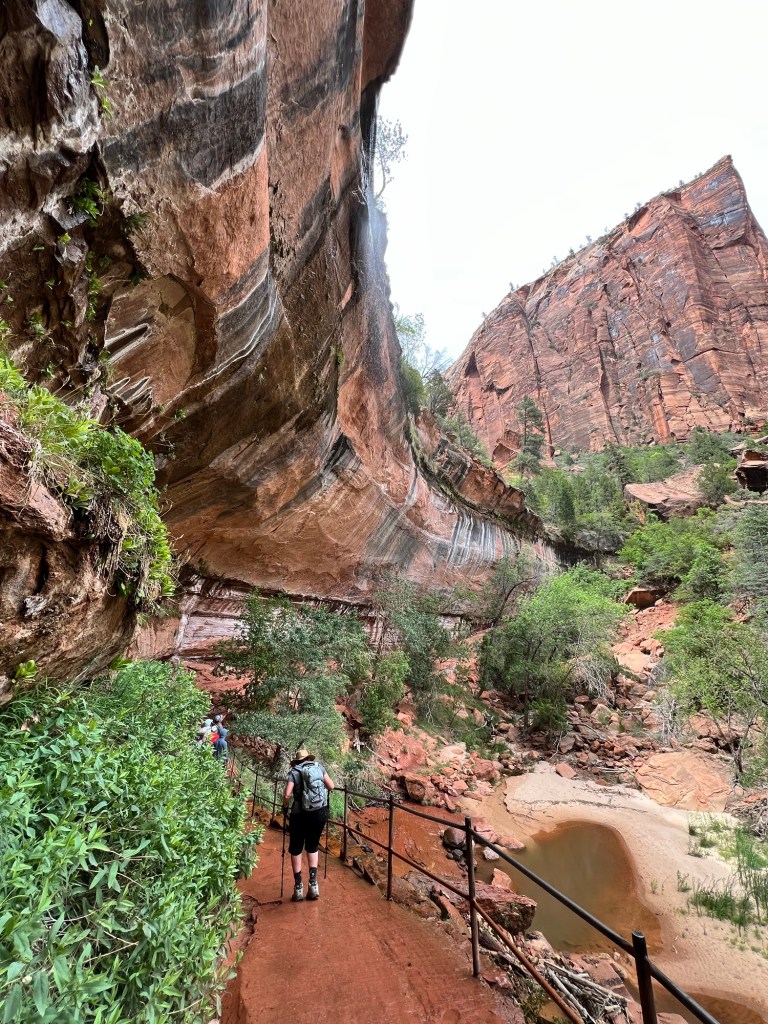
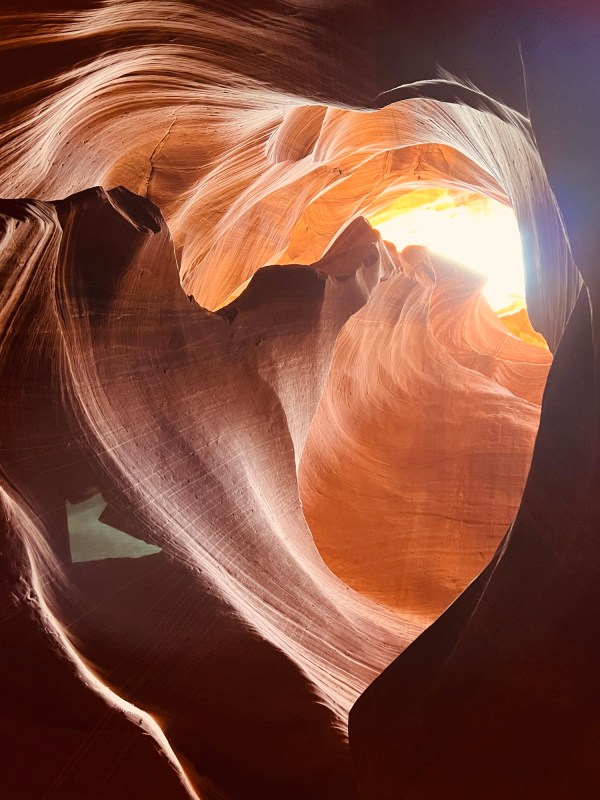
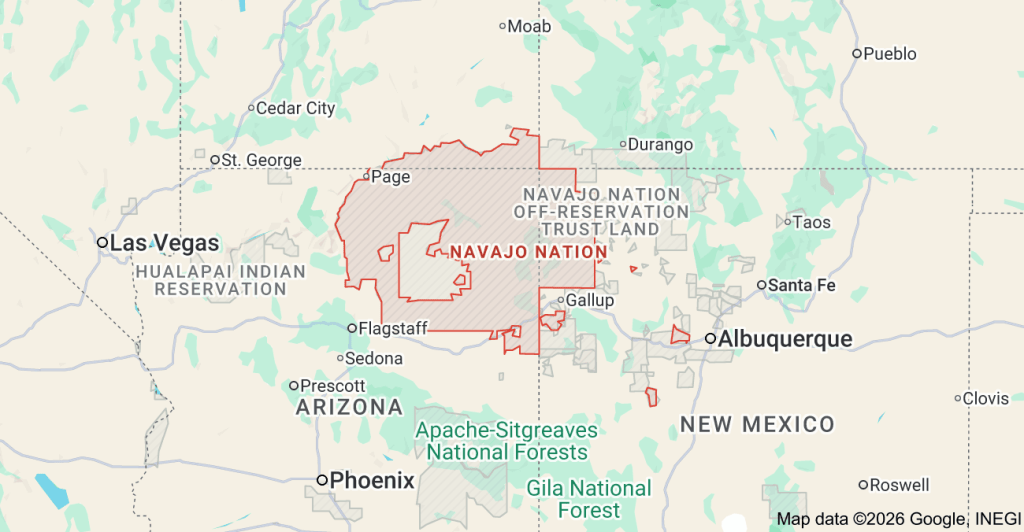
On Monday we moved on from Moab, Utah to Glenwood Springs, Colorado.  After that we were going to do a couple of nights of boon-docking, as they call it in the RV biz.  So no hookups or WiFi, but Vanna has WiFi, so no problem. Unfortunately, the Vanna WiFi quit working exactly one week after we left home.  To reset it, Doug has to climb up on a tall ladder and get on top of Vanna to push the reset button.  Not only is this dangerous, but Vanna doesn’t have a place to haul a tall ladder around the country.  Absolutely moronic planning back at the Leisure Travel Van factory.  So we spent one night and I said, “Yeah, right, I have had enough of boon-docking,” and we came on over to Colorado Springs yesterday.  No pictures of the ill-fated boon-docking, but a couple more of Moab.

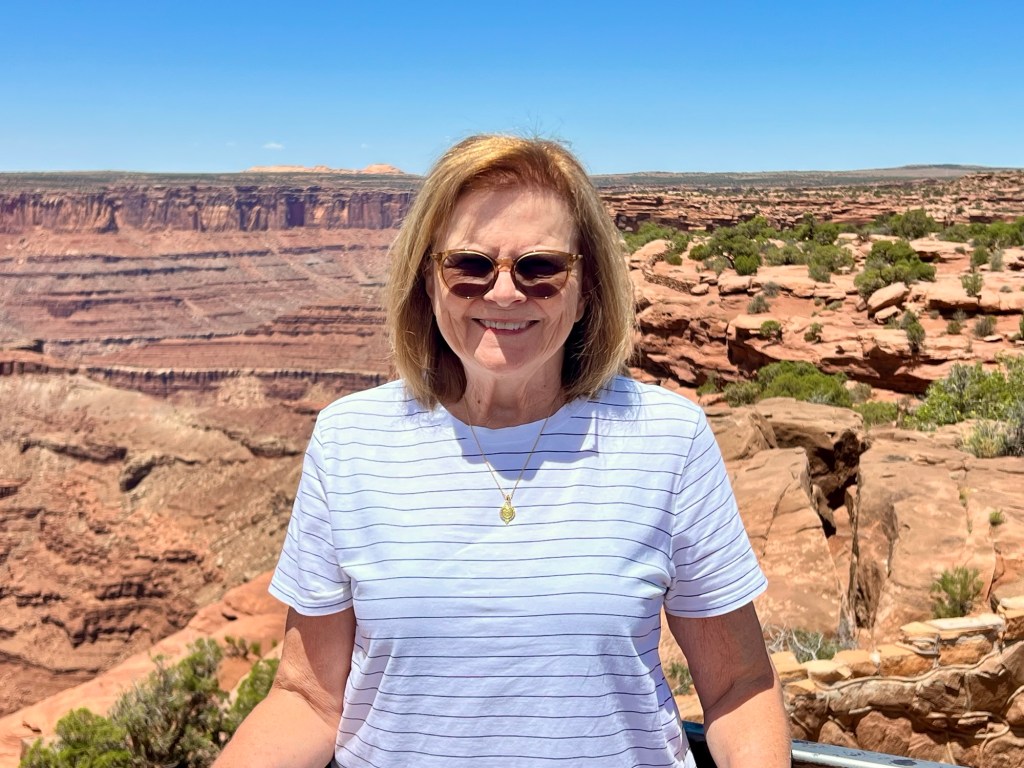
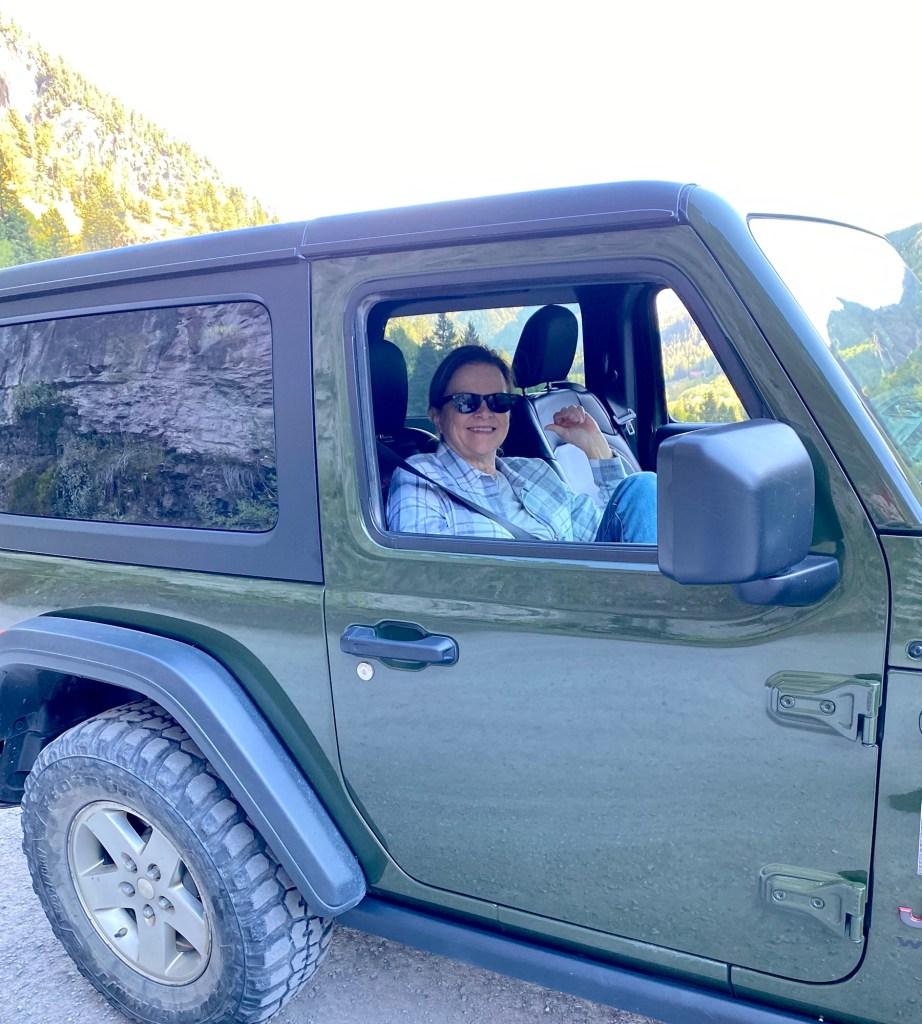
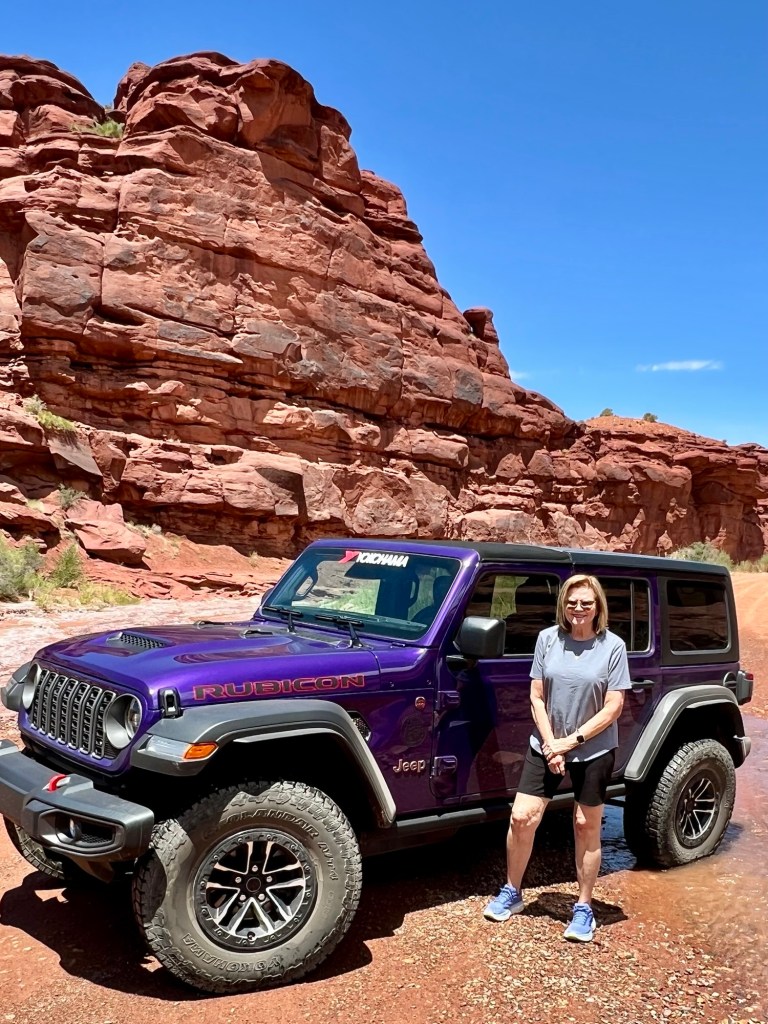
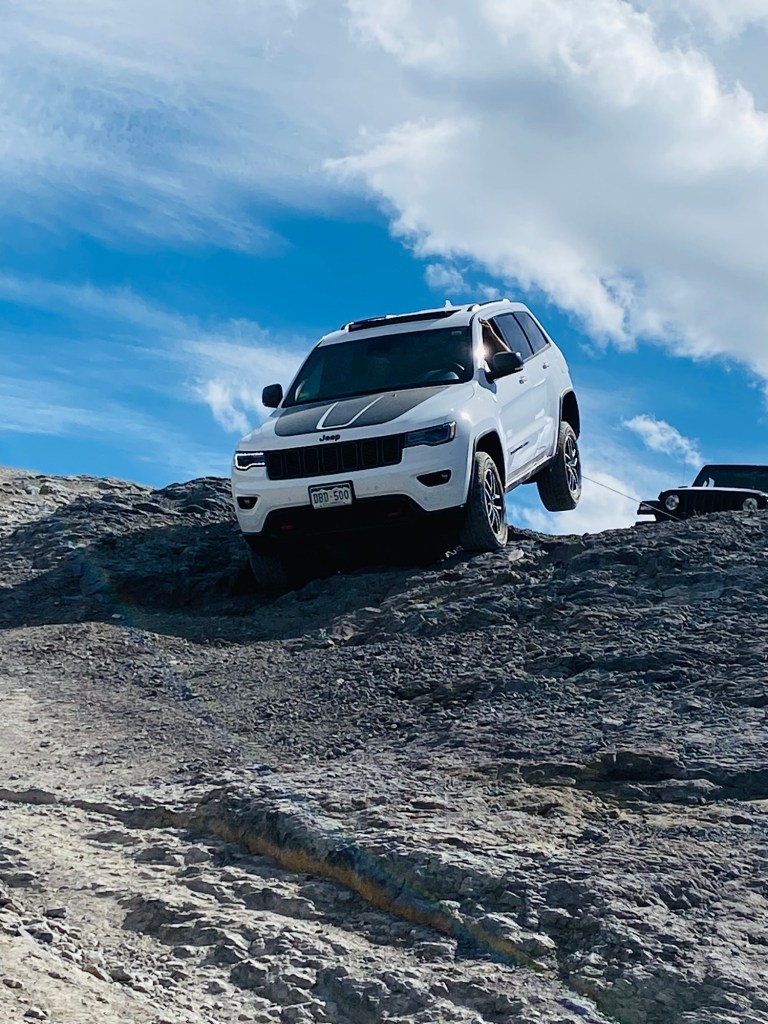
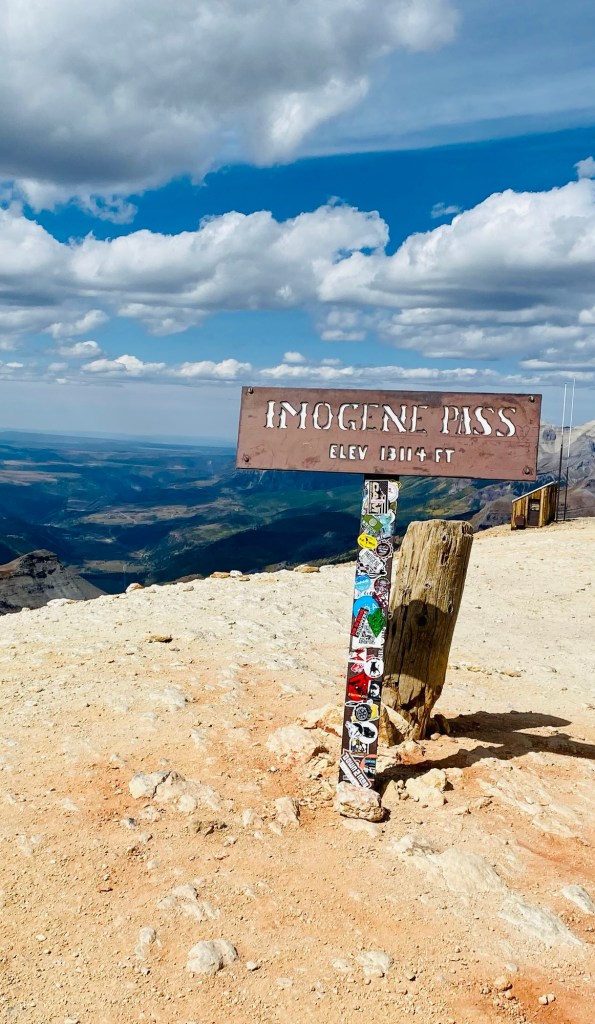
And I do have to redeem Doug regarding the high-centered jeep on the top of Imogene.  That was not our jeep.  We were taking the picture of another jeep that should never have been on Imogene because it wasn’t high clearance.  But Doug did trick me into going up there.  When we rented the jeep and said we were going up Imogene, I said clearly that I had been up Imogene and did not care to go back.  He said that I had not because he had only been up there with his brother Terry.  Well, I knew better, but he kept insisting I had not been there and I caved.  That, my friends, is called gaslighting.  Here’s a picture of the jeep we were actually driving.  I still look happy, so maybe it was at the bottom.

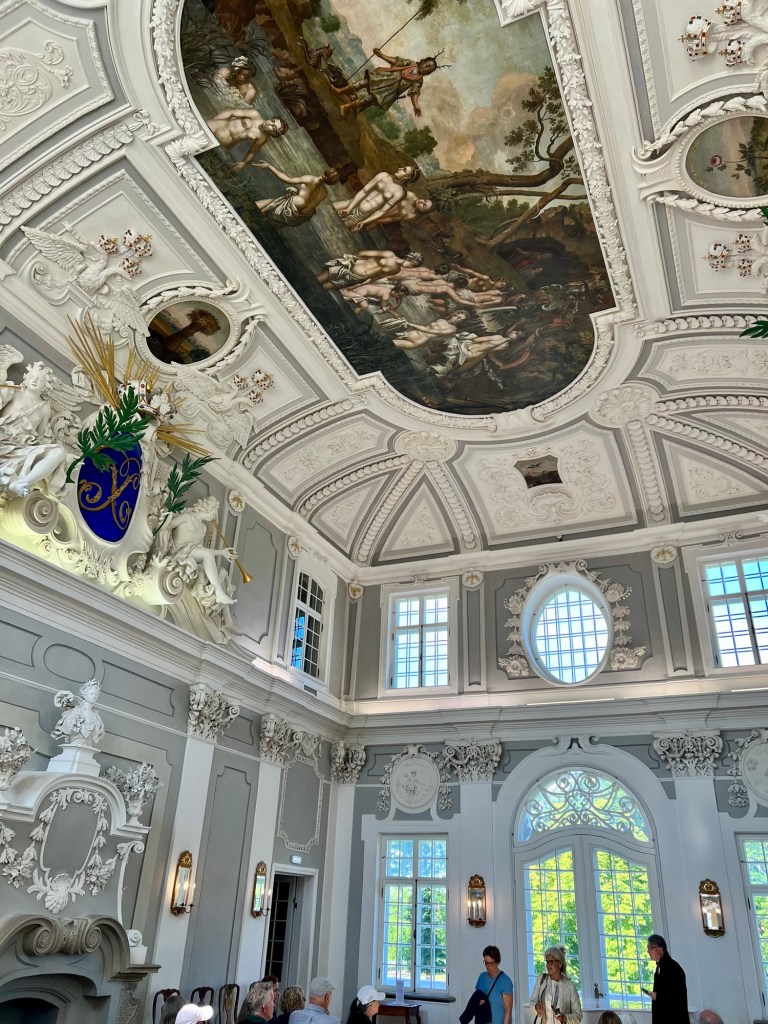
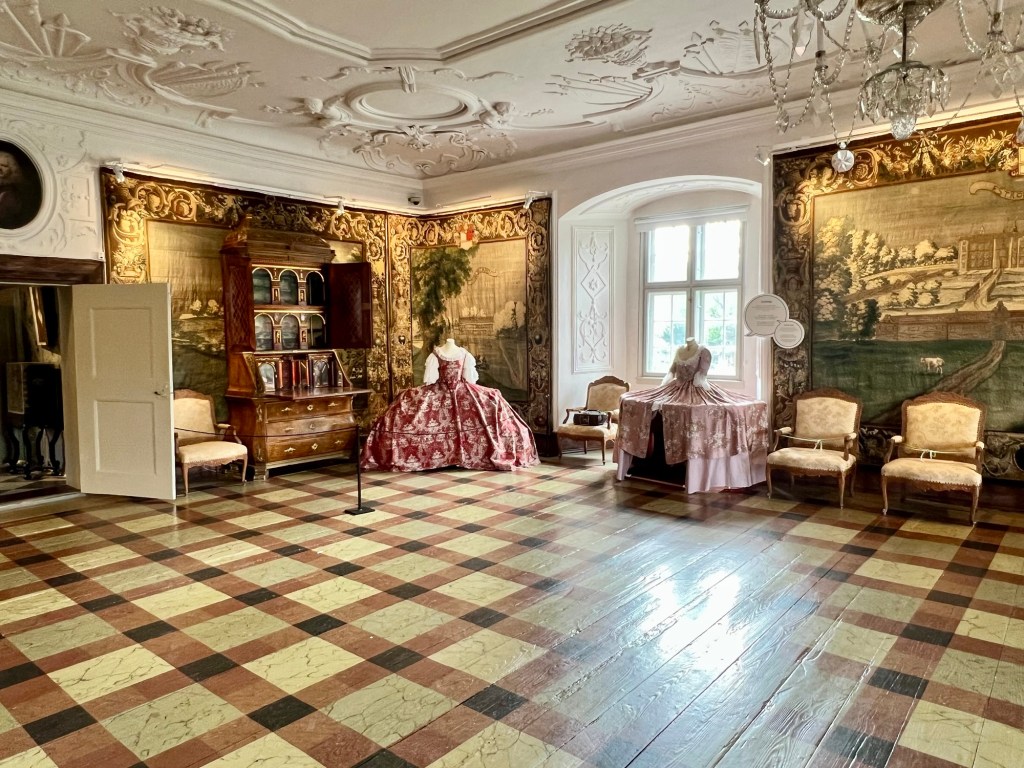
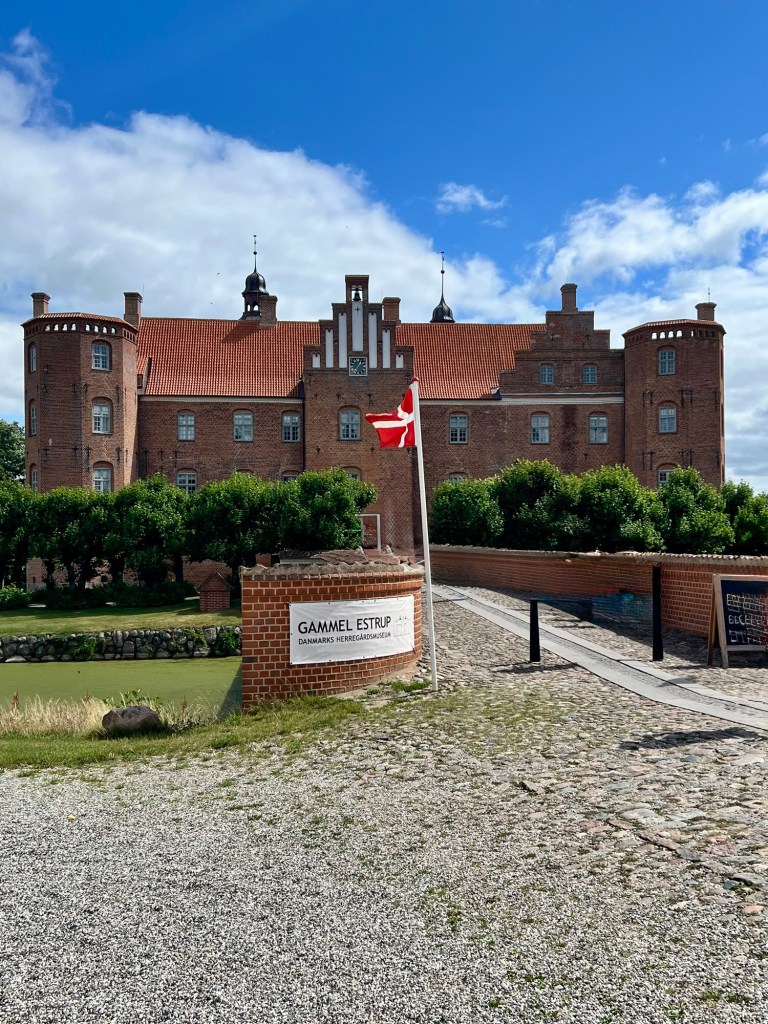
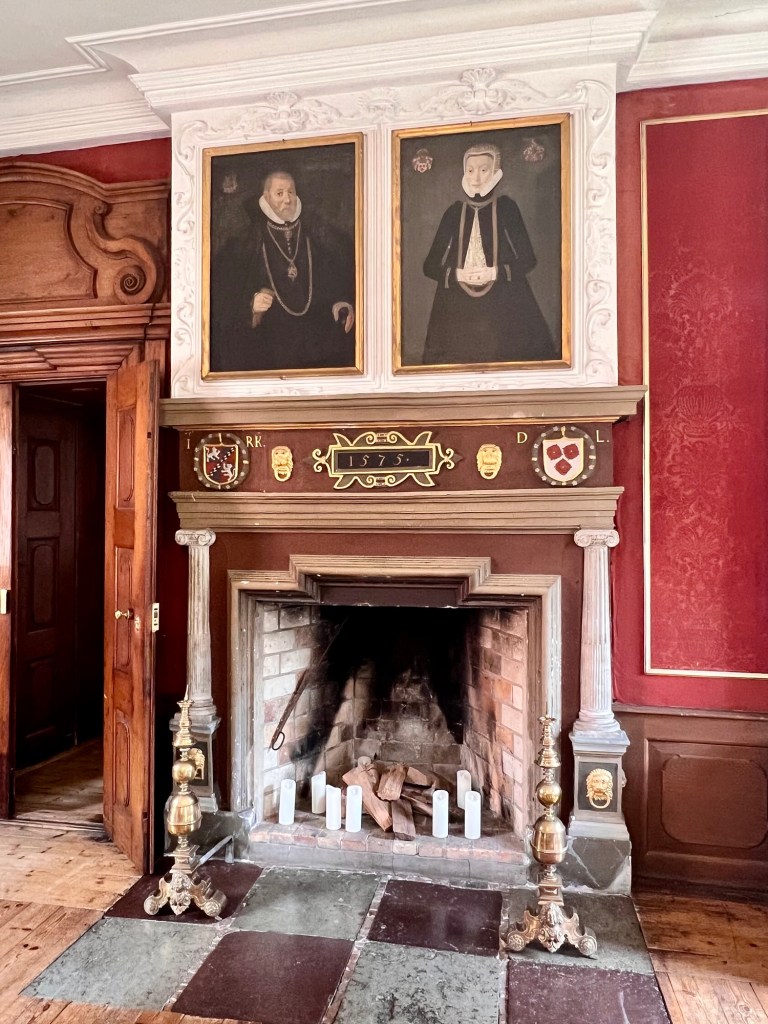
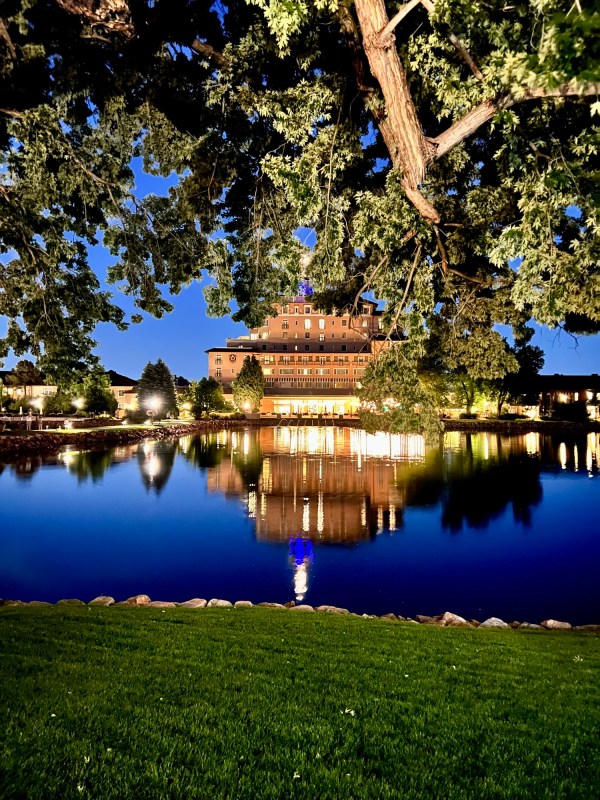
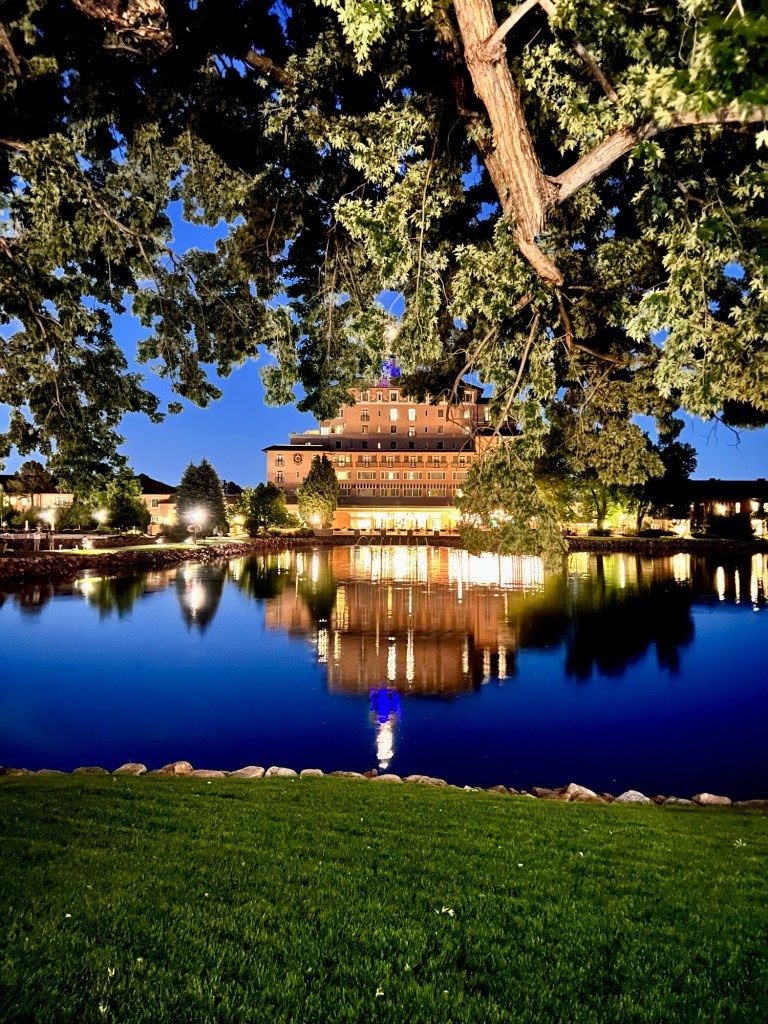
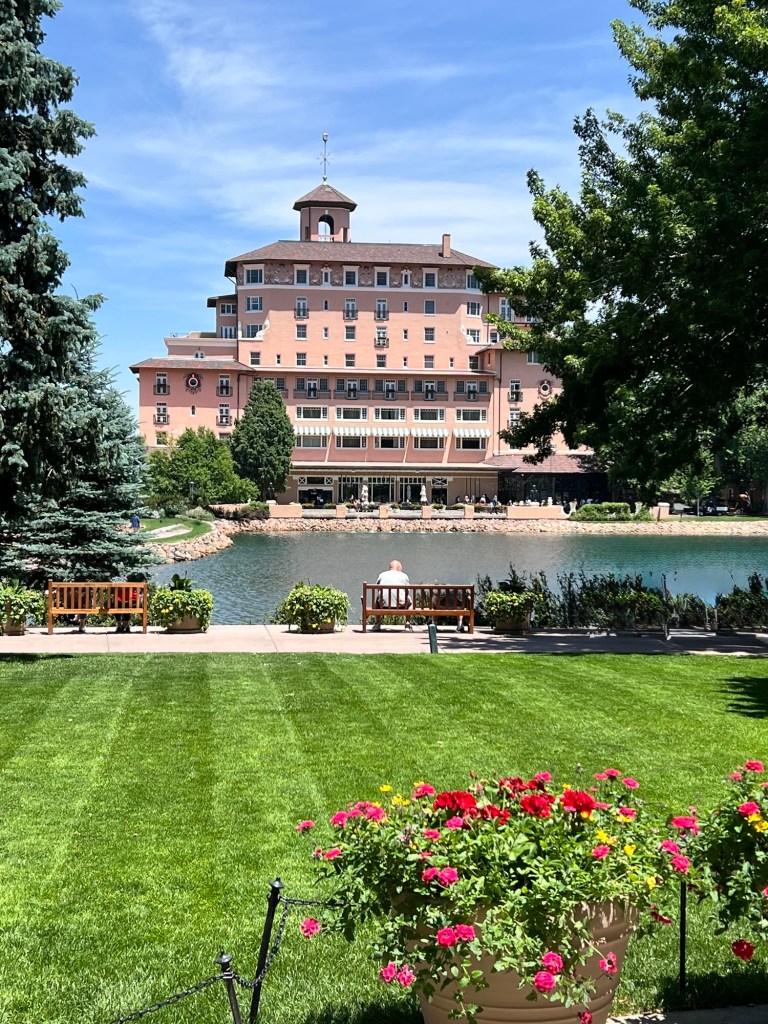
Anyway, back at the Broadmoor.  The Broadmoor was built in 1918 by the oil tycoon Spencer Penrose.  It sits at the foot of Cheyenne Mountain in Colorado Springs.  Absolutely stunning place.   

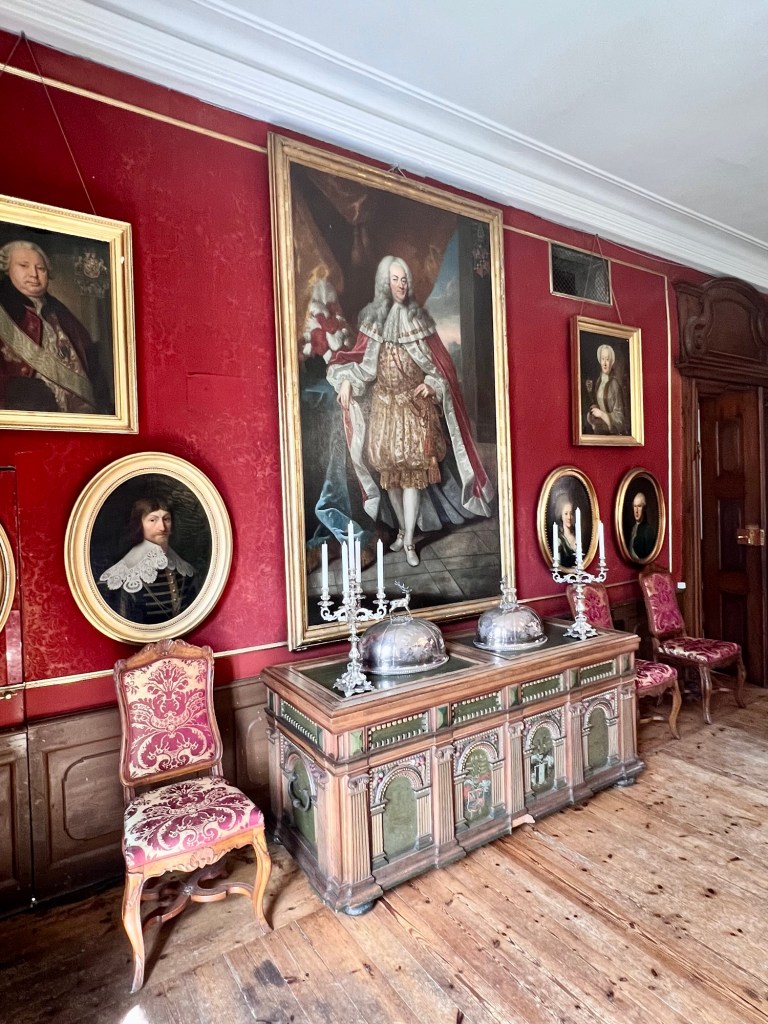
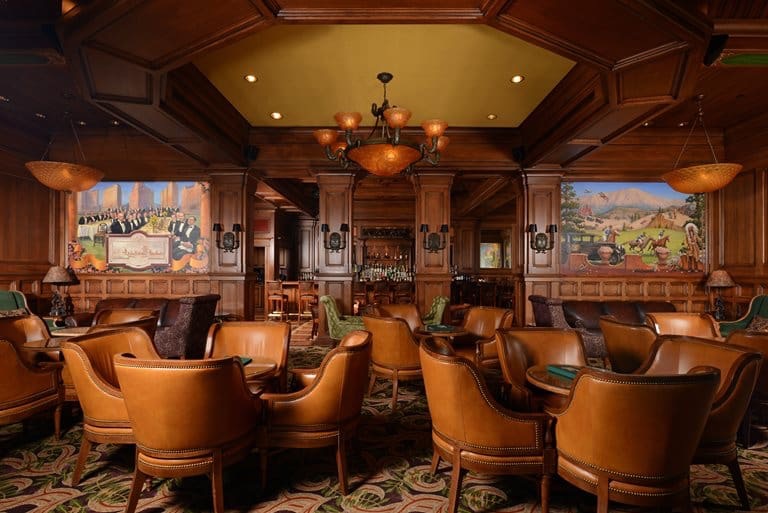
In 1920, Penrose invited about sixty wealthy hoteliers for a paid two week stay at the Broadmoor.  This group was dubbed the Hundred Million Dollar Club because that was their approximate net worth at the time (all sixty of them. Different times). Since most of them were from the east coast, Penrose paid for their train fare cross country.  This was during Prohibition, so he advised each man to bring five bottles of their favorite cologne, a euphemism for liquor at the time.  Penrose commissioned a special railroad car for the liquor, with the outside marked: “Flammable:  Gasoline.”  (When I read that I had to think what if some poor guy thought cologne really meant cologne and ended up sitting there reeking of some smelly stuff while having to watch everyone else sip fine bourbon for the next two weeks.). Anyway, at the original hotel bar where the group met there are several giant murals on the walls depicting the club.  Here are two of them in the room we ate dinner in last night (not my picture).  In the one on the right the men are playing polo, one of the activities.  

So this is probably it for now.  I’m blogged out and we are headed home on Saturday.  Traveling is fun, but it can also be tiring and inconvenient.  Yesterday afternoon when we arrived, it was 100 degrees.  Literally.  We pulled up at this nice hotel in Vanna, looking hot and bedraggled.  Doug explained to the bellman that our luggage was kind of strange because we had been in a travel van.  The bellman did not seem concerned, but I knew how Doug felt.  What are these RV people doing here with their mix of logoed nylon bags (not me) and free range hanging clothes?  But, hey, it’s America, and most Americans are fairly nonjudgmental about how you got here or what you have on when you arrive.  They just valet park your travel van and mind their own business.  I like that.  

June 13, 2026–Wild, Wild West Expedition:  Moab, Utah and Learning Your Limitations

Well, it is official.  My off-road jeep days are officially over.  I’m turning in my Yeti cooler and rubber ducks (you might have to look the rubber duck thing up).  We rented a jeep when we got here on Thursday, so we could take some easy off road trails.  The trails around Moab are marked “Easy,” “Moderate,” “Difficult,” and “Extreme.”  The rating system was created by the local Red Rock 4 Wheelers Club:  Easy (1-3) is okay for high clearance vehicles and SUV’s; Moderate (4-6) requires high clearance 4WD vehicles; Difficult (7-8) requires heavily modified 4WD vehicles with large tires and locking differentials (whatever that means);  Extreme (9-10) are for expert drivers in specialized tough rock buggies.  Note:  Expect vehicle damage and 36 inch drops.  Yikes!  

So yesterday we took our jeep out on Schaffer Trail, which is rated “Easy.”  Remember, the Easy rating is 1-3.  So you can get a 1, 2 or 3 at different times and none of it is the promised “Easy.”  To sum up, it is still fun to do something when you cannot wait until it ends?  Like the kayak ride we took in the Bahamas with the cold, salty sea water slapping me in the face with every wave?  Or the ferris wheel ride I took with my younger brother Don at the Missouri State Fair in about 1964 when Don had just started on his favorite thing, a huge multi-colored cotton candy cone when it started to rain, leaving him crying brokenheartedly about the melty mess for the entirety of the ride, with both of us covered in rainbow colored goo?  

Anyway, this entire rant brought on by Shaffer Trail, which we were on two years ago when we were here.  Too rough, too scary, too long.  I have crossed the rubicon.  And Rubicon takes on a double meaning in the pictures I have grudgingly added below:  

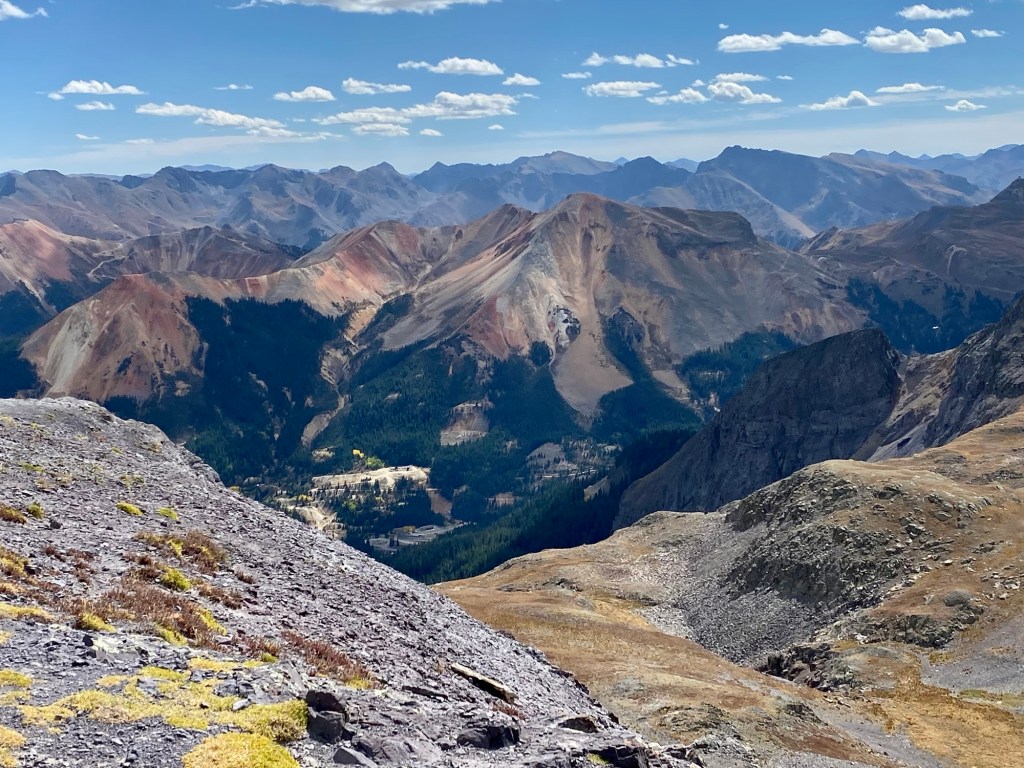
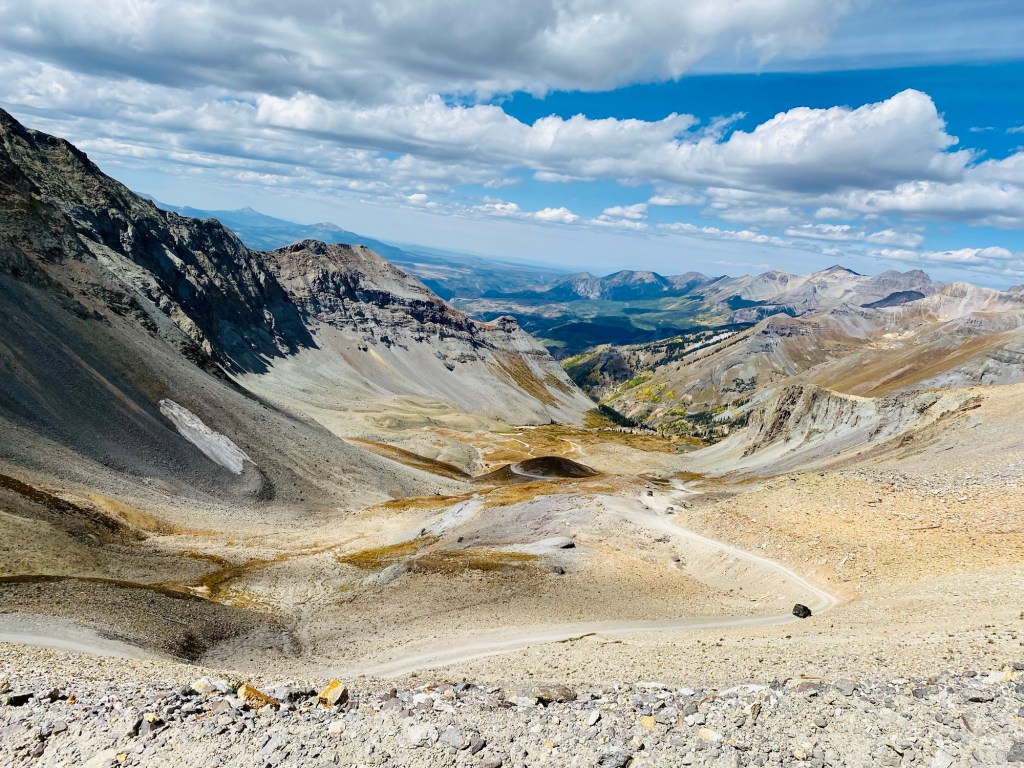
We did a lot of off-roading when we were younger, especially in Colorado, but I guess I was more resilient then.  In fact, we went over Imogene Pass in 2021, which is rated a 6 (Doug tricked me into that one. I will provide details if there is sufficient interest). To prove this I have added pictures of the Imogene trip below. The white jeep had high-centered and had to be wenched out.  Like that’s not scary.  (Colorado has basically the same rating system.)

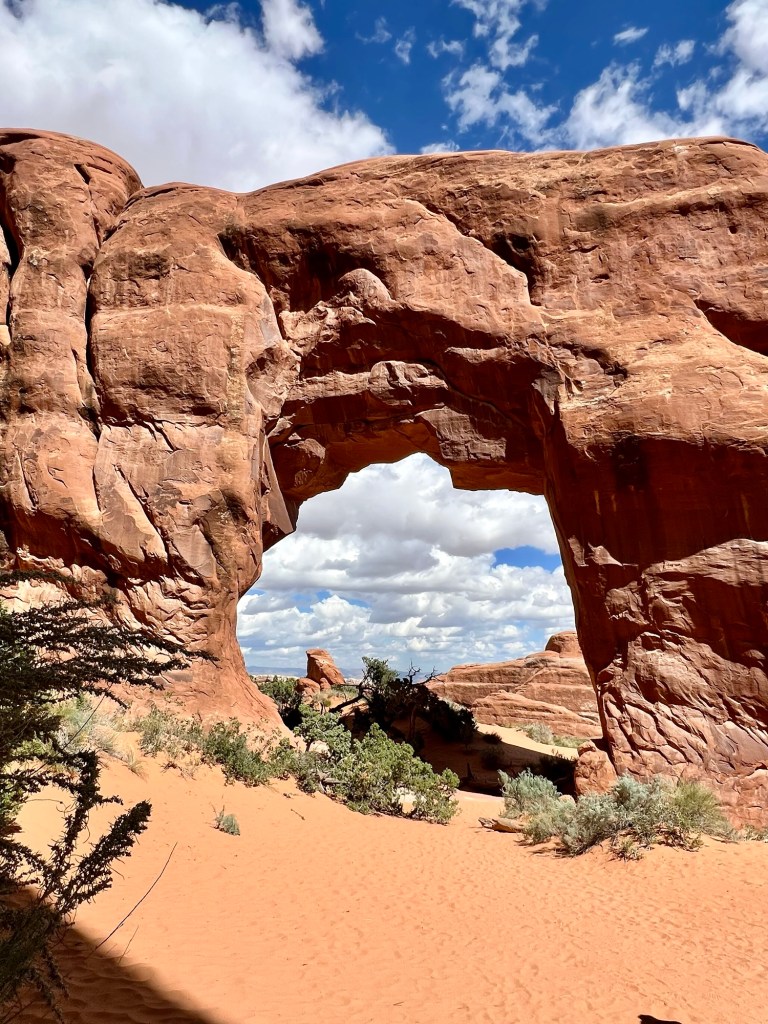
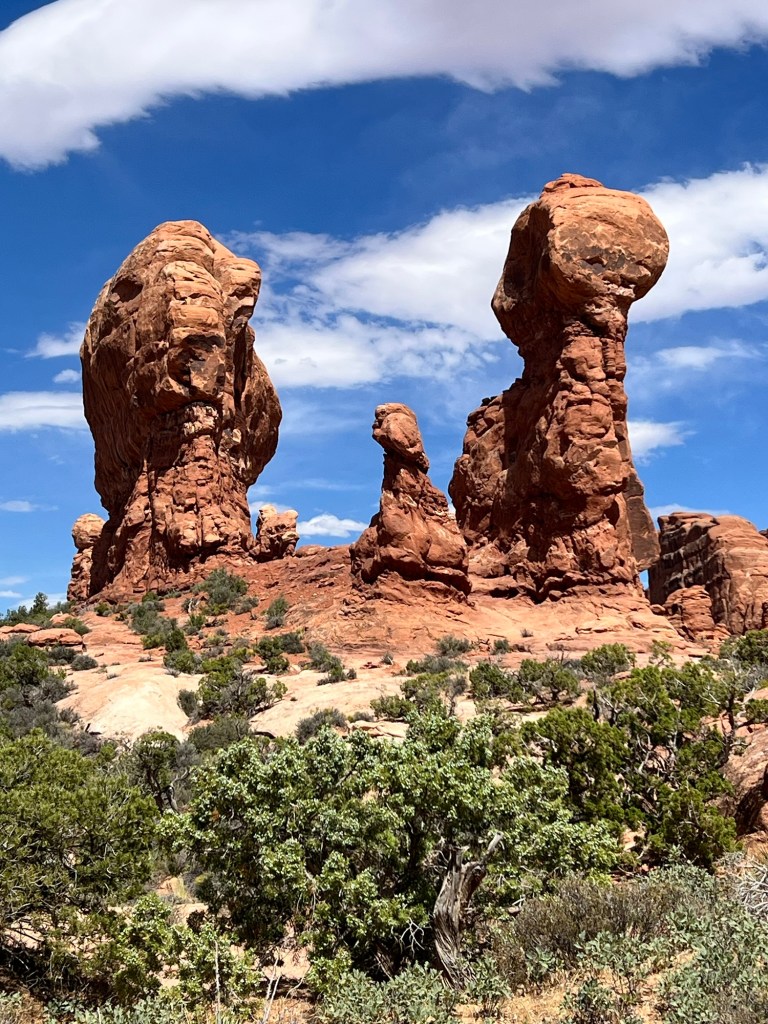
Today we did a jeep light day at the Arches National Park, one of the other places we were two years ago.  

Tomorrow, Doug is setting out for exciting solo adventures in the purple Jeep Rubicon while I stay in our air-conditioned hotel suite and enjoy the hotel pool.  Did I tell you that it’s hot as Hades here?  

June 11, 2026–Wild, Wild West Expedition:  Bryce Canyon National Park and the Hoodoos

We have been in Bryce Canyon National Park for the past couple of days, which is another of our early eighties camping van destinations.   In case you are wondering why we traveled out West so extensively then, we lived in mid-Missouri and the West was both accessible and fun for young marrieds on a tight budget.  

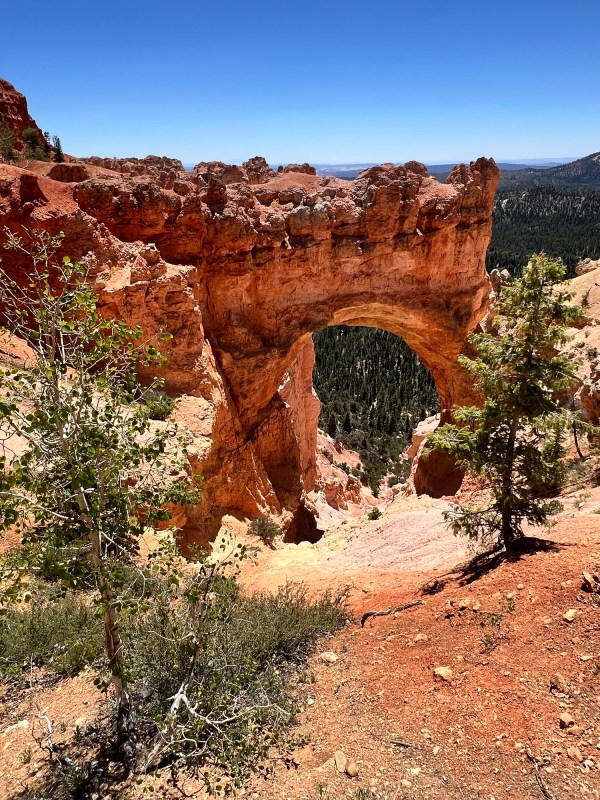
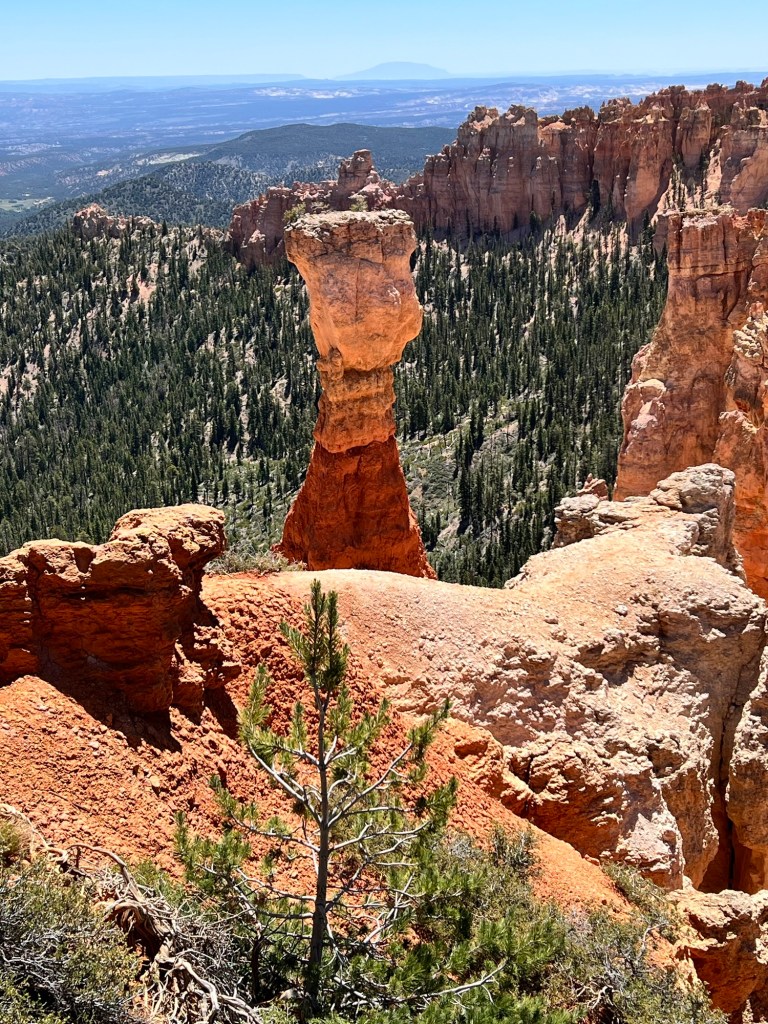
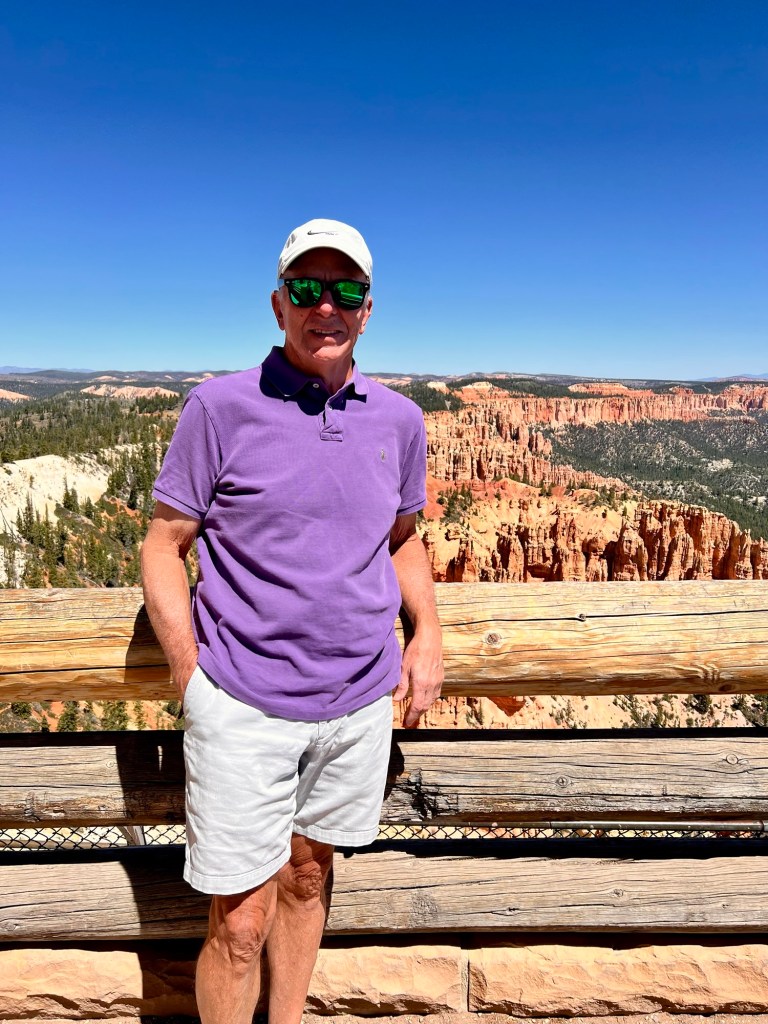
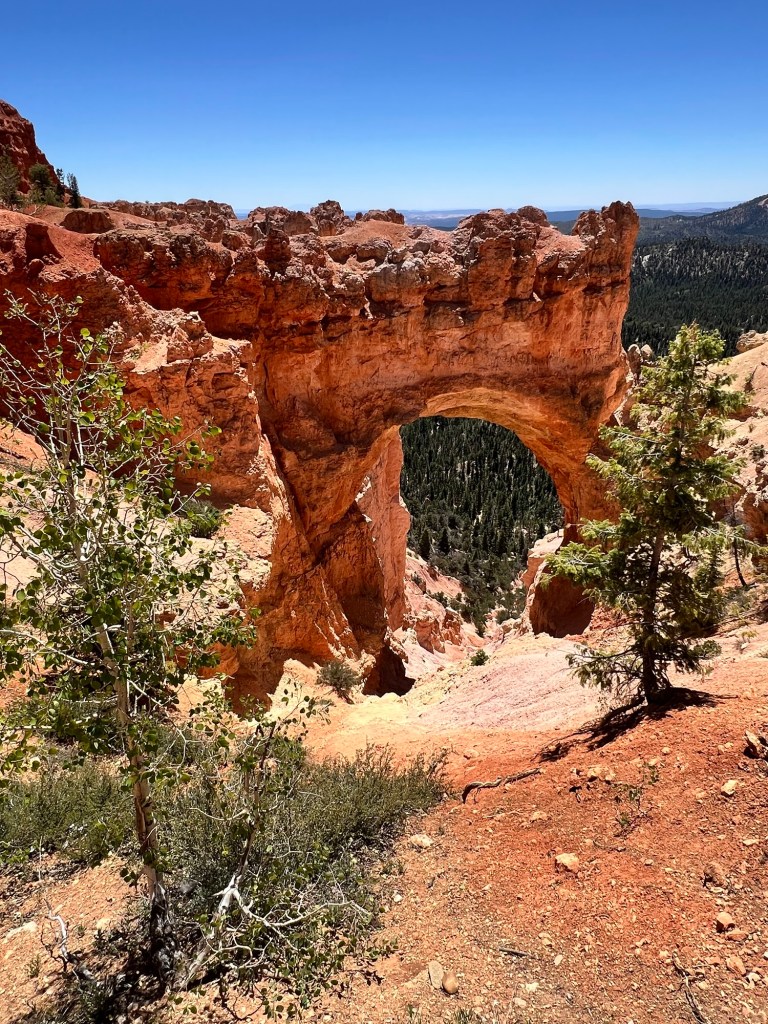
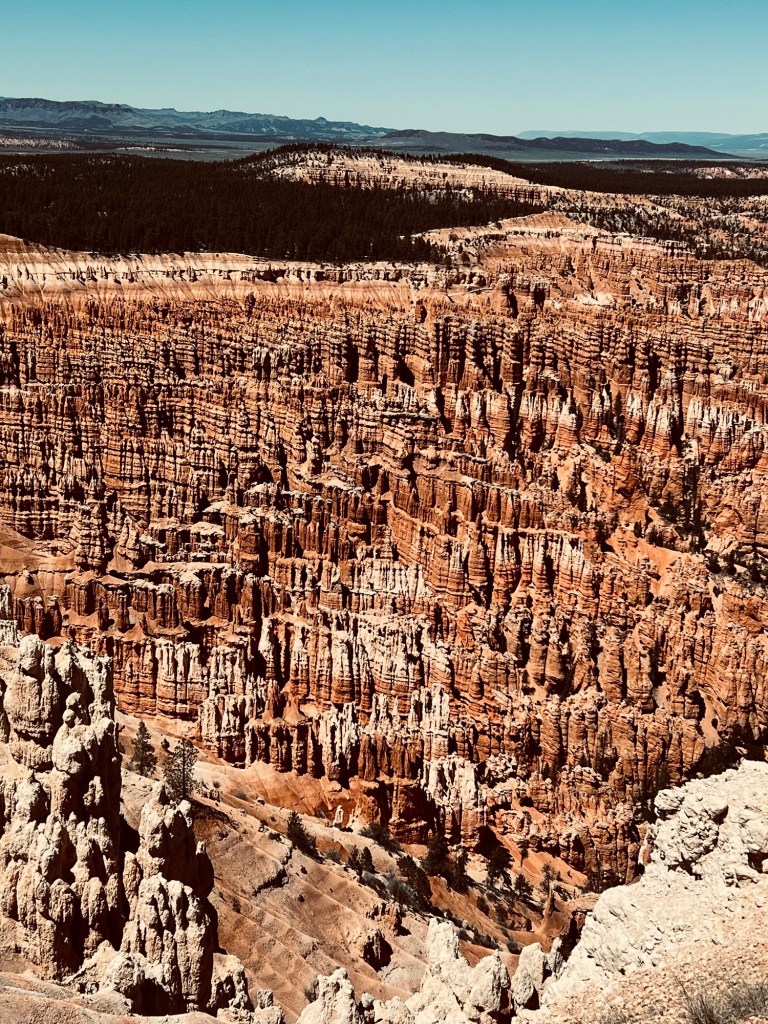
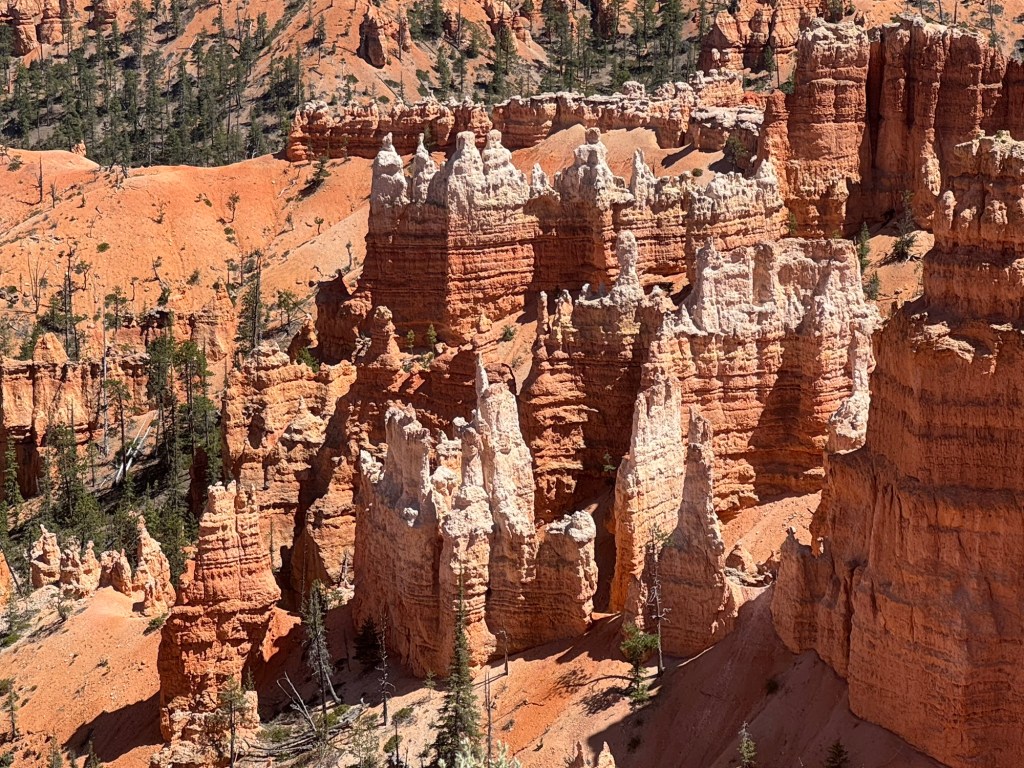
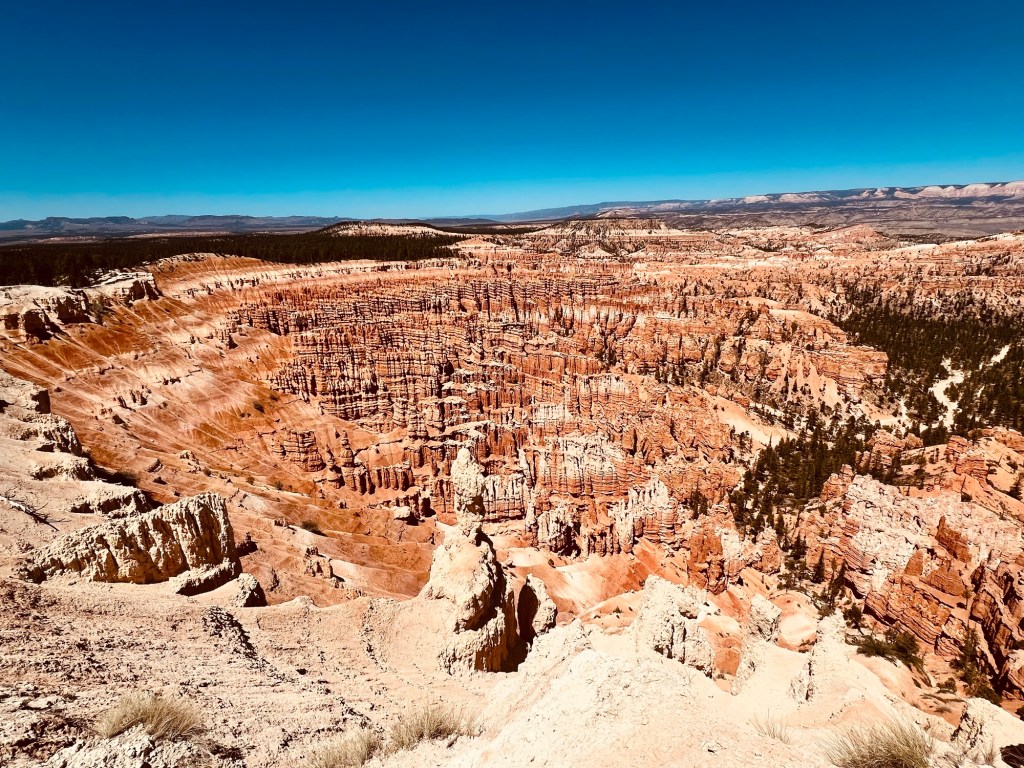
Bryce is nice.  That’s all I’ve got.  Just kidding.  It’s pretty and quite distinctive due to geological structures called hoodoos, tall, thin spires of rock formed by frost weathering and stream erosion of the river and lake bed sedimentary rock.  Bryce is much smaller and sits at a much higher elevation than nearby Zion.  The rim at Bryce varies from 8,000 to 9,000 feet.  Bryce Canyon is not technically a canyon but a collection of giant natural amphitheaters along the eastern side of the Paunsaugunt Plateau.  By the way, Doug has bought a series of strange looking sunglasses at places like Buc-ee’s as we have traveled across the country. He is wearing the latest in the picture below. Also, the purple polo shirt could be circa 1999. Anyway, that’s my best guess.

So back to the Hoodoos.  Bryce Canyon has the largest concentration of Hoodoos on earth (just in case you were wondering where have all the hoodoos gone. Note: vague reference, almost never picked up by anyone under 65, unless you happen to be Julie). Native Americans, the Paiute tribe in this case, thought the hoodoos were “Legend People,” who were turned to stone by the coyote god for bad deeds.  They do kind of look like people, with their stone bodies and heads. Also, you can see in the pictures below why Bryce is called an amphitheater.

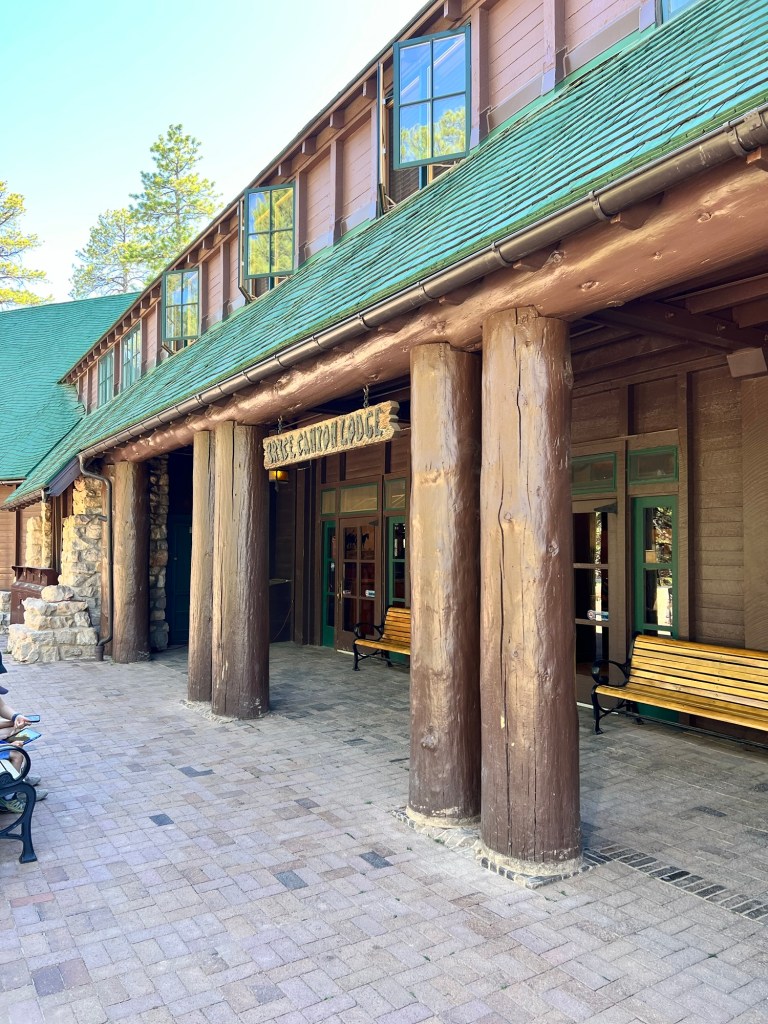
The lodge at Bryce was built in 1926 by the Union Pacific Railroad. It’s lovely, but again not at the level of Old Faithful Lodge or the Glacier Lodges. The picture below is of the original front, but now you enter from the back because the road and parking have changed. It’s weird, because it’s so underwhelming when you arrive. Our room is just over the middle of the green overhang. No air conditioning or television, but the running hot and cold water were a nice amenity.

Tonight we are in Moab, Utah. More on that later.

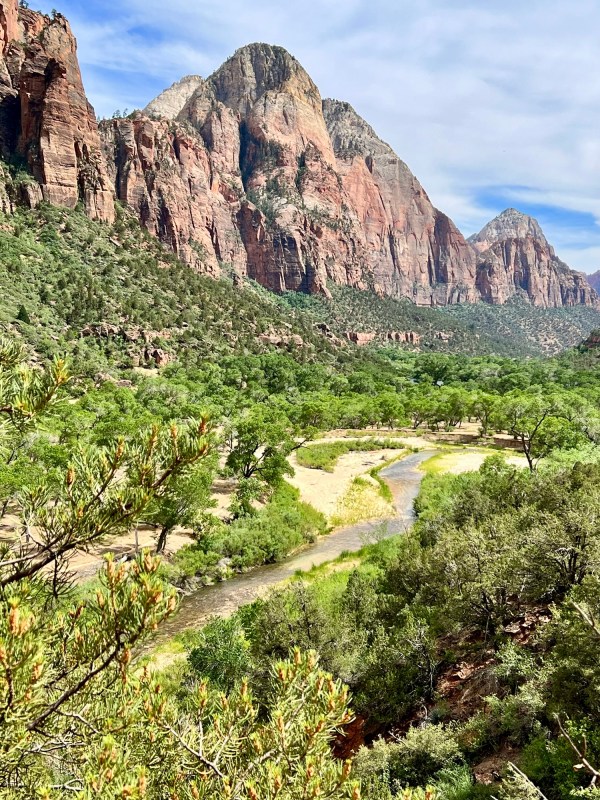
June 9, 2026–Wild, Wild West Expedition:  Zion National Park

We spent the last couple of days in Zion National Park at Zion Lodge. We have been to Zion before, but it was probably in the late seventies or early eighties so we don’t remember much about our time here, except that we camped.

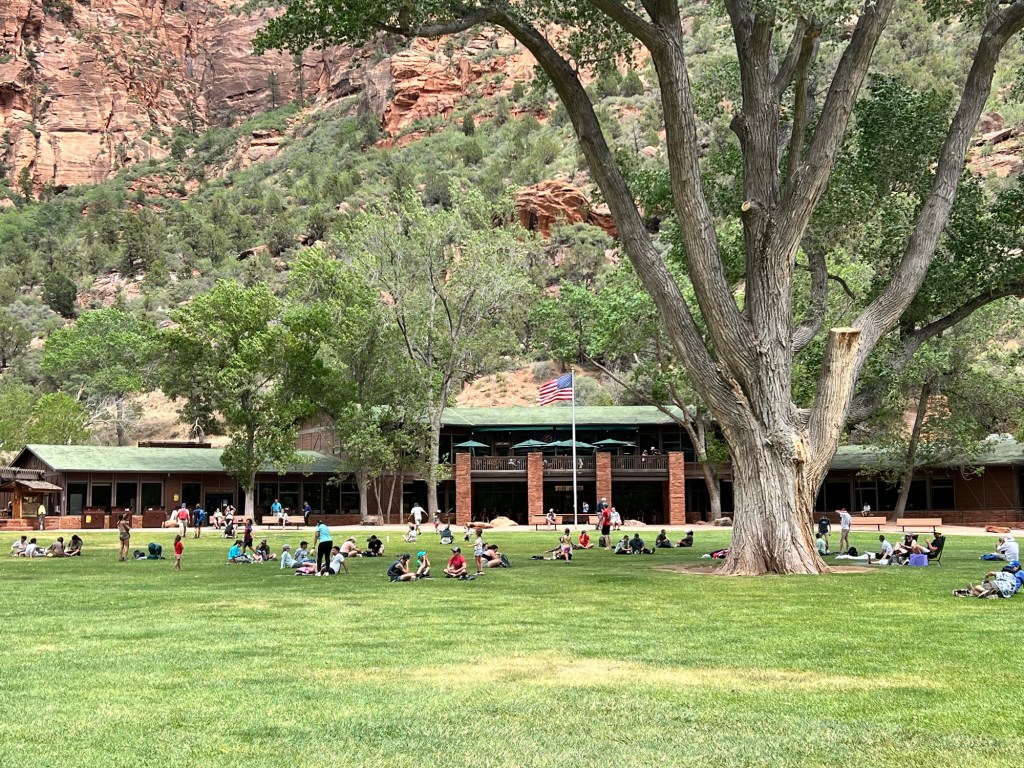
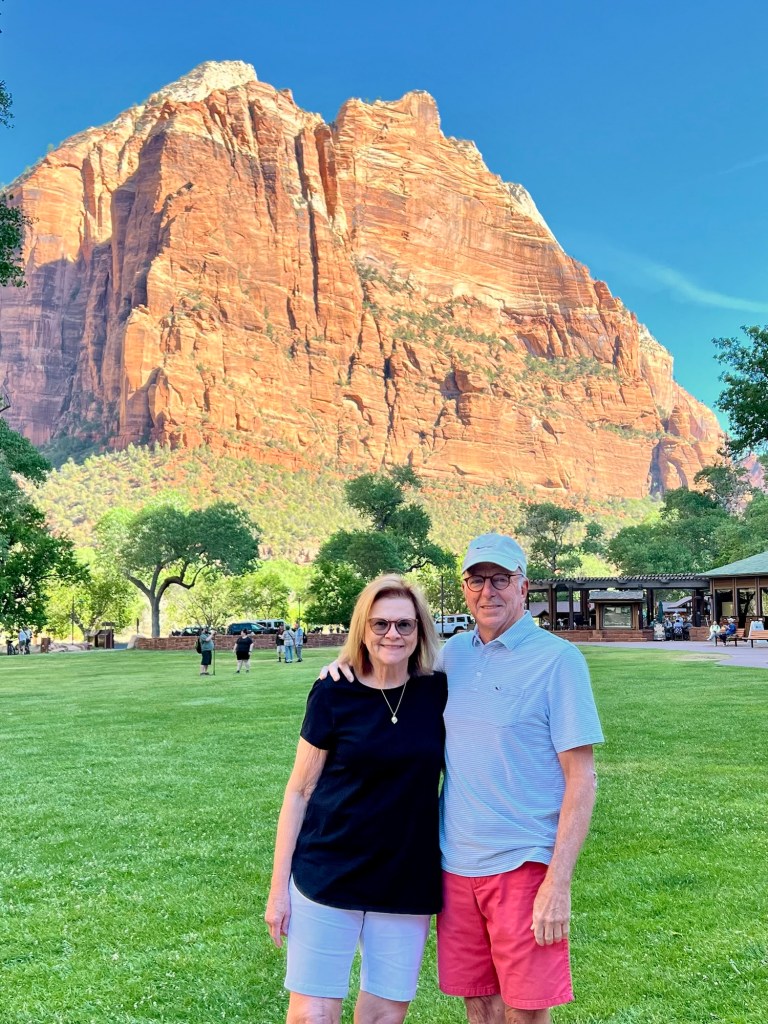
I have mentioned this previously, but after the National Park Service was created in 1916, railroad companies built rail lines to bring visitors to America’s new national parks, as well as constructed some of the first hotels in the National Park System.  At Zion, the Utah Parks Company, a subsidiary of Union Pacific Railroad, ran a spur line as far as Cedar City, Utah (about 30 miles from the park) and established a lodge in Zion Canyon.  Zion Lodge was built in 1926, but burned in the sixties and had to be rebuilt, so it has none of the charm of Yellowstone or the Glacier Lodges. Part of the lodge is in the background here:

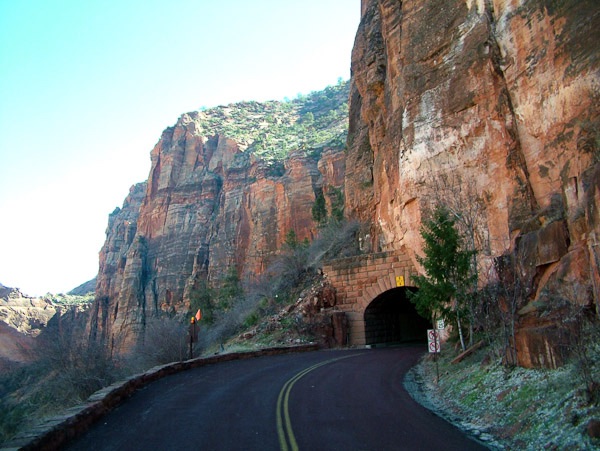
Like a lot of National Parks, cars are more restricted than they used to be, so although you can drive through Zion, parking is limited and some of the park can only be reached by taking a park bus.  When we came in, the ranger at the fee office had to come out and measure Vanna to make sure she could pass through the historic 1.1 mile Zion-Carmel Tunnel built in 1926. For once, Vanna made the cut, but we were kind of freaked out when we started through it. It was narrow and dark and lit only with six giant window like openings.  But we made it.  Not my original pictures below because we couldn’t stop and take one. The first is of the entrance and the second is a distant view of one of the “windows” (look to the left of the four taller trees towards the bottom).

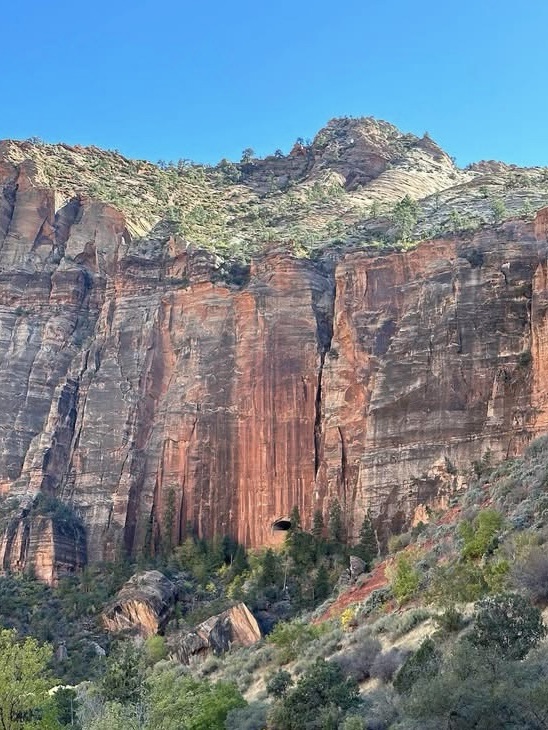
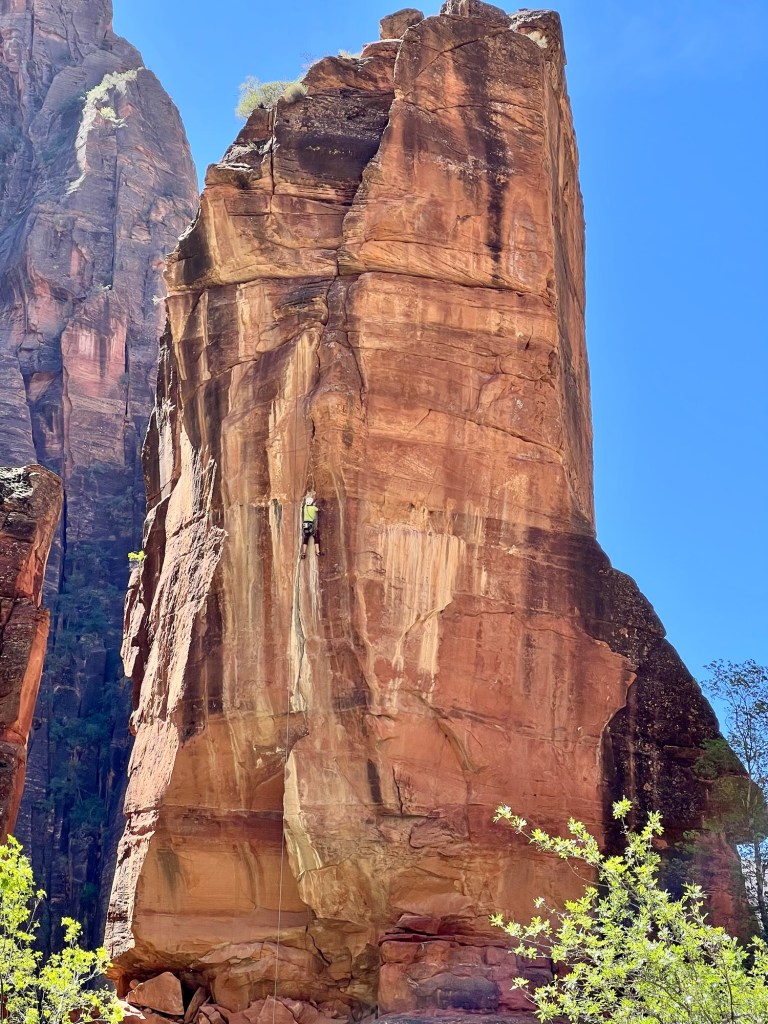
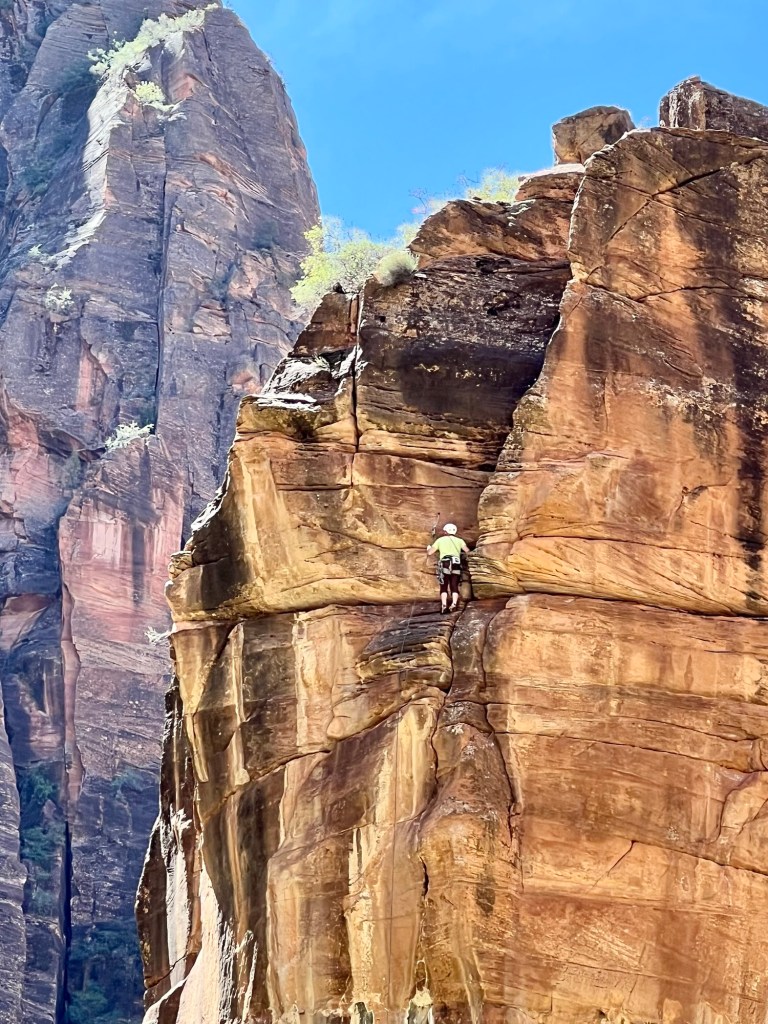
We went on a short tour yesterday morning im a tram-like vehicle to see the part of the park that’s not open to cars. Our guide, John, was a regular comedian. He said that he is a life long bachelor (he was probably in his late forties?) but he’s trying to figure out how to become an eligible bachelor. It was a weird joke. Rock climbing is a big thing in Zion, and we saw the the guy in the first two pictures below make this much progress in the five or ten minutes we were stopped here. Notice the dark spot with a little ledge way above him in the first picture that he climbed to in the second picture. Not for the faint of heart.

Back in the late seventies when we were camping in places like Zion we traveled in a conversion van.  Well, more a DYI van because Doug converted it himself.  In the back of the van we had a mattress up on a plywood platform, and then all of our luggage, camp stove, lanterns, etc. were stowed underneath the platform.  We have a lot of memories, but one in particular that we still laugh about is the Dinty Moore beef stew night.   We got to the campsite late that day and it was cold, so we heated up a can of Dinty Moore stew.  We were about half way through the meal, and Doug suddenly stopped eating and said he was full.  A couple of days later he told me that he had found a piece of hide in the stew.  Well anyway, he said he hoped it was cow hide and not from a rat.  I screamed, “Why didn’t you tell me?”  And he said, “Are you kidding?  You would have freaked out.”  Why, yes, I would have been most horrified.  

Tonight we are in Bryce Canyon National Park.   

June 7, 2026—Wild, Wild West Expedition:  Lake Powell and Antelope Canyon 

We spent the last couple of days in Page, Arizona, which is part of the Navajo Nation and is just right over the border from Utah.  The Navajo Nation is the largest Indian reservation in the United States, covering a total of 27,000 square miles and stretches across northwest New Mexico, northeast Arizona, and southeast Utah.  I looked it up and it’s roughly the size of West Virginia.  

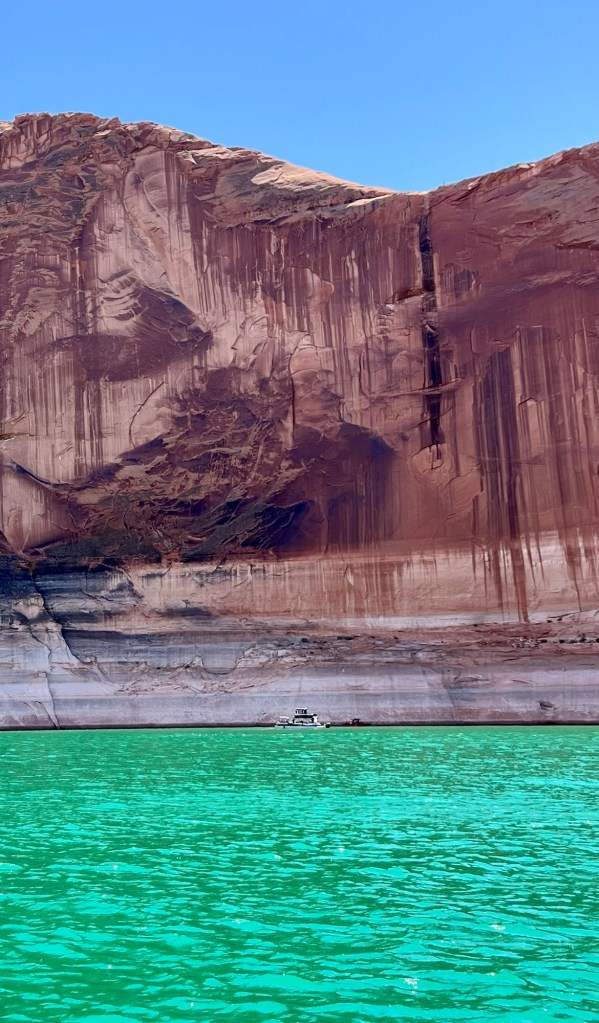
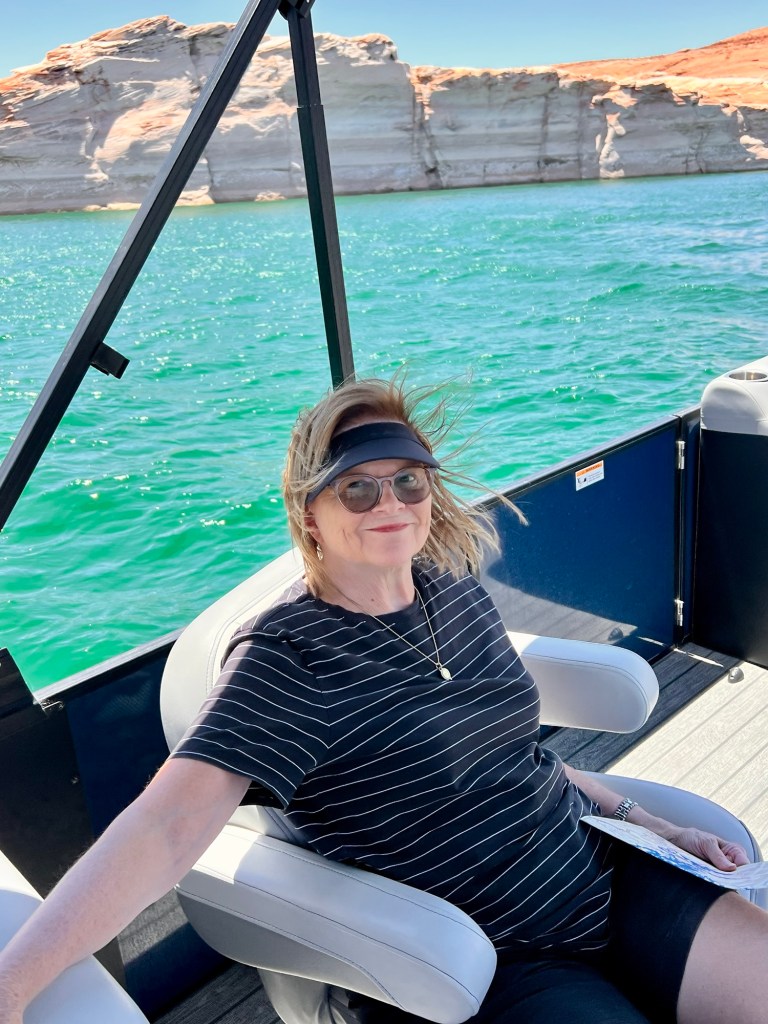
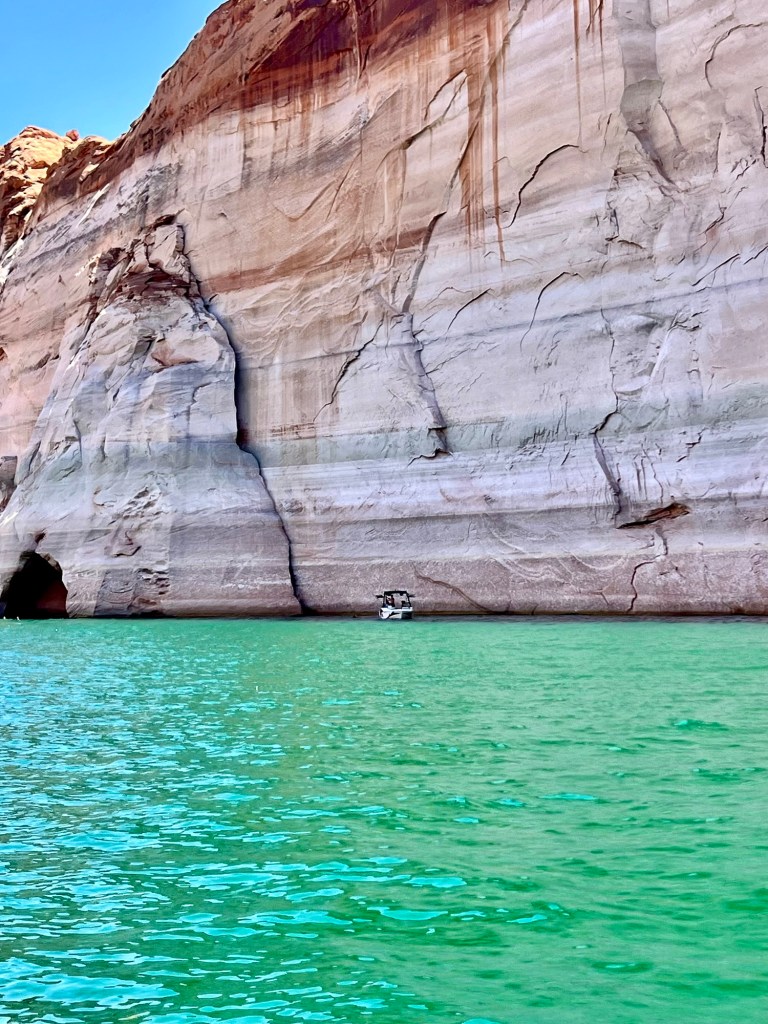
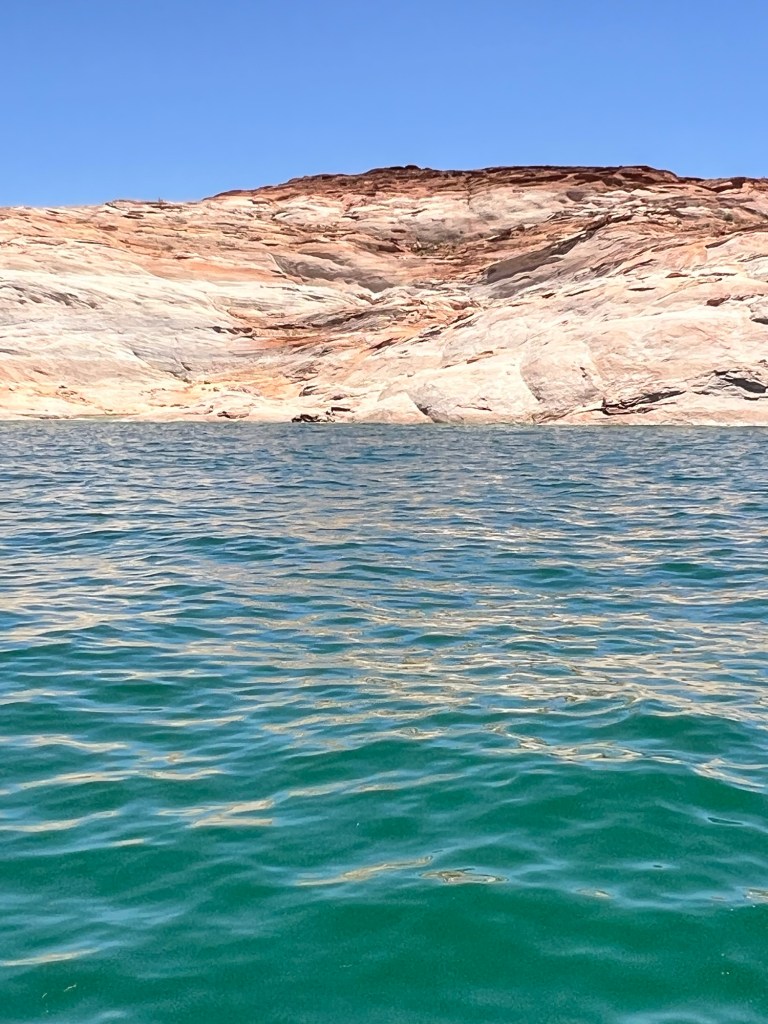
Yesterday we rented a pontoon boat and took a ride on Lake Powell.  Lake Powell was created by the 1972 construction of Glen Canyon Dam, which backed up the Colorado River into Glen Canyon. The building of the dam and creation of Lake Powell led to the Glen Canyon National Recreation Area, a popular summer destination of public land managed by the National Park Service.  The lake is huge, weaves in and out of both Utah and Arizona, is about 256 square miles, and is quite spectacular.  It was so hot!  

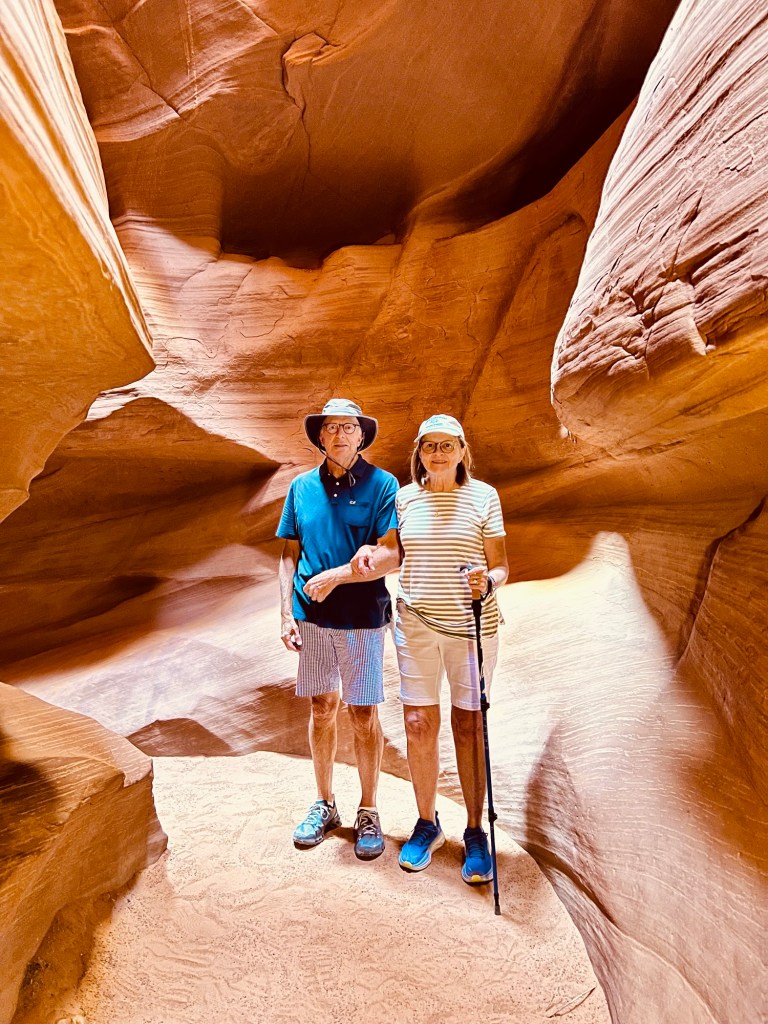
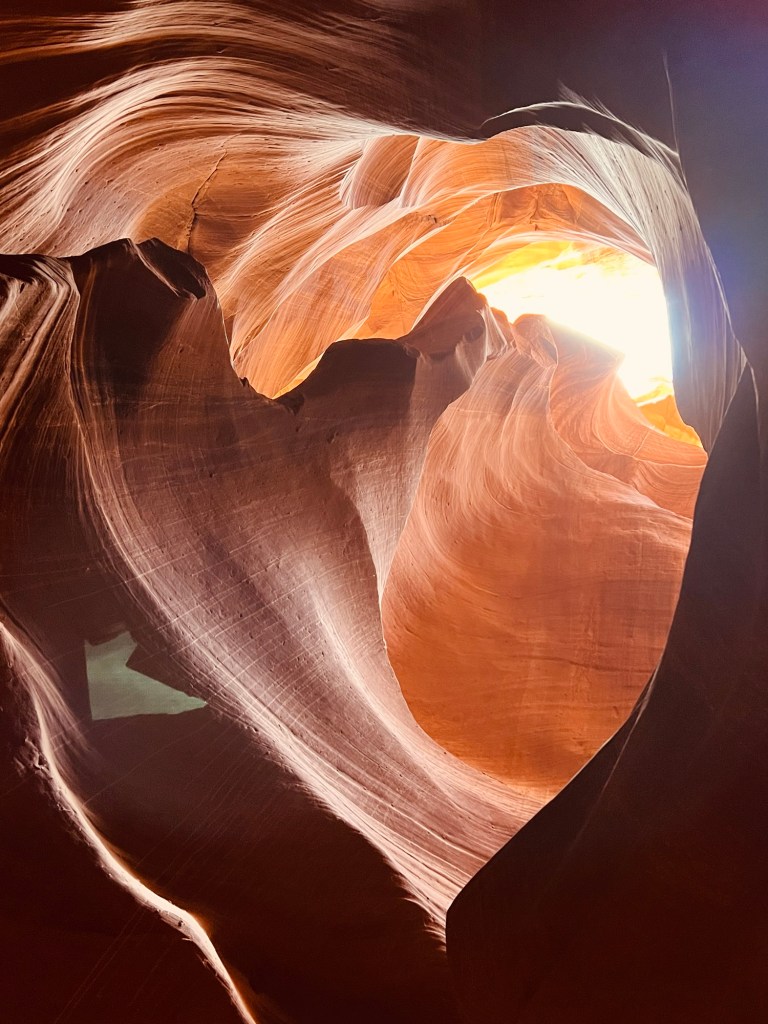
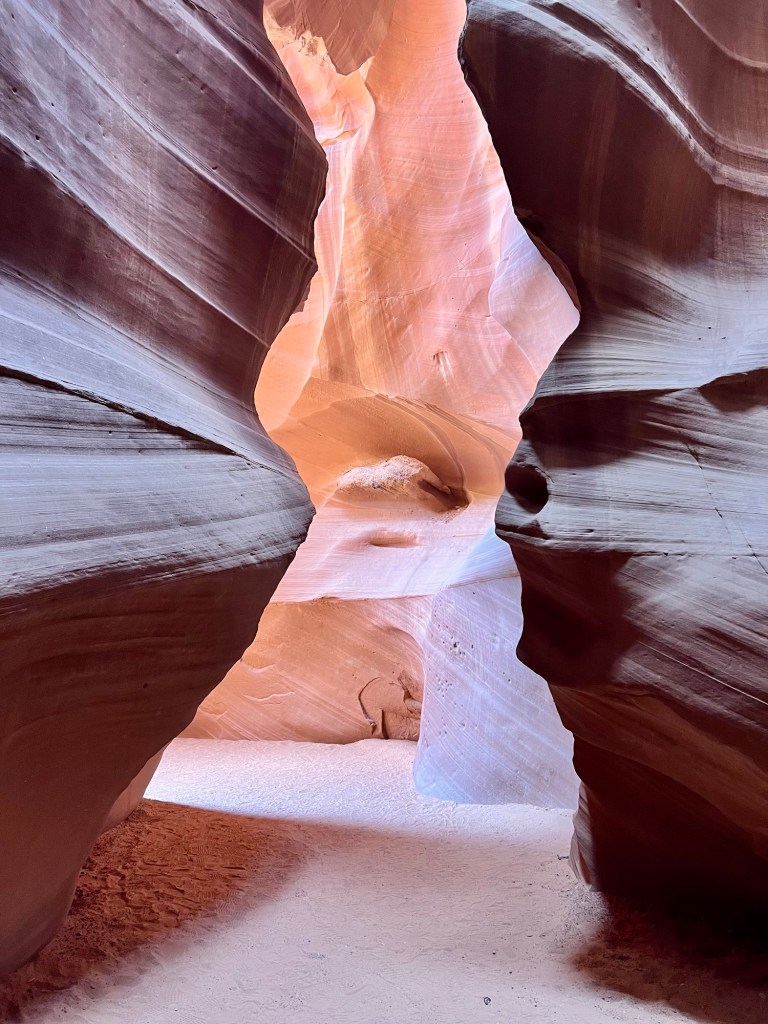
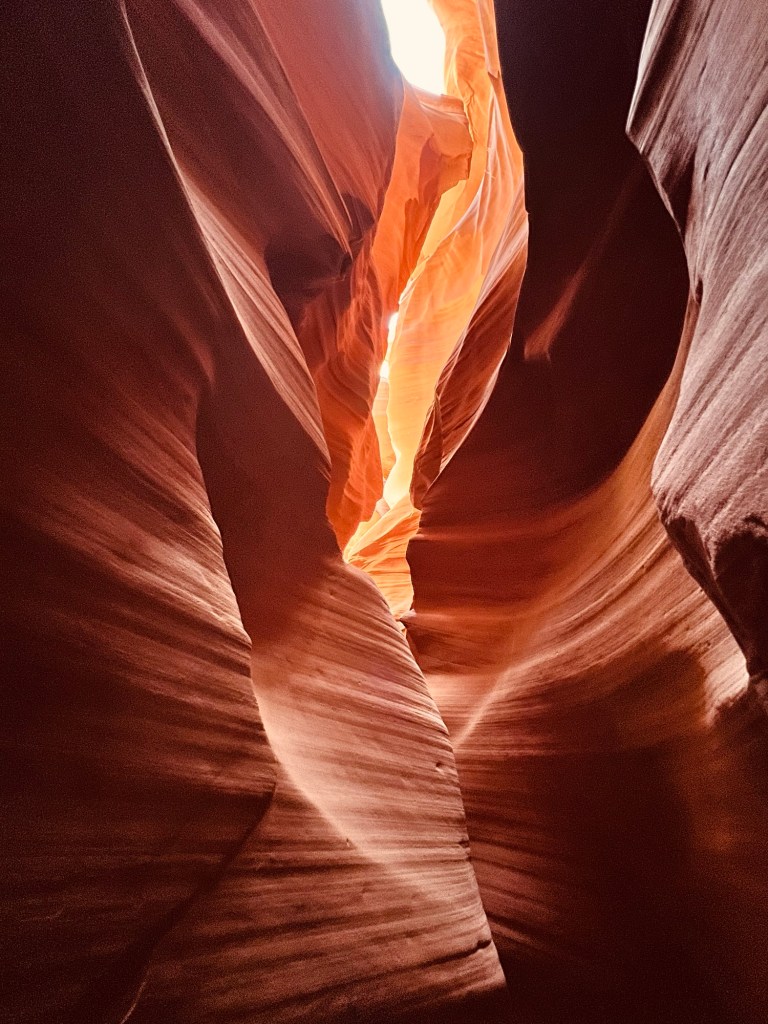
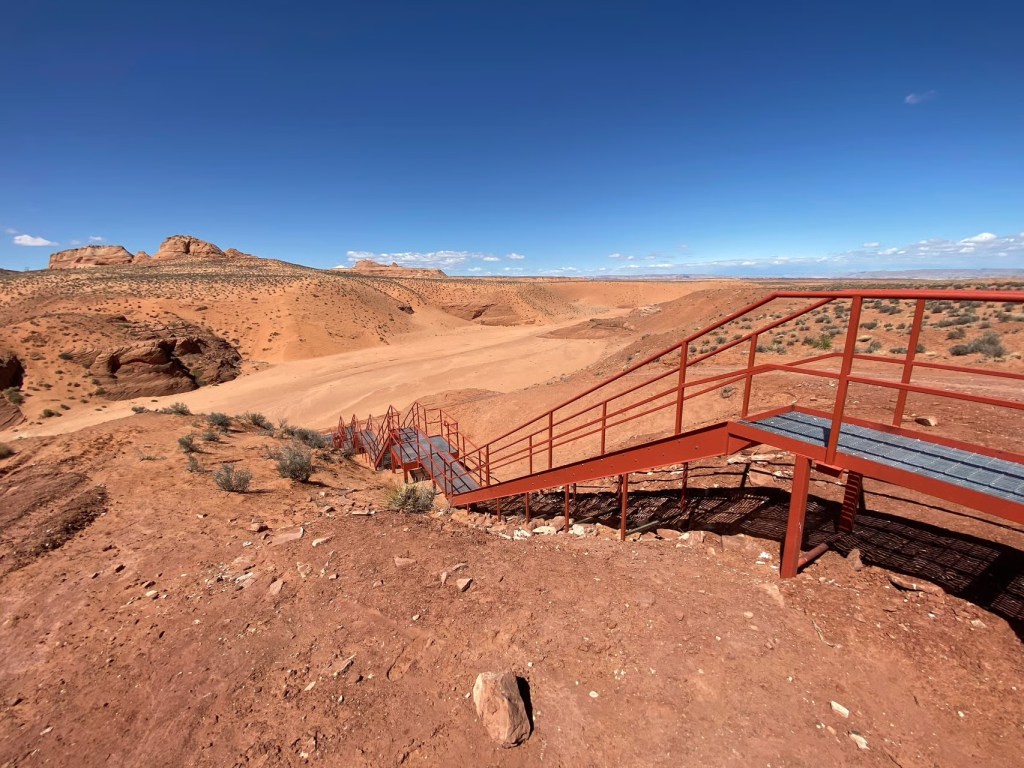
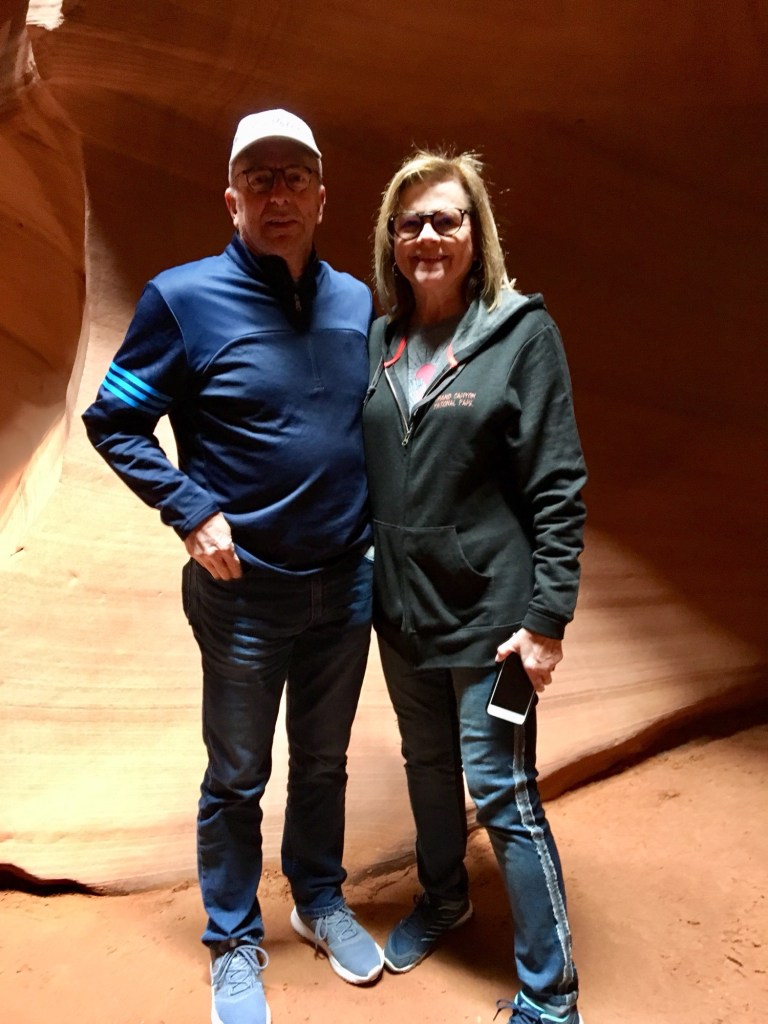
Today we went on a guided tour to Upper Antelope Canyon, albeit with mixed results.  We had been there in 2019, and the walk was fairly flat on the way in and then you went back out the same way.  It’s a little narrow in some sections, but okay if you aren’t claustrophobic.  Well, much to my chagrin, they changed the exit in 2021 without notifying us. First you had to scramble up some small sandy hills and big rocks to reach a giant metal covered walkway across the top of the canyon, and then scramble back down about a million stairs to the parking lot.  It was hot as Hades and sand was blowing from all directions. People with a bad knee can’t manage that stuff.  I made it up to the walkway, but it wasn’t pretty.  So Carson, our understanding guide, took us back down to the canyon and we walked through it against the grain to get back out.  Don’t worry, I apologized to our group and informed them that it is “hell getting old.” Everyone, including the sweet family of four from Tennessee, were quite sympathetic. But not the two German guys.  Oh, well.

The Hellish Way Out

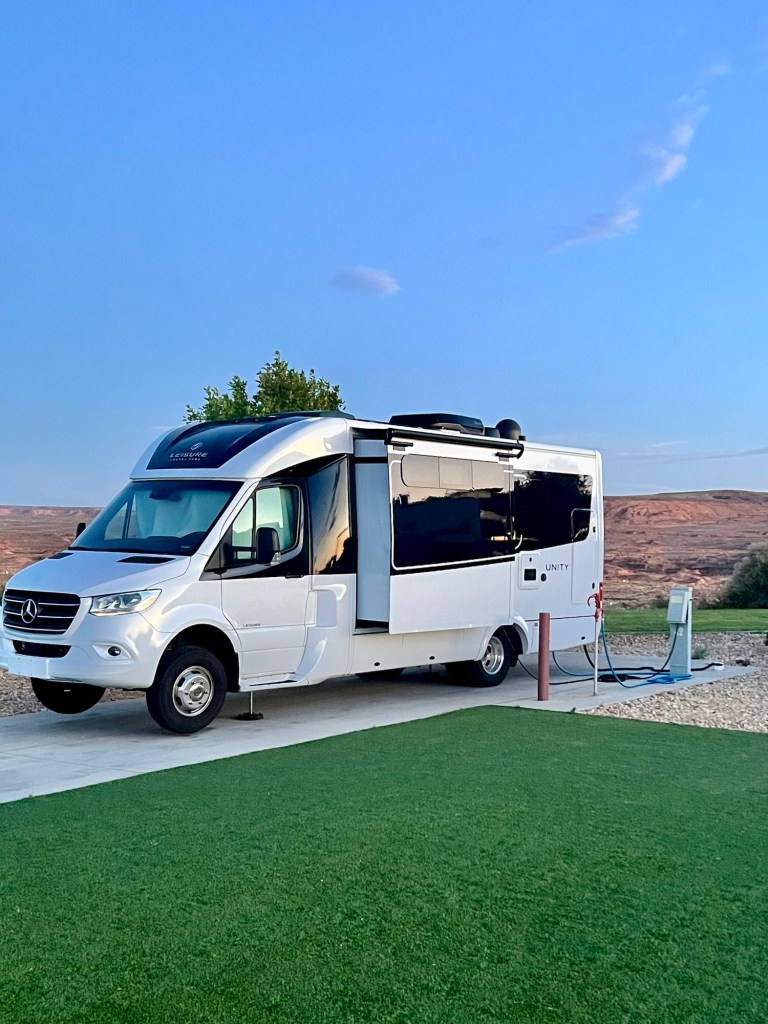
And just in case you need to know that Vanna is still in the picture, here’s a picture. The grass is astroturf, so not real.

Tonight we are in Zion National Park at the lodge.  My knee is sore, but uninjured.  And incidentally, my physical therapist told me to stop calling it my bad knee, but I can’t think of a better way to refer to it without swearing. Any ideas?

June 5, 2026–Wild, Wild West Expedition:  Monument Valley and “Forrest, Forrest Gump”

The last couple of days we have been in Monument Valley, which is in both Arizona and Utah.  The Valley is a region of the Colorado Plateau, characterized by a cluster of sandstone buttes, with the largest reaching 1,000 feet.  The native Navajo Indians consider the Valley sacred, and it is within their reservation.  You can either pay a fee to drive 17 miles on a dirt road to see the interior of the Valley, or you can take a covered truck ride with a guided tour.  Vanna was not allowed, so we took the truck.  It’s a gorgeous place.  

Our guide today was Derek, who is a native of the area.  Along with telling us about the geography of the area, he also talked about the Navajo or Dine (dih-NEH) tribe.  The tribe is divided into subsets called clans, and there are around 140 clans total.   Some of the clans names are the Tangle People, the Towering House People, and the Bitter Water People.  Each person knows which four clans they belong to, and there are strict rules against marrying someone who belongs to either your mother or father’s clan.   Makes sense doesn’t it?  

Derek also mentioned the Navajo Code Talkers, a group of Marines in WWII who created a secret code based on the Navajo language.  It was really a double code—for instance, for hand grenade they used the Navajo word nimasii, which translates to potato in English.  For a tank they used Ch’ééh digháhii, or turtle in English. If you’re a history buff you probably know all of this, but it’s still pretty cool if you want to look up more details.

Remember Forrest Gump Point in Utah?  Neither did I.  It’s the place where Forrest stopped running after three years, two months, fourteen days, and sixteen hours.   He turned to the waiting crowd who were expecting him to say something profound and said, “I’m pretty tired, I think I’ll go home now.”  We went by there on Thursday and some 25 people were there, right in the middle of the road, taking pictures.  Of a hill that was in a movie made in 1994.  Doug, not to be outdone, joined them.  Here’s the result:  

Another place we passed yesterday in Utah was the Mexican Hat, which looks remarkably like a Mexican hat.

As we drove across hot and dry Arizona, I was reminded of a story my Dad used to tell.  Back when he was just out of school, his first job was as a traveling salesman for his family’s business.  For a while he traveled out west, and of course in the early fifties there was no air conditioning in cars.  He said that had a small bucket and he used to stop and buy ice for the bucket, set the bucket on the seat beside him, then aim the vent over the ice bucket.  Voila!  Air conditioning of a sort.  

Tonight we are in Page, Arizona camping close to Lake Powell.  

June 3, 2026–Wild,Wild West Expedition: “I’ve Been Everywhere, Man”

Today we are in Santa Fe, New Mexico after a three day 1,500 mile trip across seven states.  We enjoyed a “Highway 20 Ride” in Georgia, traveled through “Sweet Home Alabama,” and drove across the “Big River” in Mississippi.  We didn’t get a chance to go “Walking in Memphis” Tennessee and we missed “Little Rock” Arkansas, but we did notice that the wind comes sweeping down the plain in “Oklahoma!”  In Texas we got to “Amarillo by Morning” and then finally arrived in that God forsaken country they call “New Mexico.”  
Actually, I like New Mexico and it doesn’t seem God forsaken at all.  Santa Fe is the oldest state capital in the U.S. and is known for its iconic Pueblo Revival architecture.   It sits at an elevation of 7,000 feet at the base of the Sangre de Cristo Mountains.  Founded in 1610, it is home to the Palace of the Governors, the oldest continuously occupied public building in the United States.  Today we walked around and enjoyed the crisp, clear sunshine and the fact that we weren’t driving miles and miles in Vanna. Our hotel is right by the historic Santa Fe Plaza, so we took some pictures:

And of course, we had to visit the obligatory church in the Cathedral Basilica of St. Francis of Assisi which is right off the Plaza.

As an aside: When I was a kid, my Aunt Elsie and Uncle Glen always talked about their business in Clines Corners, New Mexico. Of course I had never been to New Mexico, so the idea of it seemed pretty exotic to me. Clines Corners has been around since 1934, and was established by a guy aptly named Roy Cline, who built a gas station and rest stop there. My aunt and uncle probably purchased it in the 60’s. If you look it up on the internet, you learn that Clines Corners is a legendary New Mexico travel stop and souvenir mecca located about 60 miles east of Albuquerque at the junction of 1-40 and U.S. 285. Basically, it’s a small blip on the map in the middle of nowhere. We drove by there several years ago, and at that time there was a cafe, post office, gift shop, gas station and R.V. Park. They sold the expected chocolate pecan fudge. Yesterday when we drove by it the post office had closed, and the cafe was replaced by a Subway. Judging by the looks of it now, I’m sure people who read the blurb online and decide to visit are sorely disappointed. Luckily, the RV park is still there and seems quite populated. Why, I don’t know. And they still have delicious fudge, according to the flashy sign.

Tomorrow we are headed to Monument Valley, which is in both Arizona and Utah.  We will be camping on the Utah side in a little town called Goulding.  

October 12, 2025–Final Notes From Florence, Italy

Tomorrow morning we fly out of the Florence airport via Charles De Gaulle to Atlanta.  We have been in Europe for three weeks and that is a long time. I only have the bare minimum of clean clothes at my disposal.  I’m all set with clean underwear and socks, but I have worn all of my jeans and leggings a few times. No use being persnickety at this point.  You either have to get up and get dressed in something, or stay in bed all day.  Pick your poison.  (And yes, I know we could have had laundry done by one of the hotels.)

Florence is yet another beautiful Italian city.  It was a center  of medieval European trade and finance, and is considered by many to have been the birthplace of the Renaissance.  There are over sixty museums in Florence, but we only visited two of most famous: the Uffizi Gallery and the Accademia Gallery, mainly because I wanted to see the Botticellis at the former and Michelangelo’s David at the latter. My favorites are Botticelli’s Birth of Venus and Michelangelo’s David. Which ones do you find most appealing?

And Michelangelo’s David:

Florence is also known for its many bridges.  The city is divided by the Arno River, and its bridges are a large part of its identity, most famously the Ponte Vecchio, the oldest and most recognizable bridge, lined with shops since the 13th century.   Our hotel is right on the Arno River, so we can see many of the bridges from our room.  The first picture is of the Ponte Vecchio where all the shops are, and the second picture is of Ponte Santa Trinita, which is named for the Santa Trinita Church you can see in the background. Ponte is Italian for bridge as you may have guessed.

The other night we walked across the Ponte Santa Trinita for dinner, and Doug ordered a steak with a side of tagliatelle (the long flat ribbon pasta).  The waiter seemed pretty disgusted by the entire idea and said in a rather sneering manner, “Pasta with steak?  You’re just like the French!”  I guess he didn’t really care for the French people or their food choices. Or Americans, for that matter.
As side note about the Renaissance in Europe, Shakespeare set thirteen (out of thirty-eight) of his plays in Italy.  Scholars think he did this because Elizabethans were fascinated by the Italian culture, political intrigue, family strife, and palace plots.  One of the other reasons might have been that he was able to criticize the ruling class in England by couching it in Italian settings, thus avoiding the displeasure of the monarchy.  For instance, “Romeo and Juliet” is set in Verona, “Julius Caesar” in Rome, “Othello” in Venice, and part of “All’s Well That Ends Well” in Florence.  
And what would a blog about a European city without a cathedral? The largest one in Florence is the Duomo di Firenze. The first stone on the cathedral was laid in 1294 and it took 140 years to build.

All of the streets in Florence are really crowded with tourists and it can be fairly overwhelming at times. My biggest pet peeve is people who are obsessed with looking down at their cellphones while walking down the sidewalk, or who stop right in the middle of the sidewalk to send a text or take a selfie. They are always crashing into innocent bystanders. How is that enjoyable for anyone involved?

And so another trip, another blog. I enjoy writing them most days, but I do find it difficult to choose what pictures to put in, which facts are interesting and which are too trivial or boring, and how much griping I can do without people thinking I’m curmudgeonly. Hope I got the perfect balance this time. Until we meet again, arrivederci!

October 9, 2025–Florence, Italy

Tonight we are in Florence, where will stay until we fly out on Monday morning.  We spent the last three nights in Siena in a hotel at the heart of the Siena City Center, or Piazza del Campo.  

The Grand Hotel Continental in Siena where we stayed was constructed in the 17th-century and originally built as a wedding present from Pope Alexander VII to his niece, Olimpia, and her husband Giulio de’ Gori. It has been a hotel since 2002, and maintains its original Renaissance architecture with frescoes, antiques, and terracotta floors.  It is an absolutely gorgeous hotel.  The first picture is of our room; the second picture is a sitting room which was probably once a ballroom; the third picture is of the street beneath our room.

Siena is a walled town and the center is fortified  by ancient brick walls, bastions, and towers built between the 14th and 16th centuries.  The first thing you notice when you walk into the Piazza del Campo is the tower of Torria del Mangia.  The tower was built in 1338–1348, and is located next to the Palazzo Pubblico (Town Hall).  The tower was built to be exactly the same height as Siena Cathedral as a sign that the church and the state had equal power.  The clock on the lower part of the shaft was added in 1360, and it chimes like clockwork, as they say.  It’s amazing to think that for hundreds of years, people have been sitting in that square, hearing that clock chime.  All of the awnings in the last picture are sidewalk restaurants.

The other famous building in Siena is the Siena Cathedral, which was designed and completed between 1215 and 1263.  It has the form of a Latin cross with two transepts (left and right), a dome and a bell tower.  In case you are wondering what a transept is, it is a part of a cruciform (cross-shaped) building that projects at an angle from the main body and forms the arms of the cross.  

I have had to look up many Italian words lately since my grasp of the language is limited.  Italian has many similarities to Spanish if you studied that in high school or college.  Inexplicably, I took German (I won’t go as far as to say that I studied German).  In restaurants the menus aren’t that difficult to figure out because a lot of the words are the same: pizza, pasta, ragu, lasagna, pomodoro, etc.  But sometimes you just have to guess at things.  Like today when I wanted to buy some sparkling water, my choices were acqua naturale or acqua gassata.  I chose gassata because CO2 gas is used to carbonate water and gassata sounded closer.  It’s not always so easy, though.  Road signs are super confusing.  

Below is the picture of the newsstand we had to drive by to get to our hotel. No, it does not look like you should be driving a car through there.


We returned our car today (thank goodness) and will either walk or take taxis in Florence.  We will miss our long suffering GPS, a nice British gentleman we called Alfred.  There are many toll roads here, and Alfred freaked out every time we approached a toll booth.  He kept saying,  “Warning.  Approaching toll booth,” over and over in his uber polite, yet hoity-toity manner.  The toll booths were all automated and confusing, so Alfred had reason to be concerned.  We would sit there forever trying to figure out the directions, all of which were stated by an automated voice in super fast Italian.  The credit card readers worked only occasionally, so we had to dig out Euros most of the time.  Once we succeeded the voice would say quite cheerfully, “arrivederci.”  Yeah, whatever.  Back at you.

October 6, 2025–Under the Tuscan Sun in Siena, Italy

Tonight we are in Siena, where we will be for the next three nights. Our hotel is right off the main square, so driving here was quite a feat. They told us not to use GPS because we would end up in a restricted area and would probably receive a large fine. So, rather than us being arrested by the Carabinieri, they sent turn by turn directions that were insanely hard to follow: drive past the soccer field, make a sharp right up a steep ramp, go past a round green garden on the right (?), drive by the newsstand on the left (on a road that was looking more and more like a pedestrian sidewalk), and then drive to the end of the road to the statue of Salustio Bandini in Piazza Salimbeni. The hotel is in walking distance. So, we arrived at said statue and had no idea where to park. We ended parking right by the statue while Doug found the hotel and someone who could park our car legally. Totally nerve-wracking.

We spent Friday and Saturday nights in Portofino—well actually on the Portofino Peninsula—in a town called Comalgi, which is part of the Italian Riviera.  The Italian Riviera is the narrow coastal strip in Italy which lies between the Ligurian Sea and the mountain chain formed by the Maritime Alps and the Apennines Mountains.  Although the Italian Riviera is known for 300 days of sunshine per year, it was raining on Saturday when we were there.  Go figure.  Basically, everything is built on a mountainside, so colorful houses line the beach and go up the mountainside.  Comalgi was a fishing town, so the different shades of orange, yellow, red, and green helped sailors recognize their houses against the vast expanse of the sea, making landfall more straightforward.  By the way, this is a phenomenon in many coastal villages and seaports, even in America.  For instance, Rainbow Row in Charlestown, South Carolina has the same history of colors used to guide sailors home. The pink building in the center picture is where we stayed, Hotel Cenobio dei Dogi.

One thing I learned about traveling in Italy:  you had better love pasta for breakfast, lunch and dinner.  Well, not for breakfast, but definitely for the other meals.  And seafood, especially in the places on the water where we have been.  Comalgi is historically a fishing town, so seafood is a way of life.  And of course, the bread is fantastic and the pizza is always excellent.  We were at a pizzeria a couple of nights ago and they had a pizza called Americano, which listed as one of its ingredients as “frites.”  I was confused because even us rube Americans know that frites are French fries.  I asked, and yes, they had a pizza with French fries on it which was supposed to appeal to Americans.  That’s just weird in my book.

Last night we stayed in Hotel Villa Casanova, which was a farmhouse or villa on 360 acres before being converted to a fourteen room hotel in 2009. It is about six miles from Lucca, and totally out in the country, so the GPS had us making numerous turns through small towns and taking the second and third exits off dozens of roundabouts. It seemed like we were going to end up somewhere scary.  But we finally arrived and it was just the sweetest place ever, with a restaurant, pool, and a lovely guest room.

By the way, we are in Tuscany and it is sunny, thus my title.


Blog at WordPress.com.

Up ↑